Vinyl Record Insurance: Protecting Your Valuable Collection
Most vinyl collectors treat insurance as the last item on the list, right after they finish alphabetizing their crates. Then a burst pipe, a break-in, or a stack of water damaged jackets turns that long collection into a single expensive question: what was it worth, and will anyone pay for it. The answer depends less on your records than on your paperwork. Here is how to insure a valuable vinyl collection, what it actually costs, and how to document a collection so a claim does not turn into an argument.
Start with what your homeowners policy already covers
Records are personal property, and standard homeowners and renters policies cover personal property against the causes of loss named in the policy. The catch is the ceiling. Personal property coverage is usually a percentage of your dwelling coverage limit, often around 50 percent, and that total is shared across everything you own. On top of that total sit category sub-limits for jewelry, art, and collectibles, which commonly land somewhere between $1,000 and $2,500 per item.
The National Association of Insurance Commissioners points out in its consumer guide that you should verify those limits and buy additional coverage when your valuables exceed them. A $2,500 sub-limit on a first pressing that is worth $8,000 is the classic gap. NAIC also notes that high-value items often need to be scheduled, meaning listed on a separate endorsement with an agreed value, because standard policies frequently exclude or limit certain causes of loss such as mysterious disappearance or damage during an appraisal or repair.
When a scheduled policy or floater makes sense
Three options cover the gap, and they work at different scales.
- A personal articles floater on your existing policy. This is an endorsement that adds high-value items to your home policy at an agreed value, often with broader causes of loss and no sub-limit. It is usually the cheapest fix and the first thing to price.
- A dedicated collectibles policy. Standalone policies for music and media collections can cover accidental damage, theft, and water damage, and specialist vinyl cover exists up to fairly substantial limits. These products typically carry agreed value or new for old replacement terms rather than depreciated actual cash value.
- Scheduled personal property coverage. This is the most formal route, underwriting each item individually with a stated value, which is what you want for a genuinely rare pressing.
On cost, a reasonable rule of thumb for a collector policy is 0.5 to 1.5 percent of the insured value per year. A collection valued at $20,000 therefore lands somewhere between $100 and $300 annually. Expect a minimum premium around $175 to $250 on many music and gear policies, with the rate rising once you add expensive high-value titles. Actual pricing depends on security, fire protection, and storage, so a home with a monitored alarm and a dedicated cabinet will consistently quote lower than a rented flat with records in a bedroom closet.
Valuing the collection: what an insurer will actually accept
You cannot be paid for what you cannot prove. The core document is a dated inventory that identifies each record by artist, title, label, catalog number, pressing, and condition, paired with a defensible value for every item. There are three levels of evidence, and you can mix them.
Sales history is the cheapest tool you have. Discogs calculates an estimated value for items in your collection automatically, and each release page shows the last 30 recorded sale prices along with the lowest, median, and highest values. That median is a strong supporting document because it is transparent and reproducible. The limitation is that Discogs estimates reflect what items actually sold for, so a copy you own in near mint condition with a specific variant number may be worth more than the median, and a common pressing in poor condition may be worth less.
Professional appraisals are the expensive tool, and they matter most for the top of your collection. Look for an appraiser with personal property and music collectibles experience who follows USPAP, the nationally recognized ethical and performance framework for personal property appraisal. A well prepared appraisal typically names the specific records, describes condition, cites comparable sales, and states the date and basis of value.
Purchase receipts fill the gaps. Even a dated receipt for a $12 thrift store copy proves ownership, which matters if two people claim the same disc. Photographic documentation of sleeves, labels, and runout etchings closes the argument about pressing variants, which is often the difference between a common copy and a first pressing.
Risk mitigation is the cheapest insurance premium
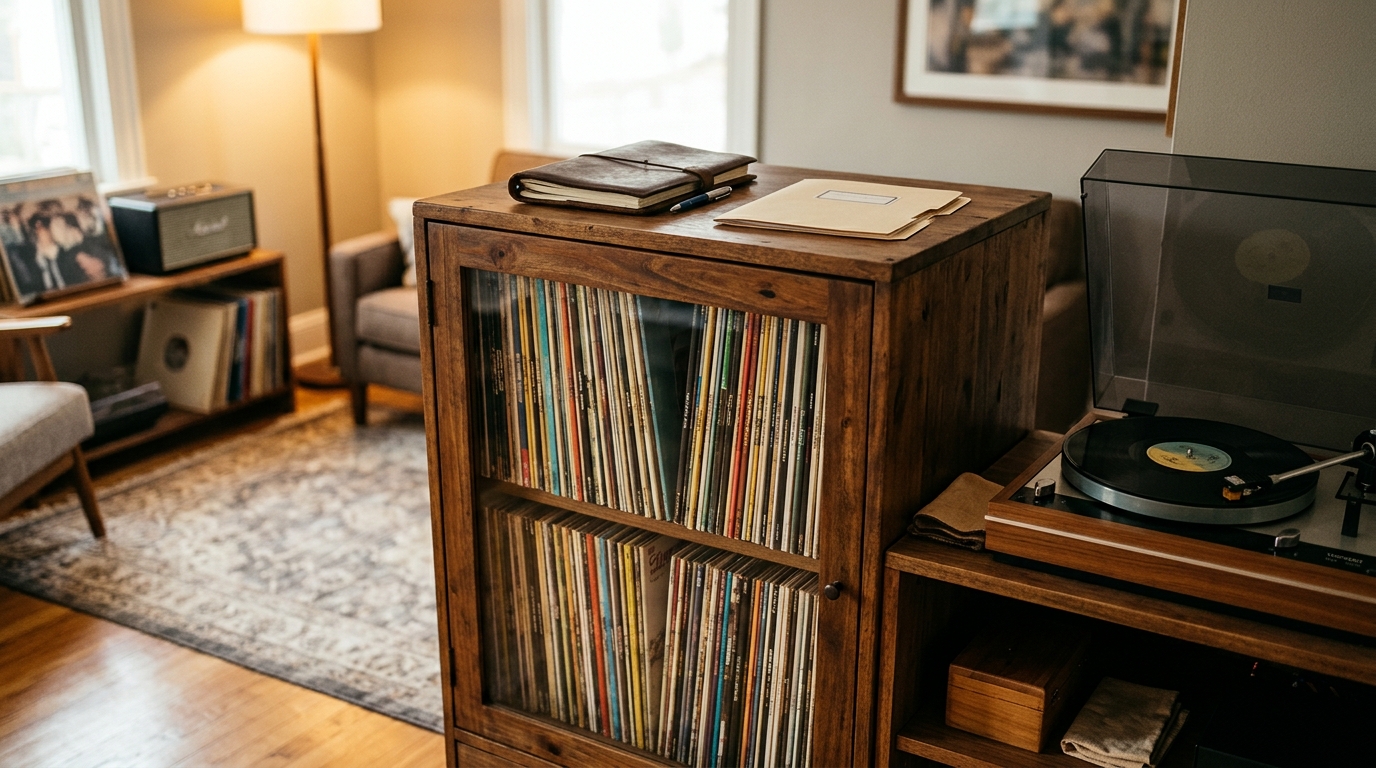
Insurers price the risk you control, and a surprising number of claims are preventable. Direct sunlight and heat warp vinyl and fade sleeves, so keep records out of south facing windows and off top shelf radiators. Store them upright rather than stacked, because leaning sleeves hold a permanent curve. Keep them away from any water source, including the water heater, and consider a dedicated cabinet with a door latch that will deter an opportunistic theft. Maintain consistent humidity, and if you use a dehumidifier, place it where a failure will not create a flood. Keep a copy of your inventory off site, ideally in cloud storage, so a fire that destroys both the records and the local copy does not also destroy the evidence.
Filing a claim: the sequence that works
If something happens, contact your insurer as soon as possible, before you clean up or move anything.
- For theft, file a police report and keep the report number. Insurers will ask for it.
- For damage, photograph everything before you touch it. Make reasonable temporary repairs to prevent further damage and retain those receipts.
- Keep the adjuster informed and do not discard damaged property until the adjuster has examined it or has told you in writing that it is safe to do so.
- For flood damage, federal guidance from FEMA makes an important exception. Materials that create a health hazard may need immediate disposal after documentation, so safety guidance can override the usual advice to retain damaged property. Document first, then discard.
- Wet records need air drying, not heat. National Archives emergency guidance is a useful reference for stabilizing water damaged paper and sleeves, and it applies well to album artwork and liner notes.
A practical checklist
- Pull out your homeowners or renters policy and find the personal property limit plus the collectibles sub-limit.
- Build a spreadsheet inventory with artist, title, pressing, condition, purchase date, and value for every record worth more than a few dollars.
- Use Discogs sales history to set values for ordinary records and a professional USPAP appraisal for the pieces that carry most of the value.
- Photograph sleeves, labels, and matrix numbers for the high value items.
- Get quotes for a floater, a collectibles policy, and scheduled personal property, then take the coverage that matches the real gap.
- Store a backup copy of the inventory and receipts in cloud storage.
The goal is not to insure every record. It is to make sure that if a fire, flood, or break-in takes the collection, you have the evidence and the coverage to be made whole within a few weeks rather than a few years of arguing with an adjuster.
Frequently asked questions
How much does it cost to insure a vinyl record collection?
Collector policies commonly price between 0.5 and 1.5 percent of the insured value per year, so a $20,000 collection typically runs $100 to $300 annually, with a minimum premium often around $175 to $250 and higher rates once expensive titles are added.
Does my homeowners insurance cover vinyl records?
Usually yes, as personal property, but only up to your policy's personal property limit and subject to category sub-limits for collectibles that often fall between $1,000 and $2,500 per item. If a valuable pressing exceeds that, you need a floater or scheduled coverage.
Will a Discogs collection export be enough for a claim?
For ordinary records it is a strong document, since the values come from real recorded sales. For rare or expensive titles, insurers generally want a professional appraisal or a detailed inventory with receipts and photographs.
Does my policy pay for records that are damaged rather than stolen?
It depends on the causes of loss named in your policy. Many standard policies pay for fire and theft but restrict or exclude mysterious disappearance, damage during an appraisal or repair, and certain weather related perils. A floater or collectibles policy widens that list, which is why specialists publish the specific causes they cover.
Do I need an appraisal for a collection worth a few thousand dollars?
Not always. A dated inventory with receipts, photographs, and Discogs based values will often satisfy a standard policy. An appraisal becomes necessary when a single item carries a large share of the value or when a scheduled policy requires an agreed value for each item.
Sources
- National Association of Insurance Commissioners, A Consumer's Guide to Home Insurance: https://content.naic.org/sites/default/files/publication-hoi-pp-consumer-homeowners.pdf
- NAIC, Understanding Your Homeowners or Renters Policy: https://content.naic.org/article/consumer-insight-understanding-your-homeowners-or-renters-policy
- Discogs, Where Can I Access Sales History?: https://support.discogs.com/hc/en-us/articles/360007425553-Where-Can-I-Access-Sales-History
- Discogs, Market Value and Demand for Vinyl Records: https://www.discogs.com/about/features/sales-history/
- Insurance Information Institute, How to File a Homeowners Claim: https://www.iii.org/article/how-to-file-a-homeowners-claim
- Federal Emergency Management Agency, Salvage and Cleanup Guidance: https://www.fema.gov/print/pdf/node/694490
- The Appraisal Foundation, Uniform Standards of Professional Appraisal Practice (USPAP): https://appraisalfoundation.org/pages/uspap/
- American Society of Appraisers, Why Hire an Appraiser: https://www.appraisers.org/why-hire-an-appraiser/faqs-for-consumer
A spreadsheet tracks what you own. What's Spinning identifies what's playing.
On-device vinyl ID logs your listening history automatically. 7-day free trial.
Looking for Shazam for vinyl?
What's Spinning identifies what's playing on your turntable on-device, logs history, and AirPlays now-playing to your TV.
Comparing vinyl ID apps?
Analog requires Discogs and is iPhone-first (iPad coming). What's Spinning works without Discogs on iPhone and iPad with AirPlay.
Try What's Spinning Free
Turn your iPad into a live now-playing display. Track every record you spin.
START FREE TRIALThen $4.99/mo or $39.99/yr · Cancel anytime
Get it on your iPhone
Open on iPhone