Vinyl vs. Streaming: How Do They Compare?
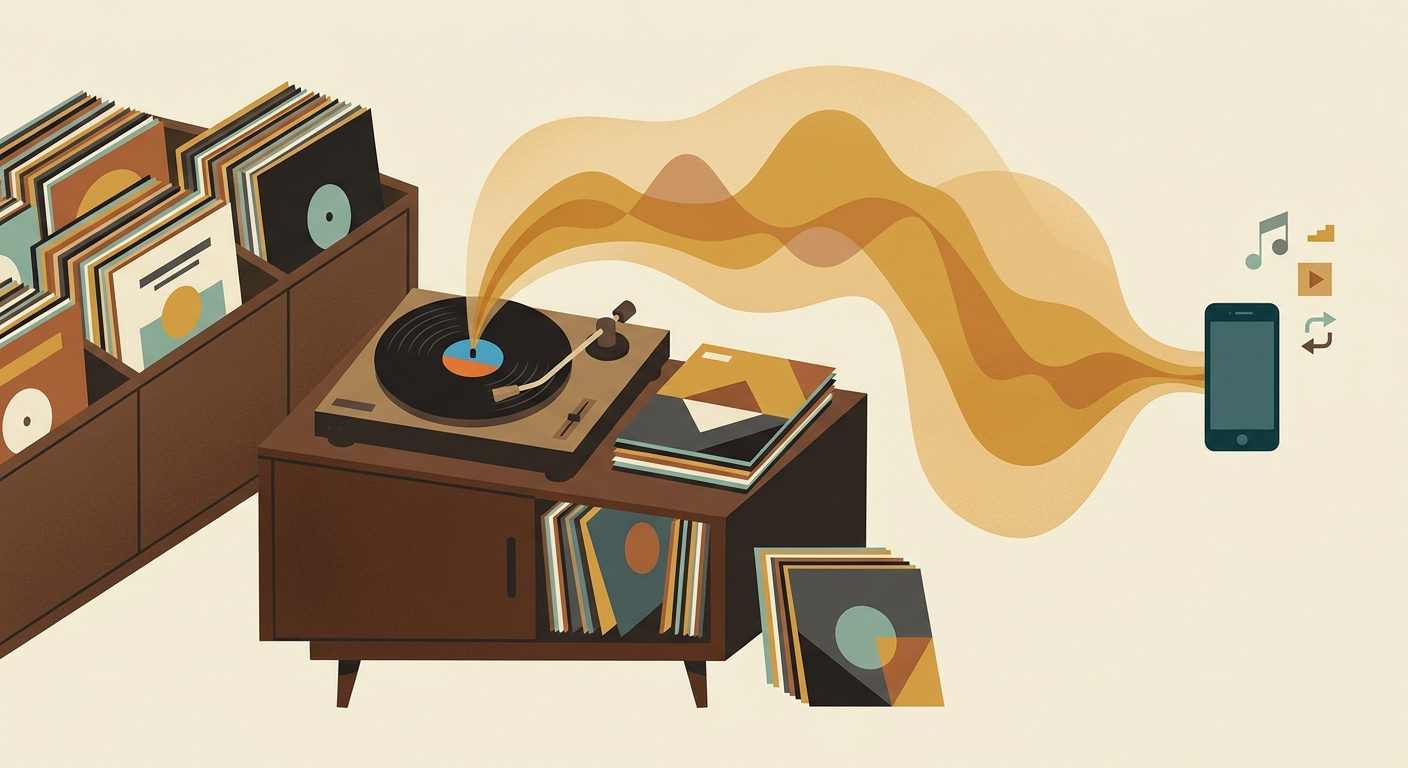
The vinyl vs streaming sound comparison is not really a fight between old and new. It is a comparison between two different listening systems. Vinyl is a physical format with a stylus tracing a groove. Streaming is a delivery method that can range from compressed phone playback to lossless files feeding a serious DAC. Both can sound excellent, both can sound mediocre, and the details matter.
The market shows why the question keeps coming up. RIAA's 2024 year-end report said streaming generated about 84% of U.S. recorded music revenue, while physical formats still grew, with vinyl leading physical revenue at roughly $1.4 billion [1]. In other words, most people listen through streaming, but plenty of collectors still buy records because sound is only part of the experience.
What streaming does well
Streaming wins on consistency and access. If your settings are correct, you can hear the same album in the car, at a desk, or through a good home system without hunting for a clean copy. Spotify lists its "Very high" quality at about 320 kbit/s and its newer lossless tier up to 24-bit/44.1 kHz FLAC [2]. Apple Music says most of its catalog is available in ALAC from 16-bit/44.1 kHz, CD quality, up to 24-bit/192 kHz [3].
Those numbers matter because standard CD audio is already 16-bit/44.1 kHz. A properly mastered CD-quality stream can cover the full practical range of human hearing and has a theoretical dynamic range around 96 dB. That is far quieter than most listening rooms and far beyond what a dusty record, slightly worn stylus, or rumbling turntable can deliver in practice.
What vinyl does well
Vinyl wins on involvement. You choose a side, clean the record, set the tonearm, and listen with fewer distractions. The format asks you to notice sequencing, side breaks, sleeve art, pressing notes, and condition. For collectors, that ceremony is not a gimmick. It changes how you pay attention.
Sound-wise, vinyl can also be genuinely beautiful. A good pressing cut from a strong master can have weight, texture, and spatial depth that feels more alive than a flat or overly loud stream. But that character is not magic hidden above 20 kHz. It is the sum of mastering, cartridge response, phono preamp, speakers, room, and the tiny distortions of mechanical playback.
The mastering issue
The biggest surprise in any vinyl vs streaming sound comparison is that you may not be comparing formats at all. You may be comparing masters. The vinyl edition of an album is sometimes cut from a less compressed master because the groove cannot handle extreme loudness as gracefully as a digital file. A streaming version may use a different remaster, a newer remix, or a loudness-normalized version. That is why one record can beat its stream while another stream easily beats a noisy LP.
Examples are everywhere. Classic jazz and 1970s rock reissues often sell on mastering credits, source notes, and pressing plants because collectors know the chain matters. Meanwhile, many modern pop records are recorded, mixed, and mastered digitally from the start. Pressing that digital master to vinyl can still be fun, but it does not automatically create a more accurate source.
Noise, wear, and setup
Vinyl's weaknesses are physical. Records can have ticks, pops, off-center pressings, inner-groove distortion, static, warps, and groove wear. A misaligned cartridge can make a great record sound edgy. A worn stylus can damage records. Streaming has different problems: bad Bluetooth codecs, low quality settings, poor remasters, weak DACs, and tiny speakers. Neither format is immune to the rest of the chain.
If you want a fair test, use wired playback, disable low quality streaming modes, clean the record, check tracking force, and match volume. Louder often sounds "better" for the first 30 seconds, which makes casual comparisons unreliable.
So which should you choose?
Choose streaming when you want convenience, discovery, playlists, portability, and the cleanest path to a lossless digital master. Choose vinyl when you want a physical collection, album-focused listening, artwork, pressing history, and the particular pleasure of a record playing in the room.
The best answer is not either-or. Use streaming to explore, then buy the records you return to. If you use What's Spinning, your turntable sessions become a listening history, so you can see which albums actually earn shelf space instead of guessing from memory. Streaming tells you what is available. Vinyl tells you what you are willing to live with, care for, and play again.
FAQ
Does vinyl sound better than streaming?
Not automatically. Vinyl can sound wonderfully natural when the pressing, cartridge, setup, and record condition are good. Lossless streaming can be more accurate to the digital master because it avoids surface noise, wear, and setup problems.
Can streaming match CD quality?
Yes. Apple Music offers ALAC from 16-bit/44.1 kHz up to 24-bit/192 kHz, and Spotify lists lossless FLAC up to 24-bit/44.1 kHz where available. Service, plan, device, and settings still matter.
Why do some vinyl records sound warmer?
The warmth usually comes from mastering choices, cartridge behavior, playback distortion, and the physical interaction of stylus and groove. It is a pleasing coloration, not proof that vinyl contains more audible information than a good digital source.
What should collectors compare first?
Compare the same album master if possible, set streaming quality to the highest option, clean the record, align the turntable, and match volume carefully. Small volume differences can trick your ears.
A spreadsheet tracks what you own. What's Spinning identifies what's playing.
On-device vinyl ID logs your listening history automatically. 7-day free trial.
Looking for Shazam for vinyl?
What's Spinning identifies what's playing on your turntable on-device, logs history, and AirPlays now-playing to your TV.
Comparing vinyl ID apps?
Analog requires Discogs and is iPhone-first (iPad coming). What's Spinning works without Discogs on iPhone and iPad with AirPlay.
Try What's Spinning Free
Turn your iPad into a live now-playing display. Track every record you spin.
START FREE TRIALThen $4.99/mo or $39.99/yr · Cancel anytime