How to Start Collecting Jazz Records
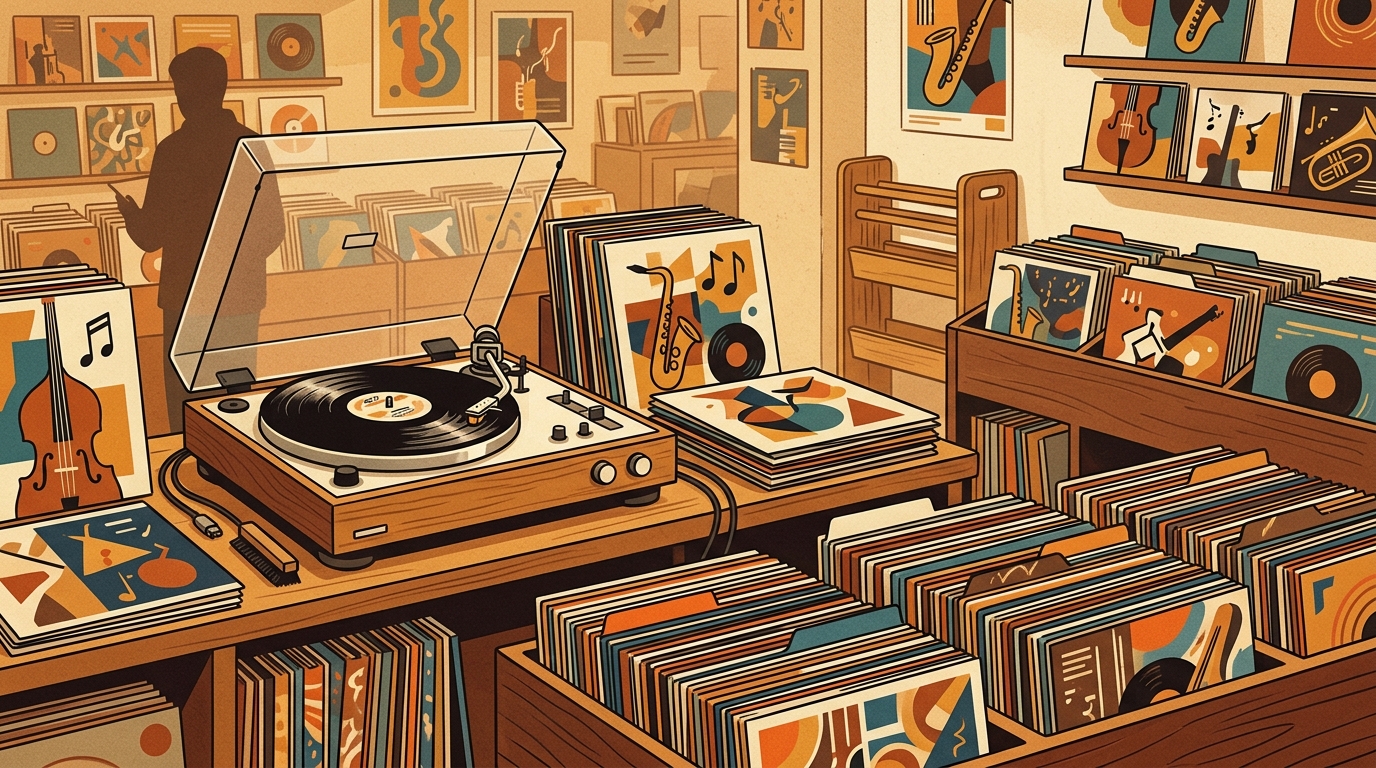
If you are wondering where to start with jazz vinyl, the best answer is not to buy the rarest record or the most expensive pressing. Start with records that teach your ears what the music can do: melody, swing, improvisation, space, tone, and mood. Jazz can look intimidating from the outside because the canon is huge and collectors talk in catalog numbers, deadwax, mono mixes, stereo mixes, and original pressings. The good news is that a smart starter shelf can be small, affordable, and deeply rewarding.
Vinyl is especially kind to jazz because so much of the classic catalog was built around the album format. A 1950s or 1960s jazz LP is often a complete session: a band, a room, a producer, an engineer, and a sequence designed to hold together. Miles Davis recorded Kind of Blue at Columbia's 30th Street Studio in two 1959 sessions with John Coltrane, Cannonball Adderley, Bill Evans, Paul Chambers, and Jimmy Cobb. John Coltrane recorded A Love Supreme in one session on December 9, 1964 at Van Gelder Studio. Those details matter on vinyl because you are hearing performances shaped by specific rooms and recording choices, not just a playlist of tracks.
Start with five lanes, not fifty albums
The simplest way in is to buy one strong record from each major lane. First, get modal jazz, where harmony opens up and the soloists have room to breathe. Kind of Blue is the obvious place to begin, and it became one of the most commercially successful jazz albums ever, with RIAA certification reaching 5x Platinum in the United States. Second, get hard bop, the bluesy, driving Blue Note sound many people picture when they imagine jazz on vinyl. John Coltrane's Blue Train, recorded by Rudy Van Gelder in Hackensack and released by Blue Note in 1958, is a perfect example.
Third, add something rhythmic and approachable. The Dave Brubeck Quartet's Time Out was released by Columbia in 1959 and is famous for unusual meters, including 9/8, 6/4, and 5/4. It is experimental without feeling academic, and "Take Five" still works as a gateway track for people who think they do not like jazz. Fourth, add spiritual or exploratory jazz with A Love Supreme. It is intense, but the suite structure gives it a clear emotional arc. Fifth, add a vocal or bossa nova record. Getz/Gilberto, released by Verve in 1964, brought Stan Getz, João Gilberto, Antônio Carlos Jobim, and Astrud Gilberto together, and "The Girl from Ipanema" won the Grammy for Record of the Year.
Buy good reissues before chasing originals
Original Blue Note, Prestige, Impulse!, and Columbia pressings can be beautiful, but they are not the right first move for most collectors. Clean originals are expensive, condition grading is inconsistent, and groove wear is hard to see in a store. Start with reputable reissue series instead. Blue Note says its Classic Vinyl Reissue Series uses all-analog 180 gram pressings mastered by Kevin Gray directly from the original master tapes and manufactured at Optimal in Germany. The Tone Poet series follows a more deluxe audiophile path, produced by Joe Harley with all-analog 180 gram reissues mastered from original master tapes by Kevin Gray.
For Verve, Impulse!, and related labels, the Acoustic Sounds series has also made many essential titles easier to buy in clean condition. These reissues usually cost more than bargain-bin copies, but less than collectible originals. More importantly, they remove guesswork. When you are new, you want to learn the music, not spend your first month wondering whether a noisy used copy is supposed to sound that way.
What to inspect in the record store
Jazz records are often quieter and more dynamic than rock records, so surface noise stands out. Pull the disc from the sleeve and tilt it under bright light. Hairlines are normal on used vinyl, but deep feelable scratches, cloudy groove wear, and edge warps are trouble. Check the spindle hole, too. A lot of marks around the label can mean the record was played heavily or handled carelessly.
Do not ignore the sleeve, but do not overpay just because the cover looks clean. For a starter jazz shelf, vinyl condition matters more than jacket condition. A Very Good Plus record in a slightly tired jacket will usually make you happier than a beautiful sleeve with a noisy disc inside. If the store has a listening station, use it. Play a quiet passage, not only the loud opening track.
A practical first ten jazz LPs
If you want a clean shopping list, start here: Miles Davis, Kind of Blue; John Coltrane, Blue Train; Dave Brubeck Quartet, Time Out; John Coltrane, A Love Supreme; Cannonball Adderley, Somethin' Else; Charles Mingus, Mingus Ah Um; Art Blakey and the Jazz Messengers, Moanin'; Herbie Hancock, Maiden Voyage; Stan Getz and João Gilberto, Getz/Gilberto; and Bill Evans Trio, Waltz for Debby. That shelf covers modal jazz, hard bop, post-bop, piano trio, bossa nova, and big personality bandleading.
After that, let your listening data guide you. If you keep replaying Blue Train, explore more Blue Note hard bop: Lee Morgan, Hank Mobley, Horace Silver, Grant Green. If Waltz for Debby is the one you return to at night, go deeper into piano trios. If A Love Supreme clicks, try McCoy Tyner, Pharoah Sanders, and later Impulse! titles. Jazz collecting gets easier when you follow musicians, labels, studios, and sidemen instead of treating every album as an isolated recommendation.
Use your turntable habits to build taste
The best starter collection is the one you actually play. What's Spinning can listen to your turntable, automatically log what you played, and show which records keep coming back. After a month, you may learn that you reach for bossa nova on Sunday mornings, hard bop while cooking, and Bill Evans late at night. That is useful collecting data, and it is better than buying from someone else's canon forever.
Start with clean, available pressings, learn the lanes, and upgrade only the records you truly love. Jazz on vinyl is not a test you pass. It is a room you enter slowly, one side at a time.
FAQ
Miles Davis, Kind of Blue, is the safest first choice. It is melodic, beautifully recorded, historically important, and easy to find in good modern reissues.
Usually no. Originals are collectible and often expensive. Beginners are better served by clean modern reissues from trusted series, then upgrading favorite albums later.
It depends on the title and mix. Many 1950s sessions were mixed with mono in mind, while later stereo recordings can sound spacious and natural. For a first copy, prioritize condition and mastering over mono versus stereo.
Ten well-chosen LPs can give you a strong map. Pick records across modal jazz, hard bop, piano trio, vocal or bossa nova, and more exploratory jazz, then follow the artists you replay most.
A spreadsheet tracks what you own. What's Spinning identifies what's playing.
On-device vinyl ID logs your listening history automatically. 7-day free trial.
Looking for Shazam for vinyl?
What's Spinning identifies what's playing on your turntable on-device, logs history, and AirPlays now-playing to your TV.
Comparing vinyl ID apps?
Analog requires Discogs and is iPhone-first (iPad coming). What's Spinning works without Discogs on iPhone and iPad with AirPlay.
Try What's Spinning Free
Turn your iPad into a live now-playing display. Track every record you spin.
START FREE TRIALThen $4.99/mo or $39.99/yr · Cancel anytime