A Better Alternative to Vinyl Shelf Organization
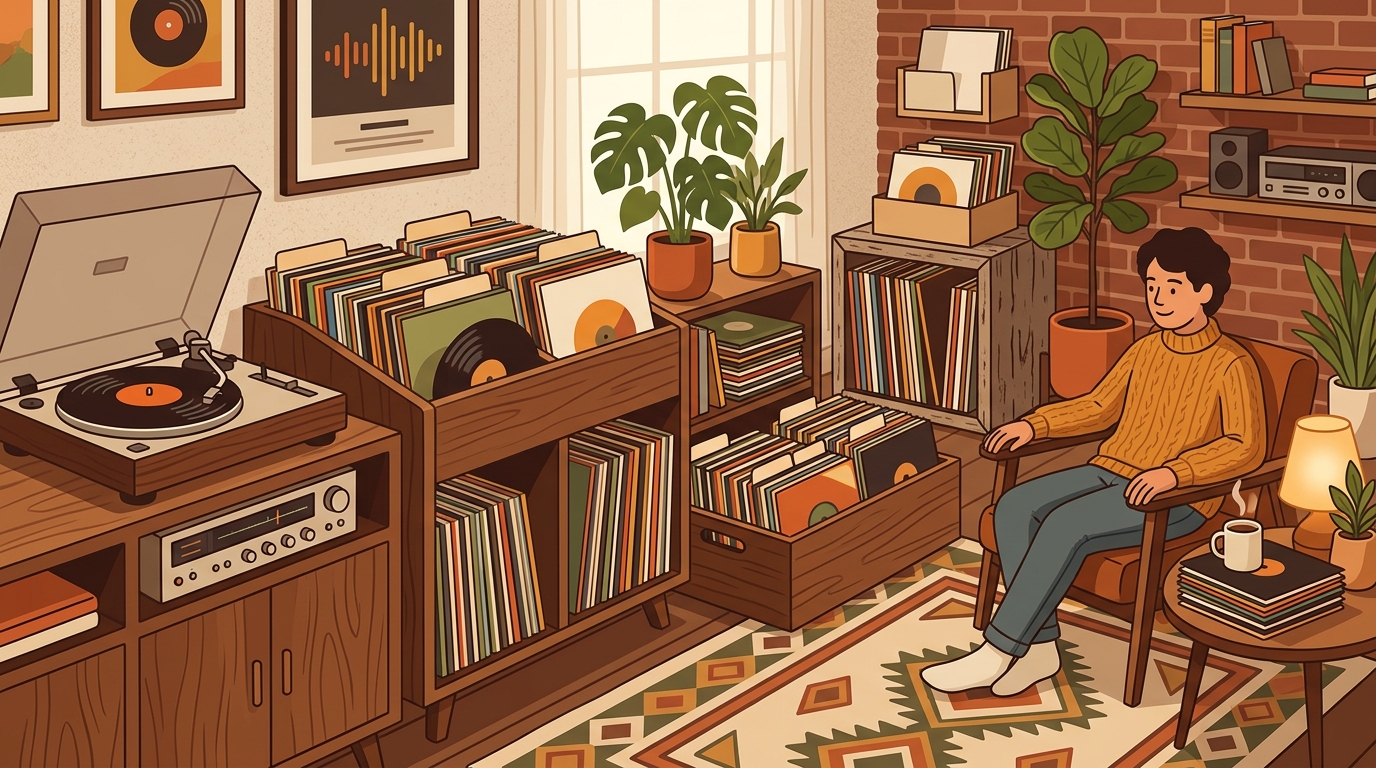
If your record shelves feel more like a warehouse than a living collection, you are not alone. Alphabetical shelf organization is neat and easy to explain, but it is not always the best way to enjoy vinyl. A shelf can tell you where a record lives. It does not tell you what you actually play, what needs cleaning, which pressings you own, or which albums keep disappearing into the “I should listen to this soon” pile.
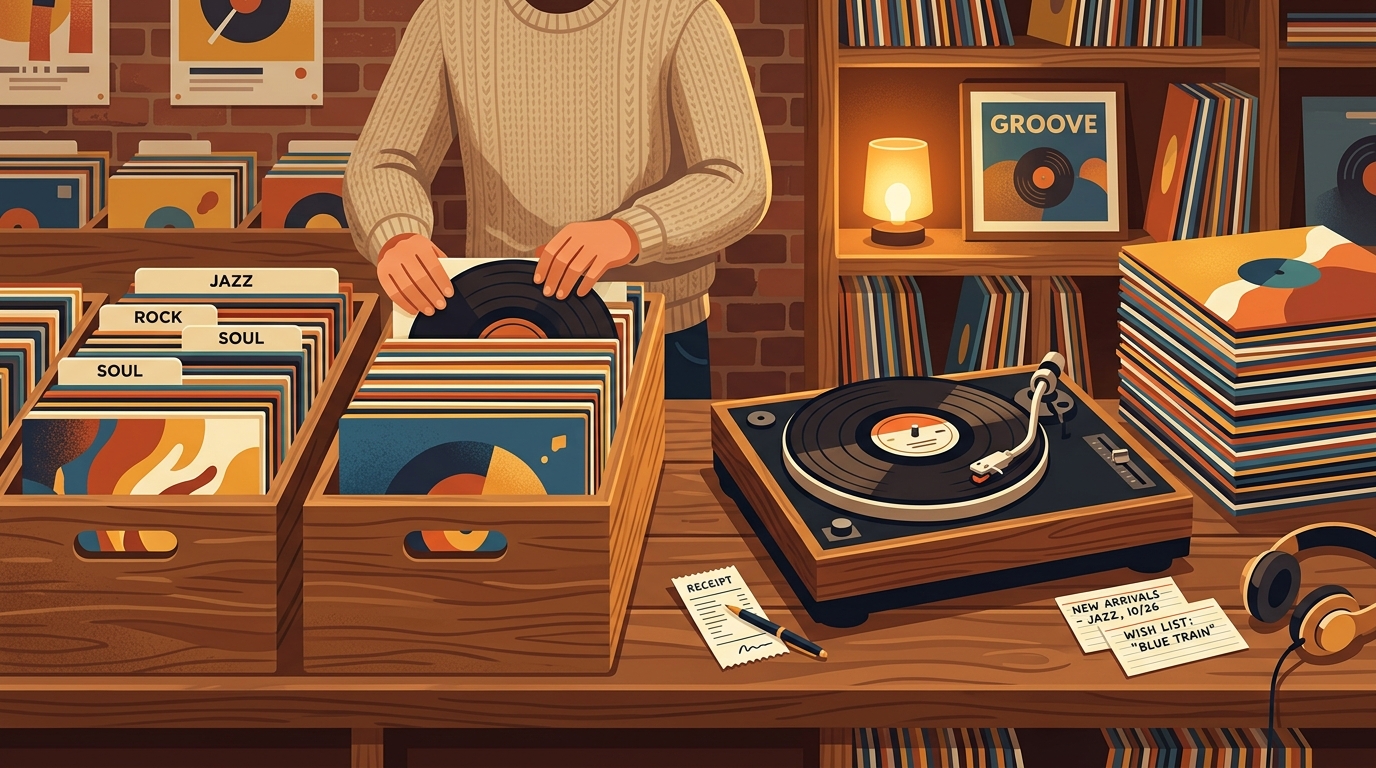
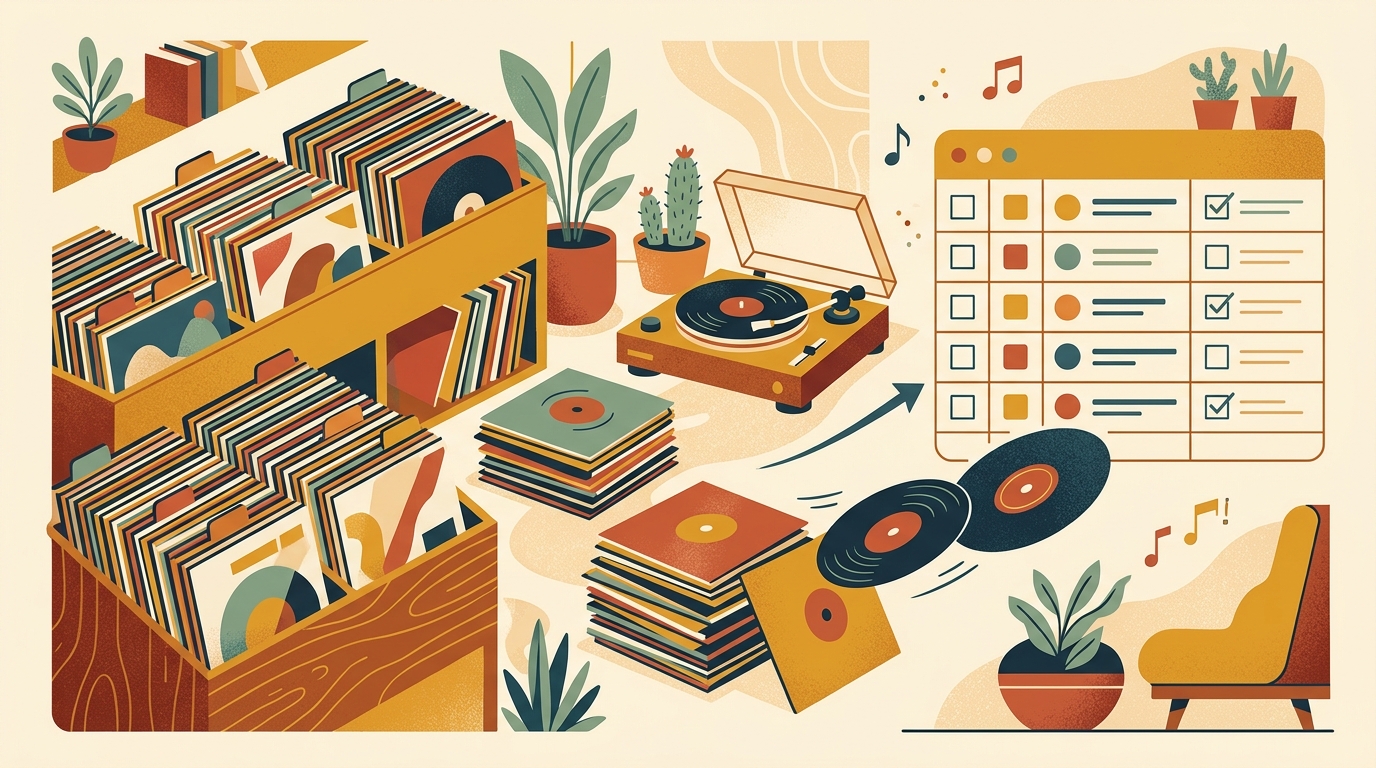
The better alternative to vinyl shelf organization is not one magic crate, app, or divider. It is a hybrid system: keep records stored safely, then organize the way you listen. For many collectors, that means a small “now playing” zone, bin-style browsing for frequently used records, clear dividers for physical retrieval, and a digital listening log that remembers the details your shelves cannot.
Why the standard shelf system breaks down
Shelves work beautifully when a collection is small, stable, and mostly browsed by artist name. The problem is that vinyl collecting rarely stays that tidy. New arrivals pile up before they are cleaned. Reissues sit next to originals. Soundtracks, compilations, 12-inch singles, box sets, inherited records, and “maybe sell” copies all bend the rules. Once your collection crosses a few hundred LPs, alphabetical order can become a filing job instead of a listening aid.
Vinyl’s comeback makes this more common. The RIAA reported that U.S. recorded music revenue reached $17.7 billion in 2024, while vinyl revenue grew 7% to $1.4 billion. Vinyl also outsold CDs in units for the third year in a row, 44 million vinyl albums versus 33 million CDs. That is great news for record stores and collectors, but it also means more people are living with growing collections in normal apartments, living rooms, and shared spaces.
There is another practical issue: a record shelf is a storage method, not a collection management system. Discogs became essential partly because it treats releases as specific objects, not just album titles. Its database includes more than 19 million user-submitted release listings, which matters because the copy on your shelf might be a repress, remaster, club edition, import, or variant with different value and sound. Your shelf cannot hold that metadata unless you build another layer on top of it.
Alternative 1: organize by listening behavior
The most useful question is not “Where does this album belong alphabetically?” It is “When do I reach for this?” A listening-based system groups records by actual use: Sunday morning jazz, dinner records, loud Friday night records, records to clean, records to compare, records for guests, and albums you want to revisit before buying more.
This is where What's Spinning fits naturally. Because it is built around automatic turntable listening, it can help your collection reflect real play history instead of wishful thinking. You may think you are a deep prog collector, then realize your turntable has been living on soul, ambient, and Blue Note reissues for the last month. That is useful information when you decide what deserves prime space near the stereo.
Alternative 2: use bins for the records you browse most
Record stores use bins for a reason. Flip browsing is faster and more tactile than pulling spines from a cube shelf, especially for the 30 to 100 records you actually play often. You do not need to move the whole collection into crates. A better approach is to keep long-term storage on shelves and create one or two front-facing bins for active listening.
Try these zones:
- Now playing: the last 10 to 20 records that have been on the turntable.
- Next up: new purchases, recent gifts, and records you want to hear before filing away.
- Needs attention: cleaning, sleeve replacement, condition check, or Discogs verification.
- Seasonal rotation: summer records, rainy day albums, holiday records, party staples.
Alternative 3: keep storage rules separate from discovery rules
Safe storage still matters. The Library of Congress recommends handling grooved discs by the edge and label areas only, keeping food and drink away, storing audiovisual formats upright, and using sturdy shelving. It also recommends sturdy, immovable dividers every 4 to 6 inches for grooved discs, plus a cool, relatively dry, stable home environment around 35% to 40% relative humidity. In other words, do not abandon good storage just because you dislike rigid alphabetical filing.
Alternative 4: track the collection digitally, then let shelves breathe
Digital tracking is not a replacement for the physical pleasure of vinyl. It is a pressure release valve. Once pressing details, play history, condition notes, wishlist items, and duplicates live somewhere searchable, your shelves do not need to carry every organizational burden. You can make more human choices: display beautiful jackets, keep current favorites close, quarantine records that need cleaning, and stop worrying that the only “correct” system is a perfectly alphabetized wall.
The best alternative to vinyl shelf organization is the one that makes you play more records. If your shelves are tidy but you keep listening to the same five albums because everything else feels buried, the system is failing. Build around the turntable first. Let storage support listening, not the other way around.
FAQ
Is alphabetical organization still the best way to store vinyl?
Alphabetical organization is still useful for a large archive, especially if you often look for a specific artist. The better approach is to use alphabetical storage for the main shelves, then keep a smaller active-listening zone organized by mood, genre, new arrivals, or current rotation.
Are crates better than shelves for records?
Crates are better for browsing, shelves are usually better for dense long-term storage. A hybrid setup works well: shelves for the full collection, plus one or two front-facing crates or bins for records you play often.
How many categories should I use for organizing records?
Start with six to ten broad categories. If you need a spreadsheet to remember the categories, the system is too complicated. Good categories should make listening easier immediately.
What is the safest way to store vinyl records?
Store records upright, avoid heat and direct light, keep them away from damp basements and hot attics, and support them with sturdy shelving or dividers. The Library of Congress also recommends handling grooved discs by the edge and label areas only.
Sources
A spreadsheet tracks what you own. What's Spinning identifies what's playing.
On-device vinyl ID logs your listening history automatically. 7-day free trial.
Looking for Shazam for vinyl?
What's Spinning identifies what's playing on your turntable on-device, logs history, and AirPlays now-playing to your TV.
Comparing vinyl ID apps?
Analog requires Discogs and is iPhone-first (iPad coming). What's Spinning works without Discogs on iPhone and iPad with AirPlay.
Try What's Spinning Free
Turn your iPad into a live now-playing display. Track every record you spin.
START FREE TRIALThen $4.99/mo or $39.99/yr · Cancel anytime