App vs Spreadsheet for Vinyl Tracking: Which is Better?
Most vinyl collectors hit the same fork in the road within their first hundred records: keep typing rows into a spreadsheet, or move the collection into a dedicated tracking app. Both work. The right answer depends on what you want the system to do, what your collection looks like, and how often you actually update it. After tracking more than 19 million releases and watching the average Discogs collection climb past 190 records, the data is clear on one thing: the best system is the one you still use six months from now.
The real difference between an app and a spreadsheet
A spreadsheet is a blank grid. You decide every column, every formula, every workflow. A tracking app is a pre-built workflow. The schema is already designed for records, the pressings, the catalog numbers, the cover art, and the listening history. The difference is whether you want to maintain a custom system or run a finished one.
That single distinction explains almost every downstream tradeoff.
When a spreadsheet wins
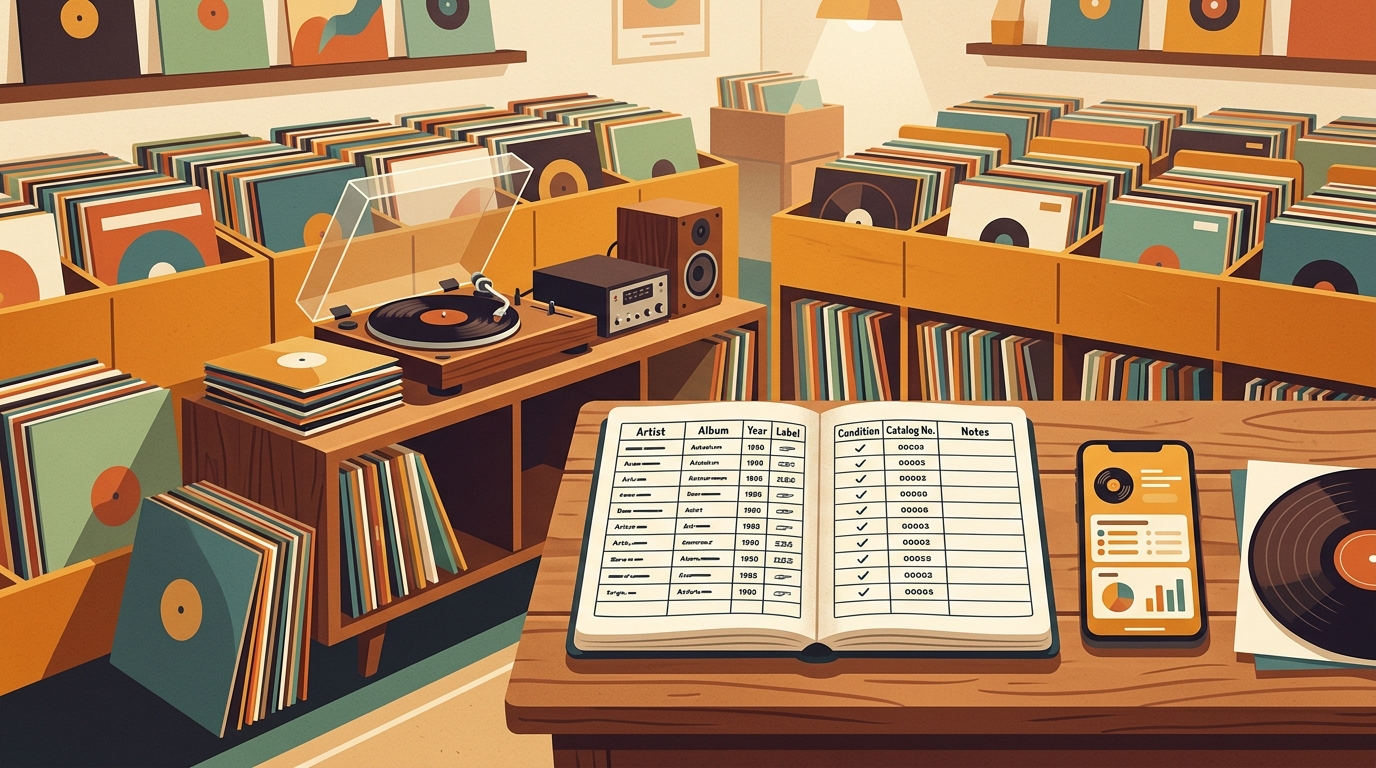
Spreadsheets are excellent when you want total control. You can build the exact columns you care about: artist, album, year, label, catalog number, pressing notes, condition, purchase price, seller, cleaning status, shelf location, and whether the inner sleeve has been replaced. That flexibility matters if your collection has personal quirks. Maybe you grade jackets separately from vinyl. Maybe you track mono versus stereo copies, runout inscriptions, Japanese obi strips, or which records came from your dad. A spreadsheet lets you create that language without waiting for an app to support it.
Size is rarely the first limitation. Excel handles 1,048,576 rows by 16,384 columns, while Google Sheets supports up to 10 million cells. Most personal collections never approach those numbers, even with pressing variants.
Spreadsheets also shine as insurance documents. The file is yours. You can export it, duplicate it, sort it, and stash a copy in cloud storage. For high-value collections, a tidy sheet with purchase prices and condition notes is the cleanest artifact a claims adjuster will ever see.
The downside is maintenance. Every row requires manual discipline. You buy a used copy, remember to enter it, type the condition, add the price, maybe paste a Discogs link, and later update the last-played field if you care. That works beautifully for collectors who enjoy data entry. For everyone else, the spreadsheet slowly becomes a museum of good intentions.
When an app wins
A vinyl tracking app wins when the record shelf is tied to behavior, not only inventory. A good app should answer questions a spreadsheet can answer only if you constantly feed it: What have I played this month? Which albums do I own but never spin? What was playing last night? What should I pull next?
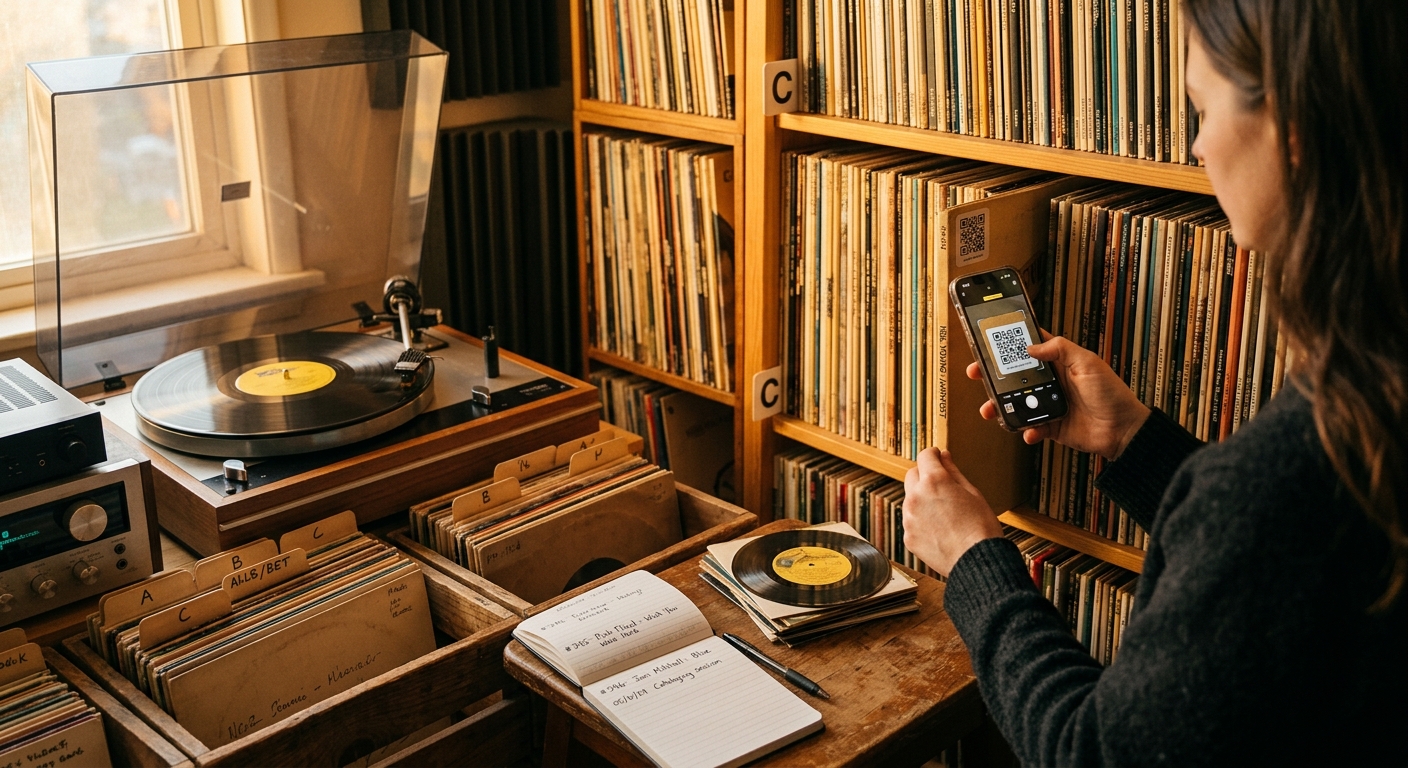
Apps also reduce friction while you are away from the desk. If you are flipping through bins and see a familiar title, a phone-friendly collection check can prevent accidental duplicates. If friends ask what is playing, a now-playing view is more natural than opening a spreadsheet. If you want stats by artist, genre, or recent plays, an app can surface patterns without you building formulas.
The Discogs app alone has shipped barcode scanning, real-time collection value, a wantlist, and a randomizer that picks an album when you shake the phone. Companion apps like VinylBox and Discographic extend that with marketplace listings, price suggestions, and Shazam integration for identifying the album currently playing through your speakers.
What the numbers say about scale
According to Discogs' year-end 2025 report, the global Discogs community has catalogued more than 920 million items across all formats, with collectors adding roughly 2.2 million items per week. The average collection holds 191 records with an estimated average value of $571.77.
The RIAA reported that US vinyl revenue crossed $1.04 billion in 2025 on 46.8 million units sold, outselling CDs three to one for the nineteenth consecutive year. France went further: SNEP confirmed vinyl revenue reached €113M in 2025, surpassing CD sales for the first time since the 1980s.
Those numbers matter because they describe the average collection size and growth rate most readers are sitting on. If your shelf is under 100 records, a spreadsheet is still easy. Once you cross 200 and start tracking variants, the friction shifts toward automation.
The hybrid setup most serious collectors end up with
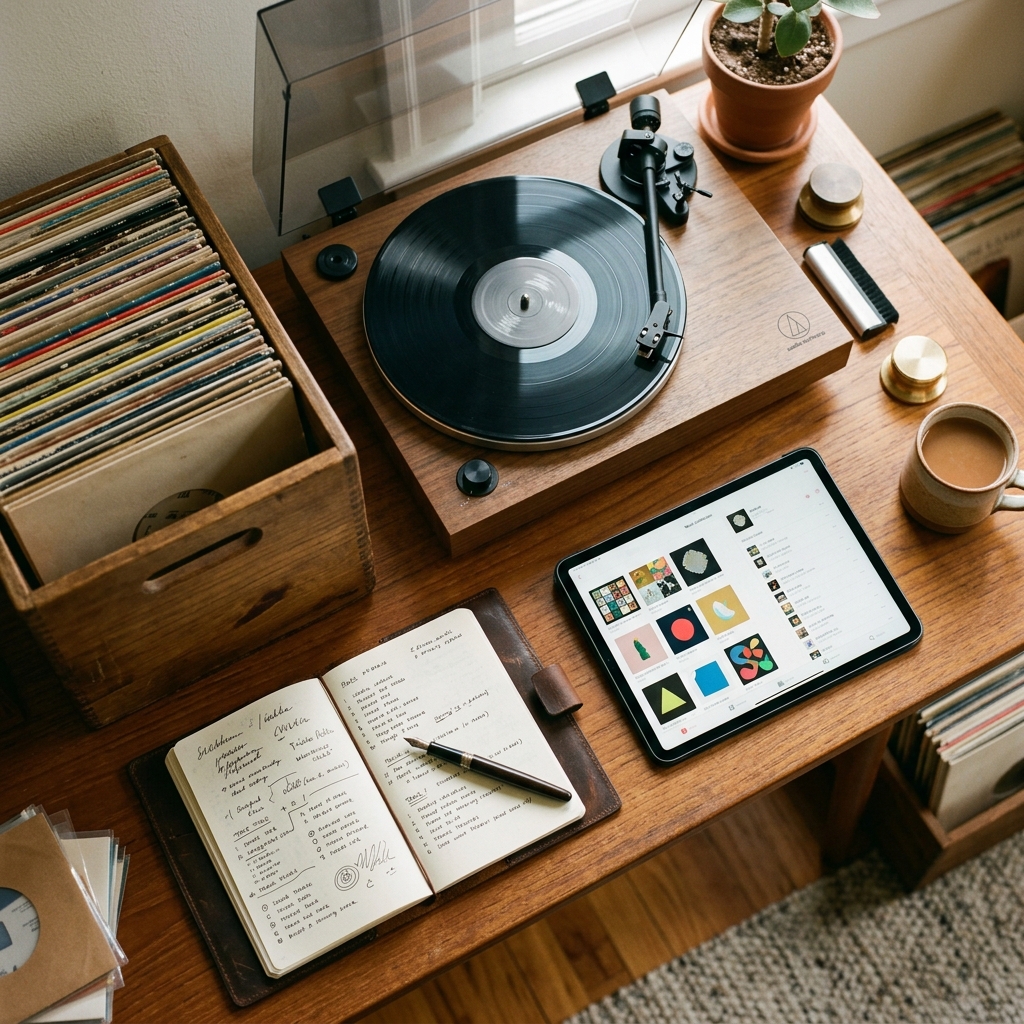
The smartest long-term arrangement is hybrid: use an app as the daily driver and export periodically to a spreadsheet as a backup. That gives you rich metadata, faster logging, and listening history, while preserving a portable archive you control. Discogs' own collection export gives you a CSV with artist, title, label, catalog number, format, year, rating, and date added, plus any custom fields you have built. Run that export quarterly, store it in cloud storage, and you have an insurance-grade copy of the same collection your app tracks day to day.
The choice between an app and a spreadsheet is really a question about where you want to spend your attention: on building and maintaining the system, or on actually using the records. The collectors who keep their shelves organized five years in are almost always the ones who picked the lower-friction option early.
FAQ
Can a spreadsheet handle a serious vinyl collection?
Yes. If you own 50 to 100 records and mostly want artist, title, condition, and price notes, a spreadsheet can work very well. The trouble starts when you want play history, duplicate warnings, photos, pressing details, or easy updates from your phone while browsing bins.
What is the main advantage of a tracking app over a spreadsheet?
Lower friction. Apps are faster on mobile, better with album art and release metadata, and more useful when you are shopping or listening. That usually means the collection stays current.
Do I need to track exact pressings?
Track exact pressings if you care about value, sound quality, variants, or resale. If you only want to avoid duplicate album purchases, album title plus artist may be enough.
Can I move my spreadsheet collection into a tracking app later?
Usually, yes, if your spreadsheet is clean. Keep one row per record, use consistent artist and title formatting, and include catalog numbers where possible. Export as CSV when you are ready to migrate.
A spreadsheet tracks what you own. What's Spinning identifies what's playing.
On-device vinyl ID logs your listening history automatically. 7-day free trial.
Looking for Shazam for vinyl?
What's Spinning identifies what's playing on your turntable on-device, logs history, and AirPlays now-playing to your TV.
Comparing vinyl ID apps?
Analog requires Discogs and is iPhone-first (iPad coming). What's Spinning works without Discogs on iPhone and iPad with AirPlay.
Try What's Spinning Free
Turn your iPad into a live now-playing display. Track every record you spin.
START FREE TRIALThen $4.99/mo or $39.99/yr · Cancel anytime