How to Build a Vinyl Collection on a Strict Student Budget
Building a vinyl collection on a student budget is completely possible, but it works best when you treat collecting like a long-term listening project rather than a race to fill shelves. Vinyl is booming again: the RIAA reported that U.S. vinyl wholesale revenue reached about $1 billion in 2025, up 9.3 percent, marking a nineteenth consecutive year of growth. That popularity means plenty of new releases, but it also means new LPs can consume a small entertainment budget very quickly.
With a fixed monthly allowance, patient used-record shopping, and a little knowledge about condition, you can build a personal collection without turning grocery money into gatefold sleeves.
1. Give vinyl its own monthly limit
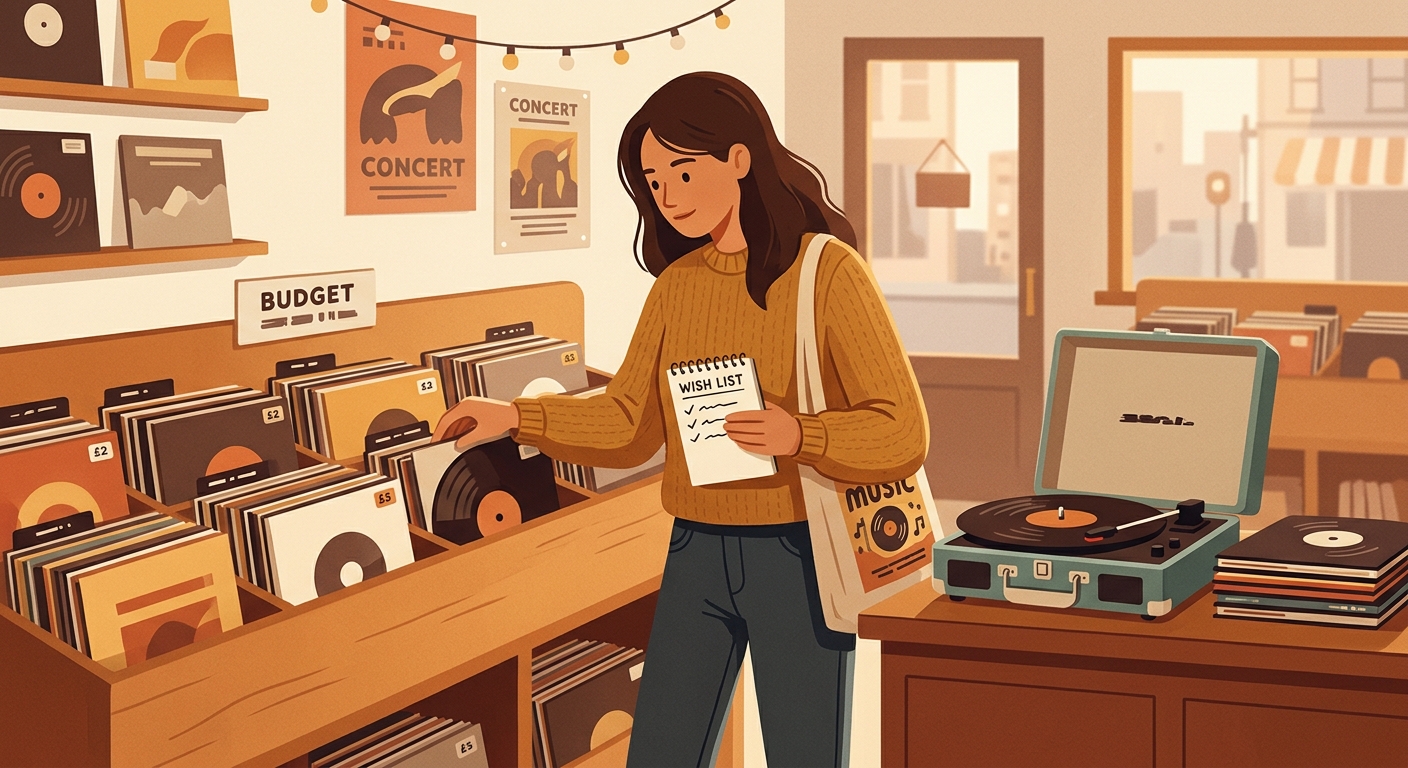
Start with a number you can spend after rent, food, transportation, books, savings, and other essentials. Federal Student Aid recommends using a budget to decide where money goes and to adjust spending when circumstances change. For a student collector, that might mean a vinyl allowance of $20, $30, or $40 per month.
Keep that money separate, even if it is only a category in your banking app. Unspent cash rolls into the next month. Saving a $25 allowance for three months gives you $75 for a record fair, a carefully chosen box set, or several used albums. The rollover rule removes pressure to buy merely because you entered a shop.
2. Build a short wantlist, not an endless one
Write down 10 to 20 records you genuinely expect to play. Divide them into three groups: essentials, interesting finds, and expensive long-term targets. Before buying, ask whether the album fills a real gap or simply looked exciting for thirty seconds.
A useful waiting rule is seven days for new records and 24 hours for inexpensive used records. Beginners often overestimate scarcity, so check recent sales for the exact pressing. Cataloging purchases in What's Spinning also helps you avoid duplicates and see which records earn repeat plays.
3. Learn the condition grades that save money
Used vinyl is where strict budgets become workable. Discogs uses the Goldmine grading system, ranging from Mint down through Near Mint, Very Good Plus, Very Good, Good Plus, and lower grades. Discogs notes that a VG+ record generally shows some signs of careful previous use and is commonly valued around half of a Near Mint copy.
That makes VG+ a practical target for many student collectors. You may get light sleeve wear or a few superficial marks while keeping enjoyable playback. VG can also be excellent value for loud rock, punk, dance music, and other recordings where a little background noise is less distracting. For quiet jazz, folk, or classical music, condition matters more.
Inspect the record under strong light and ask to hear it when possible. Look for deep scratches, warps, mold, water damage, and groove wear. A worn jacket is usually a better compromise than damaged vinyl.
4. Shop where patience is rewarded
Make the bargain bin your first stop. Many stores place common, cosmetically imperfect, or recently acquired records there before fully pricing them. Learn the shop's restocking schedule and visit regularly instead of expecting one heroic haul.
Also check campus sales, library fundraisers, flea markets, estate sales, and record fairs. Online marketplaces are useful for comparing pressings, but shipping can erase the savings on one inexpensive LP. Combining several records from one seller can reduce shipping per album. Always compare the delivered price.
5. Buy music, not collectible adjectives
Colored vinyl, numbered editions, retailer exclusives, heavyweight pressings, and deluxe packaging can be fun, but they are not automatic upgrades. A standard black pressing at $22 may deliver the same album experience as a $40 variant. Likewise, an original pressing is not automatically the best-sounding or most affordable version.
Compare the specific release, mastering, pressing plant, and buyer reports when those details matter. Otherwise, choose the cleanest dependable copy within your limit. Your first copy of a favorite album should be one you can afford to play.
6. Use a simple cost-per-play test
Before checkout, estimate how often you will play the record during the next year. A $30 album played 15 times costs $2 per play in its first year. A $7 curiosity played once costs $7 per play. This is not a scientific valuation, but it exposes false bargains.
You can also use a one-in, one-out rule once your shelf or budget gets tight. Sell or trade a record you no longer enjoy, then direct that money toward something you will play. Trading turns collecting mistakes into tuition rather than permanent clutter.
7. Protect the records you already own
Replacement costs are the enemy of a small budget. Handle records by the edges and label area, use a basic carbon-fiber brush, and return each disc to its sleeve after playing. Store LPs upright rather than in leaning or horizontal piles.
The Library of Congress recommends a cool, stable, relatively dry home environment, roughly 35 to 40 percent relative humidity, while avoiding attics, basements, leaks, and environmental extremes. You do not need museum-grade climate control, but you should keep records away from radiators, direct sun, damp walls, and overpacked shelving.
A realistic $40 monthly plan
- $25 for records: one new release, two or three used records, or money saved toward a future purchase.
- $5 for care: sleeves, a brush, or cleaning supplies, accumulated until needed.
- $10 rollover: reserve money for fairs, shipping, or a higher-priority wantlist title.
After six months, this plan provides $150 for regular purchases, up to $30 for care, and a $60 reserve. The exact numbers can change, but the structure matters: routine buying, maintenance, and special purchases are funded separately.
Frequently Asked Questions
How many records should a beginner buy each month?
There is no ideal count. Set a dollar limit instead. On a strict student budget, one carefully chosen record or two inexpensive used records per month is a sustainable pace. Skipping a month is also part of good collecting.
Is VG vinyl worth buying?
Yes, if the seller grades accurately and the playback noise suits the music. VG copies can be strong values for louder genres. Ask about skips, repeating clicks, groove wear, and warps, since those problems matter more than light surface noise.
Should I buy a cheap record player so I can spend more on records?
Do not sacrifice safe playback for a larger collection. A stable turntable with an adjustable or properly specified tracking system is a better foundation than a bargain player that handles records poorly. Save for competent equipment first, then grow the collection gradually.
Are new records better than used records for beginners?
Neither is automatically better. New records offer predictable condition and easy returns, while used records usually stretch a budget further. A balanced collection can include new copies of current favorites and clean used copies of widely available classics.
Sources
A spreadsheet tracks what you own. What's Spinning identifies what's playing.
On-device vinyl ID logs your listening history automatically. 7-day free trial.
Looking for Shazam for vinyl?
What's Spinning identifies what's playing on your turntable on-device, logs history, and AirPlays now-playing to your TV.
Comparing vinyl ID apps?
Analog requires Discogs and is iPhone-first (iPad coming). What's Spinning works without Discogs on iPhone and iPad with AirPlay.
Try What's Spinning Free
Turn your iPad into a live now-playing display. Track every record you spin.
START FREE TRIALThen $4.99/mo or $39.99/yr · Cancel anytime
Get it on your iPhone
Open on iPhone