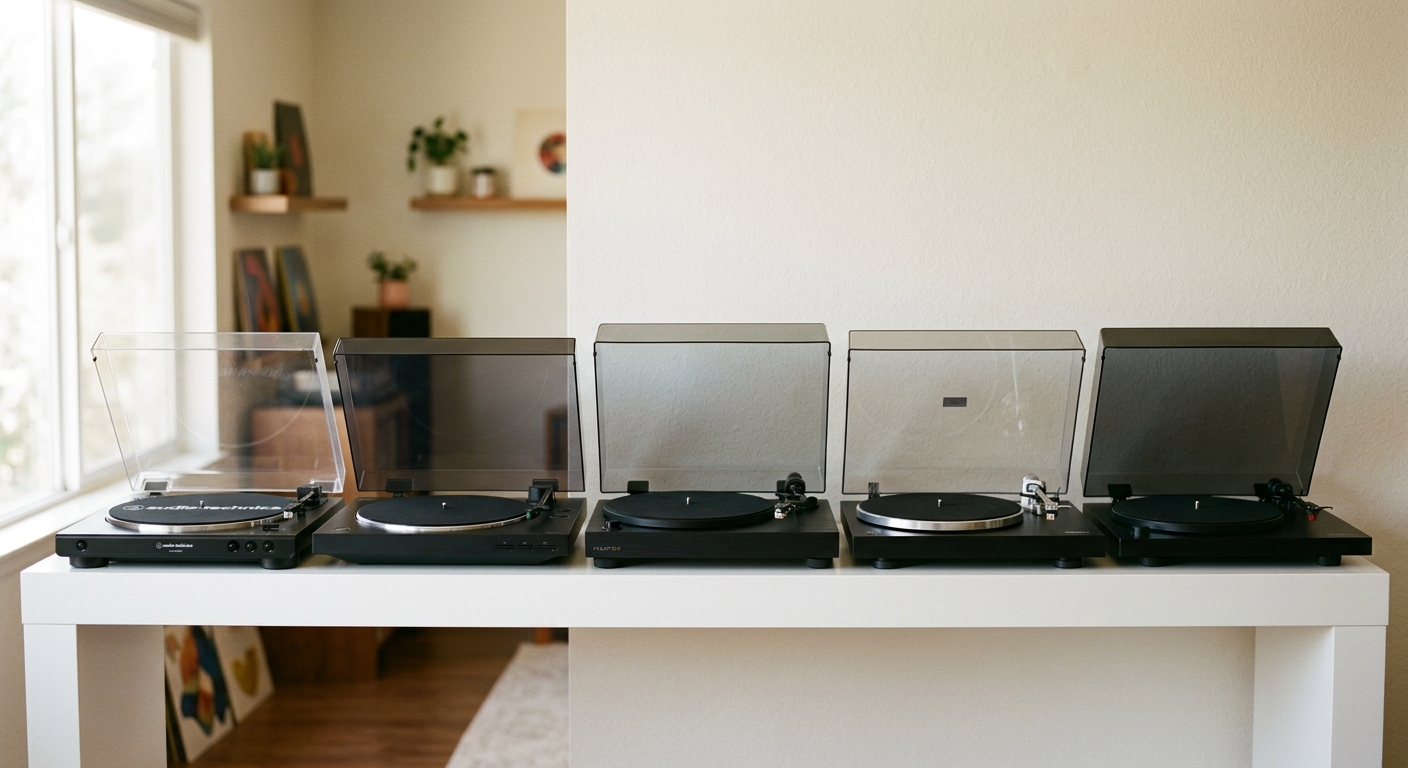
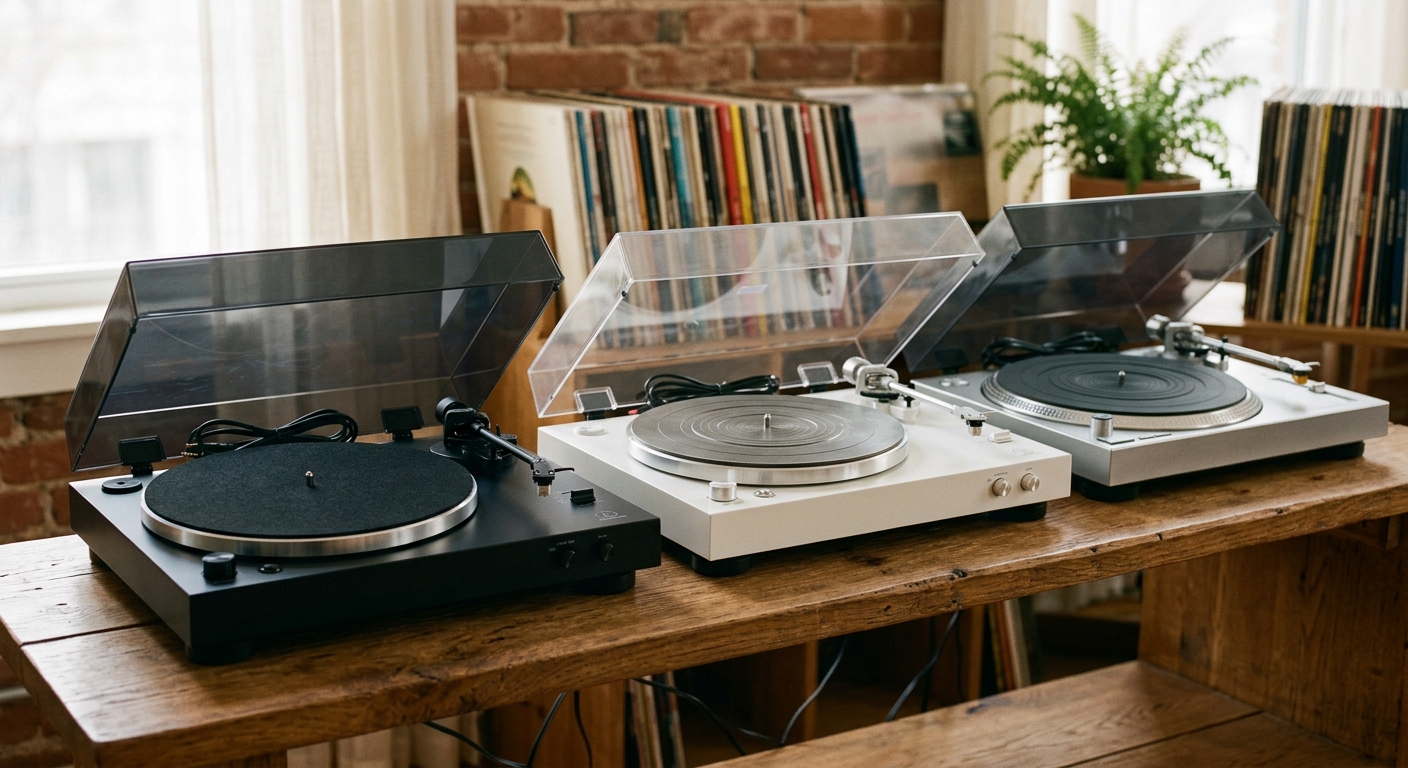
Best Turntables Under $300 for Audiophiles: A Practical Comparison
If you are shopping for the best turntables under 300, the smart move is not chasing fake high-end claims. It is buying a record-safe deck with a decent cartridge, stable speed, and a path to better sound later. Vinyl deserves that care. The RIAA reported that U.S. vinyl LP and EP revenue was about $1.4 billion in 2024, so this is not a niche curiosity anymore.
For What's Spinning users, this range is a sweet spot: good enough for daily listening, affordable enough to leave money for records, and simple enough that you will actually use it. Here are the strongest budget audiophile picks and the trade-offs that matter.
Quick comparison
| Turntable | Best for | Why it stands out |
|---|---|---|
| Audio-Technica AT-LP70X | Best automatic starter | Fully automatic, built-in phono preamp, upgradeable AT-VM95 stylus family |
| U-Turn Orbit Basic | Best purist manual deck | Simple belt drive, MDF platter, optional Pluto 2 preamp, U.S. assembly |
| Sony PS-LX310BT | Best convenience pick | Fully automatic, Bluetooth, built-in phono stage |
| Audio-Technica AT-LP3XBT | Best feature set near $300 | Automatic playback, Bluetooth, adjustable counterweight, removable headshell |
| Fluance RT81 family | Best classic hi-fi feel | Wood-look plinth, built-in preamp, Audio-Technica cartridge options |
1. Audio-Technica AT-LP70X
The AT-LP70X is the easiest recommendation for most first-time buyers because it removes setup anxiety. It is fully automatic, so the arm cues itself and returns at the end of a side. That protects records from beginner mistakes, especially hard stylus drops and letting the needle ride the runout groove for an hour.
The audiophile detail is the cartridge system. LP Gear lists the AT-LP70X with an integrated Audio-Technica AT-VM95C cartridge and upgradeable stylus options. That means you can start simple, then later move up within the VM95 stylus family without replacing the whole deck. The built-in phono preamp also lets it connect directly to powered speakers or any line input.
2. U-Turn Orbit Basic
The Orbit Basic is the best choice if you want fewer features and better fundamentals. U-Turn says the Orbit Basic uses an MDF platter, a low-resonance plinth, and an inverted main bearing, and the company hand-assembles its turntables in Woburn, Massachusetts. You can add a built-in phono preamp with Pluto 2 circuitry, but the base idea is refreshingly simple.
This is a manual turntable, so you cue the arm and lift it yourself. If you want Bluetooth or automatic return, skip it. If you want a quiet, clean foundation for bookshelf speakers and future upgrades, the Orbit Basic is one of the most serious under-$300 options.
3. Sony PS-LX310BT
Audiophiles sometimes dismiss Bluetooth turntables, but convenience matters. A turntable that gets played five nights a week is more valuable than a purist deck that intimidates the whole household. What Hi-Fi lists the Sony PS-LX310BT as a fully automatic belt-drive model with 33 1/3 and 45 rpm speeds, a moving-magnet cartridge, a built-in phono stage, and Bluetooth with aptX Adaptive.
The Sony is best for apartments, shared living rooms, and listeners coming from streaming. You can use it wired today and Bluetooth when convenience wins. The trade-off is upgrade flexibility. It is not built for cartridge swapping, but as a friendly record player that still avoids suitcase-player nonsense, it makes sense.
4. Audio-Technica AT-LP3XBT
The AT-LP3XBT is the feature-rich option near the $300 ceiling. It keeps automatic operation and Bluetooth, but adds more traditional hi-fi touches than the cheapest automatic models, including an adjustable counterweight and removable headshell. Those features matter because they leave room for cartridge changes and better setup later.
If you find it on sale, it may be the best all-rounder here. You get ease of use, analog outputs, wireless flexibility, and a more upgrade-friendly arm system. At full price, compare it against the Orbit Basic if you do not need Bluetooth, because simplicity can still win on sound per dollar.
5. Fluance RT81 family
The Fluance RT81 family is for listeners who want the classic component look: wood finish, dust cover, RCA outputs, and a traditional manual feel. Fluance highlights outside praise for the RT81, including a Forbes quote calling it an excellent turntable for discovering or rediscovering vinyl without spending a fortune.
The RT81 line is appealing when pricing stays under $300, especially if you want a built-in preamp and an Audio-Technica cartridge in a deck that feels more substantial than plastic starter models. Watch model names carefully, though. Fluance variants shift, and some upgraded versions creep above this article's price limit.
What matters most under $300?
Focus on five things. First, avoid ceramic-cartridge toy players. Second, choose a proper moving-magnet cartridge or an upgradeable stylus path. Third, decide whether you need a built-in phono preamp. Fourth, be honest about automation, because automatic return can save a stylus. Fifth, reserve a little budget for record care. A carbon-fiber brush, clean inner sleeves, and basic cleaning fluid often reduce noise more than tiny spec differences.
Bottom line
Buy the Audio-Technica AT-LP70X if you want the safest first turntable, the U-Turn Orbit Basic if you want a purist foundation, and the AT-LP3XBT if a sale brings it comfortably below $300. The Sony is the easiest household pick, while the Fluance RT81 family gives you the most traditional hi-fi vibe. The best budget turntable is the one that makes you play more records without mistreating them.
Sources
- LP Gear: Audio-Technica AT-LP70X specifications
- U-Turn Audio: Orbit Basic specifications
- What Hi-Fi: budget turntable comparisons
- RIAA recorded music revenue statistics
FAQ
Are turntables under $300 good enough for audiophiles?
Yes, if you define audiophile as careful listening rather than luxury spending. The best models in this range use decent cartridges, stable belt-drive systems, and phono stages that are good enough to start.
Should I choose Bluetooth or wired output?
Choose wired output for best sound. Bluetooth is useful for casual listening and shared spaces, but it compresses the signal.
Do I need a built-in phono preamp?
You need a phono preamp somewhere. Built-in preamps are convenient because they connect to powered speakers or line inputs, while separate preamps can be upgraded later.
What is the safest first upgrade?
Upgrade the stylus first if your turntable supports it, then speakers. Also buy record-cleaning supplies before chasing expensive accessories.
A spreadsheet tracks what you own. What's Spinning identifies what's playing.
On-device vinyl ID logs your listening history automatically. 7-day free trial.
Looking for Shazam for vinyl?
What's Spinning identifies what's playing on your turntable on-device, logs history, and AirPlays now-playing to your TV.
Comparing vinyl ID apps?
Analog requires Discogs and is iPhone-first (iPad coming). What's Spinning works without Discogs on iPhone and iPad with AirPlay.
Try What's Spinning Free
Turn your iPad into a live now-playing display. Track every record you spin.
START FREE TRIALThen $4.99/mo or $39.99/yr · Cancel anytime