The Best Reggae Albums on Vinyl: 15 Essential LPs for Collectors
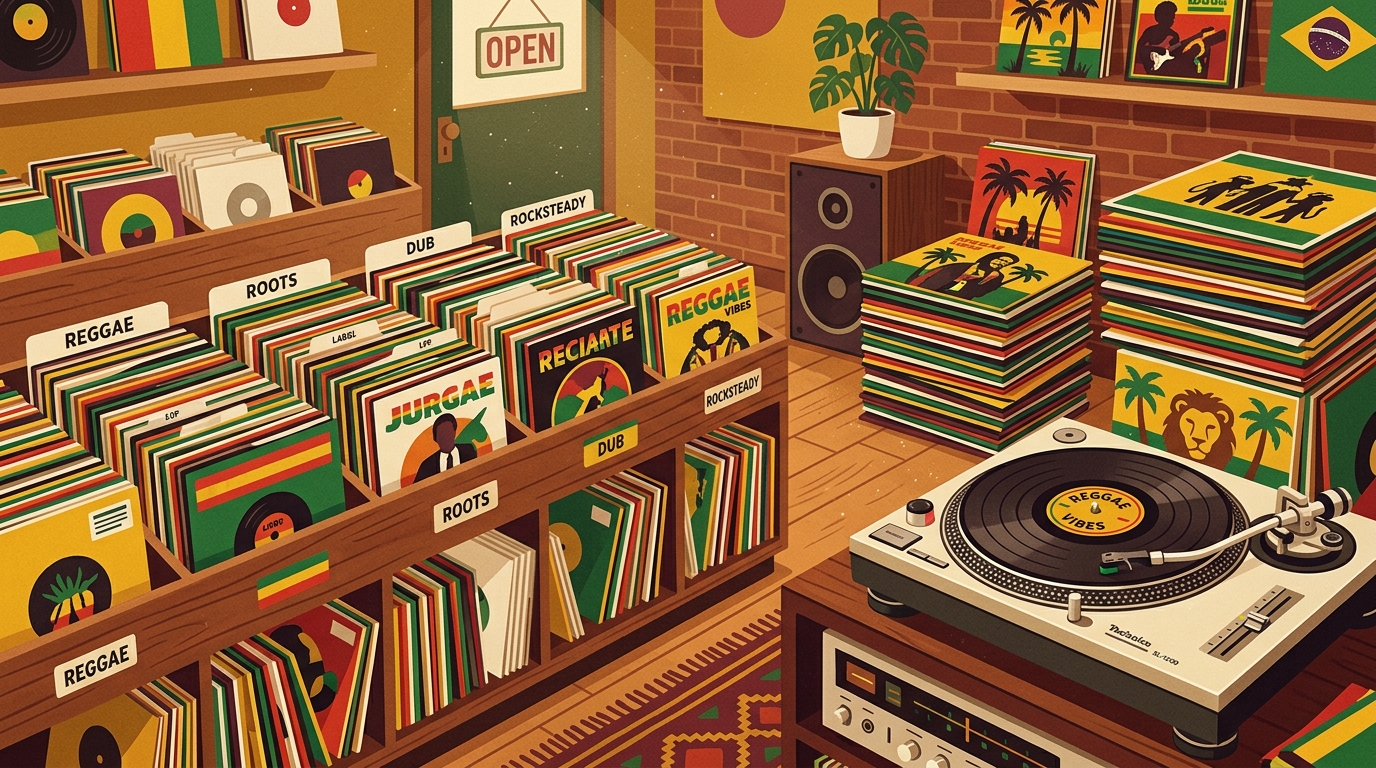
Reggae is one of the great vinyl genres because so much of its history was built through records: Jamaican singles, dub versions, sound-system culture, imported LPs, UK pressings, and later reissues that brought scarce albums back into circulation. The best reggae albums on vinyl are not just famous titles. They are records where bass, room sound, vocal blend, sleeve design, and side sequencing change how the music lands.
There is a practical reason collectors keep coming back to reggae LPs, too. Vinyl sales have remained unusually strong in the streaming era. The RIAA's 2023 year-end report counted 43.2 million LP and EP shipments in the United States, worth $1.35 billion, and the BPI reported that UK vinyl sales rose for a 17th consecutive year in 2024. Reggae collectors sit inside that wider comeback, but with their own questions: original Jamaican pressing or UK issue, new reissue or vintage copy, roots vocal LP or dub version, party record or deep listening record?
If you track your listening with What's Spinning, reggae is especially revealing because the albums you actually play may not be the rarest ones. A mint original might impress visitors, but the copy that gets pulled on a Friday night tells the truth. This list balances historical weight, vinyl character, availability, and the kind of album identity that rewards playing both sides.
Research sources included MusicBrainz and Cover Art Archive release data for dates and artwork, the Library of Congress National Recording Registry, the RIAA revenue report, BPI vinyl market reporting, and label or artist histories where available. Album cover images below are sourced from Cover Art Archive release-group artwork.
The best reggae albums on vinyl
-
Catch a Fire, The Wailers, 1973
Island Records did not simply release Catch a Fire, it repackaged Jamaican music for the rock album marketplace. Chris Blackwell had the tapes overdubbed and mixed for international ears, and the first UK pressing arrived in the famous Zippo lighter sleeve, a hinged package that has become one of reggae collecting's great display pieces. The music inside is tougher than the packaging suggests. Peter Tosh's guitar, Aston and Carlton Barrett's rhythm section, and Bob Marley's writing make the LP feel deliberate from the opening pulse of Concrete Jungle through the last fade. Collectors should know that early Zippo sleeves can be expensive and fragile, while later standard jackets are far easier to live with. For listening rather than trophy hunting, a clean reissue is often the sensible buy. The album matters because it made reggae legible as album art, studio craft, and political mood for buyers who had previously encountered Jamaican singles in fragments. Source notes: MusicBrainz lists the 1973 release group, and the cover is archived by Cover Art Archive.
-
Burnin', The Wailers, 1973
Two songs can distort how people remember an album, especially when those songs are Get Up, Stand Up and I Shot the Sheriff. Burnin' is stronger when treated as the final Wailers group statement before Marley, Tosh, and Bunny Wailer fully diverged. The record still carries the vocal blend and argumentative energy of a band, not just a frontman with accompanists. Put it on vinyl and the side programming is blunt in the best way: pressure, release, accusation, defiance. The production is less interested in polish than Catch a Fire's international remix posture, which gives the grooves a drier, more urgent feel. Original Island copies have collector heat, but this is one of those core titles where a well-mastered repress makes more sense than paying for a noisy copy with history attached. Its importance is cultural as much as musical, since Eric Clapton's 1974 cover of I Shot the Sheriff helped carry Marley's songwriting into rock radio. The LP itself remains more militant, communal, and rhythmically grounded than that crossover story implies.
-
Natty Dread, Bob Marley and the Wailers, 1974
After the original Wailers split, Natty Dread had to prove that Bob Marley could lead a new version of the enterprise without flattening its spirit. The answer came through sharper arrangements, the I Threes adding a crucial vocal architecture, and songs that bring street politics, Rastafari identity, and personal charisma into one frame. No Woman, No Cry is here in studio form, before the live version became definitive for many listeners, and that contrast makes the LP interesting for collectors. The studio take is more contained, less anthem, more room-sized testimony. Lively Up Yourself opens with a bass figure that tells you immediately whether your system can handle reggae's center of gravity. This is a good record for learning that reggae vinyl is not only about treble clarity or quiet surfaces. The low end and the relationship between bass drum, skank, and voice decide whether the album breathes. Natty Dread also marks a visual shift, with Marley becoming the unmistakable cover presence. For a shelf, it bridges the group era and the global icon era without sounding like a compromise.
-
Exodus, Bob Marley and the Wailers, 1977
The backstory is dramatic enough for a film: Marley left Jamaica for London after surviving an assassination attempt in 1976, and Exodus was made in exile. That context matters because the album sounds split between movement and healing. Side one carries the heavier spiritual and political material, including Natural Mystic, So Much Things to Say, and the title track. Side two turns toward love, release, and public communion with Jamming, Waiting in Vain, Three Little Birds, and One Love, creating one of reggae's clearest side-break arguments. Time magazine named Exodus the best album of the 20th century in 1999, a debatable but revealing choice because the record translates without losing its Jamaican pulse. On vinyl, it is also practical: widely reissued, easy to find, and instantly useful as a system test. If the bass is woolly, the album loses its stride. If the top end is too bright, the backing vocals and percussion get brittle. A good copy lets the record feel both monumental and relaxed, which is exactly the trick Marley was pulling off.
-
Legalize It, Peter Tosh, 1976
Peter Tosh did not ease into a solo career. Legalize It announces itself with a title, cover, and chorus that made the argument impossible to miss. The famous artwork, Tosh standing in a field of ganja, is not subtle, and neither is the record's demand for personal and political freedom. Yet the LP is not a one-issue poster. Tosh's voice is colder and more angular than Marley's, his guitar attack has a dry authority, and the songs often feel like cross-examination rather than persuasion. Vinyl suits the album because the rhythms need space around them; compressed digital playback can make the record seem more slogan-like than it is. Early Columbia copies attract collectors, but condition is important because the quiet passages expose groove wear. The album's value today is partly historical, since cannabis politics have changed dramatically since 1976, and partly musical. Tosh made a record that could be confrontational without sacrificing groove. For anyone collecting reggae beyond Marley, this is the first Peter Tosh LP to own because it establishes his stance before anyone has time to soften it.
-
Equal Rights, Peter Tosh, 1977
If Legalize It is the banner, Equal Rights is the courtroom argument. Tosh sharpens his politics into songs about apartheid, class violence, and spiritual resistance, and the result may be his most coherent album. The title track's demand is plain enough for a chant, but the arrangement keeps shifting its weight so the message never becomes static. Downpressor Man adapts an older spiritual lineage into a reggae confrontation, while Stepping Razor gives Tosh one of his defining self-portraits. The record's vinyl appeal comes from its physical tension. The bass lines move with discipline, the guitar chops are clipped and severe, and Tosh's voice sits forward like he is addressing a witness. Compared with Marley's warmth, this album can feel almost forbidding, which is why it has aged so well. It refuses to flatter the listener. Collectors should look for pressings that preserve the midrange bite, since smoothing this record too much turns its best quality into background music. Equal Rights belongs near the top of any reggae shelf because it makes moral clarity sound dangerous rather than decorative.
-
Marcus Garvey, Burning Spear, 1975
Winston Rodney built Marcus Garvey around repetition that feels ceremonial rather than redundant. Named for the Jamaican Pan-African leader, the album turns historical memory into chant, bass weight, and horn punctuation. The title track and Slavery Days are the obvious anchors, but the LP's force comes from accumulation. Burning Spear does not sprint toward hooks; he circles ideas until they become communal facts. For vinyl collectors, this is where mastering and pressing choices matter because the music depends on depth. Too thin a copy makes the horns feel detached and the bass underfed. Too noisy a copy breaks the spell during the patient vocal passages. There is also a companion dub album, Garvey's Ghost, which makes Marcus Garvey a useful gateway into the relationship between roots reggae and dub versioning. Unlike many albums that explain themselves through lyrical variety, this one explains itself through insistence. The cover is spare and iconic, but the real artwork is the way each groove seems to carry ancestral pressure. It is not background reggae for a sunny afternoon. It is a record with a historical spine.
-
Super Ape, The Upsetters, 1976
Lee Scratch Perry's Black Ark studio was less a normal recording facility than a living instrument, and Super Ape is one of the best ways to hear that instrument misbehave beautifully. The album turns songs into weather systems: echo trails, submerged horns, percussion flashes, voices that appear like ghosts, bass lines that seem to push air around the room. Dub can be intimidating for collectors who want conventional album structures, but Super Ape is welcoming because it has character as well as technique. The ape on the cover looks like pulp fantasy, while the sound is closer to a homemade science lab discovering portals by accident. On vinyl, the mix's spatial tricks make immediate sense. Delay is not an effect pasted on top; it is a way of arranging architecture. A strong pressing lets you hear how much detail Perry tucked into the low and mid frequencies without making the record polite. This is an essential reggae LP because it proves the studio itself could become the lead performer, an idea that influenced post-punk, hip-hop production, electronic music, and every producer who ever treated a mixing desk like a playground.
-
Heart of the Congos, The Congos, 1977
Some records sound rare even after they become easy to reissue. Heart of the Congos has that quality because its vocal blend, Black Ark atmosphere, and spiritual gravity feel almost unstable, as if the tapes are glowing from the inside. Cedric Myton's falsetto and Roydel Johnson's tenor create a texture unlike the more familiar Marley and Tosh template, while Lee Perry surrounds the harmonies with percussion, bass, and studio haze. The album's collecting history is part of the story. Original Jamaican and UK issues became prized, then later reissues helped restore the record's reputation for listeners who knew it mainly by rumor. Vinyl is the right format because the LP invites close attention to layers: hand drums, distant voices, organ lines, and low-end currents that feel hand-built rather than engineered to modern standards. It is not the cleanest sounding reggae classic, and trying to make it pristine misses the point. The magic is in the saturated room. For collectors ready to move past the biggest names, Heart of the Congos is often the moment when roots reggae stops being a category and becomes a private obsession.
-
Two Sevens Clash, Culture, 1977
The date 7 July 1977 gave Two Sevens Clash its apocalyptic charge, and Joseph Hill used that numerological dread as fuel rather than novelty. The record is roots reggae with prophecy in its bloodstream. What makes it work on vinyl is the balance between alarm and melody. Hill's lead vocal can sound warning, teasing, and consoling within the same phrase, while the harmonies keep the album from becoming a sermon without music. It arrived in a fertile year for reggae, alongside Exodus, Equal Rights, Police and Thieves, and Heart of the Congos, yet it has its own temperature. The rhythms are lean, the choruses lodge quickly, and the cover's bold graphic simplicity feels like a public notice. Collectors should pay attention to reissue source and label reputation, since this album has circulated in many forms. A good copy captures the snap of the drums and the communal lift of the vocals. Two Sevens Clash is essential because it shows how reggae could turn dread into pop shape without losing the feeling that something larger than entertainment was at stake.
-
Police and Thieves, Junior Murvin, 1977
Junior Murvin's voice is the surprise. On paper, Police and Thieves is a record about street violence, social breakdown, and authority, but Murvin sings with a high, trembling sweetness that makes the danger feel stranger. Lee Perry produced the album at Black Ark, and his touch is everywhere: elastic bass, smoky space, background details that never sit still. The title track traveled far because The Clash covered it on their 1977 debut, helping connect reggae and punk audiences at a moment when London record shops, sound systems, and youth cultures were already exchanging signals. The LP deserves to be heard beyond that footnote. Murvin's falsetto changes the emotional grammar of roots reggae, replacing declamation with unease. On vinyl, the contrast between delicate vocal and heavy rhythm is the whole event. If the pressing is dull, the spell weakens. If it is too bright, the voice turns brittle. The best copies let the song float and menace at once. Police and Thieves is a collector essential because it explains, in forty minutes, why reggae was not just influencing punk from the outside. It was teaching punk how to use space.
-
Right Time, The Mighty Diamonds, 1976
Harmony groups occupy a special place in reggae, and Right Time is one of the clearest demonstrations of why. The Mighty Diamonds brought a vocal polish associated with soul and gospel into roots reggae settings that still hit with serious rhythmic authority. I Need a Roof is the famous plea, but the album's power is broader than one song. The trio's blend lets hard subjects arrive with warmth, which can make the lyrics more devastating. The production, associated with Channel One and the Revolutionaries, has the disciplined drive that mid-70s Kingston sessions could deliver when band, engineer, and singers were locked together. Vinyl playback highlights the separation between voices without pulling them apart. That matters because the Diamonds are not about showy leads and background padding; the blend is the identity. Collectors should not ignore Jamaican pressings, but many listeners will prefer a clean, stable reissue if they want lower noise and less groove damage. Right Time earns a place on this list because it widens the emotional range of a reggae shelf. It is tender, political, melodic, and tough in ways that never cancel one another out.
-
Satta Massagana, The Abyssinians, 1975
Before it was an album title, Satta Massagana was one of reggae's great devotional songs, recorded in the late 1960s and kept alive through sound systems, versions, and spiritual repetition. The LP gathers that sacred atmosphere into a form collectors can shelve, study, and play front to back. The Abyssinians' harmonies are less glossy than the Mighty Diamonds and less theatrical than some later roots groups. They feel plain in the best sense, as if the song matters more than the singer's display. That humility is deceptive because the arrangements are carefully balanced: organ, bass, drums, and voices support a mood of reverence without drifting into museum solemnity. On vinyl, it is a record for quiet rooms. Surface noise can intrude, but a totally sterile presentation would also be wrong for music shaped by Jamaican studio realities and spiritual urgency. Collectors should listen for vocal presence and bass stability rather than chasing audiophile perfection. Satta Massagana is essential because it anchors reggae in Rastafari devotion so clearly that later roots albums can feel like conversations with it. It is a cornerstone, not a curiosity.
-
Funky Kingston, Toots and the Maytals, 1973
Toots Hibbert sang reggae like a soul shouter who had swallowed a church service and a street dance at the same time. Funky Kingston is the record to buy when you want reggae's joy without sanding off its muscle. The album's history is slightly confusing because different Jamaican and international configurations circulated, but the point is simple: Toots and the Maytals made a front-to-back LP that could compete with rock and soul albums without imitating either. The title track is a blast, Pressure Drop carries earlier Maytals fire into the album era, and the band's rhythmic lift makes the record almost impossible to treat as passive listening. Vinyl helps because the music is physical. The drums pop, the organ stabs, and Hibbert's voice pushes the needle forward. Many reggae lists lean heavily toward dread, dub, and political weight, which can understate how central pleasure is to the music. Funky Kingston fixes that imbalance. It is not lightweight. It is proof that exuberance can be a form of authority, especially when the singer has this much command over the room.
-
The Harder They Come, Various Artists, 1972
Soundtracks are sometimes sampler platters, but The Harder They Come is closer to a cultural doorway. The film starring Jimmy Cliff introduced international audiences to Jamaican music, Kingston struggle, outlaw myth, and the tension between aspiration and exploitation. The LP did similar work in record collections. Cliff's title track and You Can Get It If You Really Want sit beside cuts by Toots and the Maytals, Desmond Dekker, The Melodians, and The Slickers, making the album a compact map of reggae and rocksteady power just before roots reggae became the dominant export image. For vinyl buyers, it is also a practical recommendation because it plays well at gatherings without feeling like a greatest-hits compromise. The sequencing is varied, the songs are immediate, and the orange-toned cover remains instantly recognizable. The Library of Congress added the soundtrack to the National Recording Registry, noting its role in bringing reggae to a wider U.S. audience. That institutional honor matches what collectors have known for decades. If someone owns only one reggae soundtrack, this is the one, partly because it explains how many doors opened from one LP jacket.
What to buy first
If you are building a reggae shelf from scratch, buy in layers rather than chasing one mythical pressing. First, get Exodus or Catch a Fire because Marley remains the easiest doorway into reggae as an album language. Second, add Marcus Garvey or Equal Rights for roots conviction with less crossover gloss. Third, choose one Black Ark record, either Super Ape, Police and Thieves, or Heart of the Congos, so your shelf includes dub atmosphere and Lee Perry's studio imagination. After that, add Funky Kingston for joy, Right Time for harmonies, and The Harder They Come for the soundtrack that helped make reggae legible to a much wider audience.
Condition beats bragging rights. Reggae records often lived active lives, and a visually decent copy can still have groove wear from heavy tracking force or party use. If the bass sounds fuzzy, vocals distort on peaks, or the record is off-center enough to make sustained notes wander, walk away unless the price reflects it. For many listeners, modern reissues are the right move, especially when labels use good sources, quiet vinyl, and jackets that do not cost a fortune to replace.
FAQ
What reggae album should I buy first on vinyl?
Start with Bob Marley and the Wailers' Exodus if you want the most accessible front-to-back classic. If you already know Marley, buy Burning Spear's Marcus Garvey, The Congos' Heart of the Congos, or Lee Perry and the Upsetters' Super Ape to hear deeper roots and dub traditions.
Are original Jamaican reggae pressings worth the money?
Sometimes, but they are not automatically the best listening copies. Many Jamaican originals have huge character and historical value, but pressing quality and condition vary. A clean, well-mastered reissue can be the better everyday copy, especially for bass-heavy systems.
Why does reggae sound different on vinyl?
Reggae depends on bass weight, drum space, vocal texture, and mixing-desk decisions. Vinyl listening makes those relationships easier to follow because you hear the album in sides, not isolated tracks. Dub albums in particular reward a turntable setup with solid low-end control.
What should I check before buying used reggae records?
Inspect for groove wear, warps, off-center pressings, and noisy surfaces. Reggae LPs were often played hard at parties and on imperfect equipment, so visual grading can be misleading. When buying online, favor sellers who mention play grading and pressing details.
A spreadsheet tracks what you own. What's Spinning identifies what's playing.
On-device vinyl ID logs your listening history automatically. 7-day free trial.
Looking for Shazam for vinyl?
What's Spinning identifies what's playing on your turntable on-device, logs history, and AirPlays now-playing to your TV.
Comparing vinyl ID apps?
Analog requires Discogs and is iPhone-first (iPad coming). What's Spinning works without Discogs on iPhone and iPad with AirPlay.
Try What's Spinning Free
Turn your iPad into a live now-playing display. Track every record you spin.
START FREE TRIALThen $4.99/mo or $39.99/yr · Cancel anytime