Best Sounding Vinyl Records of All Time
For vinyl collectors and audiophiles, the quest for the perfect press is more than hobbyism. It is a lifelong pursuit of hearing music the way artists and engineers originally intended. Not every record sounds great on vinyl, and not every vinyl pressing is created equal. Some albums, however, have achieved legendary status not just for their music but for the extraordinary quality of their vinyl releases. These are records that reveal new details with every listen, records that make you understand why people spend thousands on tonearms, cartridges, and phono stages. Here are the best-sounding vinyl records of all time.
1. Miles Davis - Kind of Blue (1959)

There is no better starting point for a conversation about audiophile vinyl than Miles Davis Kind of Blue. Recorded at Columbia's 30th Street Studio in New York City in March and April of 1959, the album was produced by Irving Townsend and captured what many consider the most purely melodic jazz ever recorded. The sound is expansive and intimate at the same time. The reverb on Davis's trumpet has a three-dimensional quality that draws you into the room. Bill Evans's piano sits in the mix with a warmth that newer digital remasters simply cannot replicate. Original Columbia pressings, particularly those with the six-eye label and dogbone suffix, are prized for their tonal correctness. Mobile Fidelity's half-speed mastered edition is considered by many to be the definitive modern vinyl release of this album.
2. Pink Floyd - The Dark Side of the Moon (1973)

The Dark Side of the Moon is a sonic tour de force that pushed the boundaries of what was possible in a recording studio. Engineered by Alan Parsons at EMI's Abbey Road Studios, the album's complex multi-track layering, effects, and dynamic range presented a unique challenge for vinyl reproduction. The original UK Harvest pressings on heavyweight vinyl are celebrated for their deep, undistorted bass and crystalline high frequencies. The heartbeat and cash register effects that open and close the album translate with visceral impact on a well-set-up turntable. Alan Parsons himself has stated he listened to the vinyl mix more than any other format. Finding an original UK pressing in good condition is rare, but the satisfaction of hearing it is unmatched.
3. Fleetwood Mac - Rumours (1977)
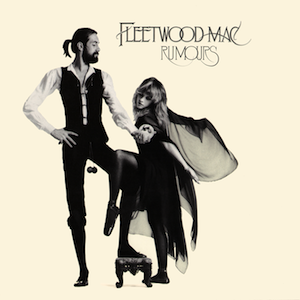
Rumours was recorded at Sausalito's Record Plant and produced by the band with Ken Caillat, and its vinyl sound is a study in contrasts. The album manages to be both polished and raw, with tight bass lines underpinning smooth vocal harmonies. The production by Fleetwood Mac and Caillat preserves the intimacy of the performances while delivering a wide stereo image that fills a room on vinyl. The interplay between Lindsey Buckingham's guitar and Stevie Nicks's vocal is captured with a immediacy that makes the record feel live. Original Warner Bros. pressings on their Burbank-designed labels are considered collector's items, but the 2011 Analogue Productions reissue brought new life to the album's bottom end.
4. The Beatles - Abbey Road (1969)

Abbey Road represents the Beatles at the height of their studio craft, and its vinyl sound reflects the meticulous work of producer George Martin and engineers Geoff Emerick and Phil Spector. The album was recorded across EMI's Abbey Road, Trident, and Olympic studios, then master-taped to produce a mix that translates beautifully to lacquer cut. The opening medley flows seamlessly from track to track, and the vinyl groove carries the orchestral swells of "I Want You (She's So Heavy)" with authority. The Apple label original UK pressings remain the gold standard, though the 2012 mono and stereo reissues by Capitol and Mobile Fidelity have earned significant praise from serious listeners.
5. Joni Mitchell - Blue (1971)

Joni Mitchell's Blue is one of the most emotionally naked albums ever recorded, and its sound quality on vinyl matches its emotional intensity. Recorded in Los Angeles and London, Blue was produced by Mitchell herself and features her distinctive guitar tunings paired with sparse arrangements. The acoustic guitars have a woody resonance on vinyl that digital formats tend to compress. Mitchell's vocal delivery is captured with startling presence, every breath and inflection preserved. The Reprise original pressings have a warmth that later reissues lost, and the 2021 half-speed mastered edition from Mobile Fidelity brought the record closer to its original intent than any prior reissue.
6. Bob Dylan - Blood on the Tracks (1975)

Bob Dylan's Blood on the Tracks is often cited as one of the finest breakup albums ever made, but it is also a remarkably well-recorded album. Produced by Dylan and recorded at Sound 80 in Minneapolis with overdubs added at A and R Studios in New York, the album's acoustic guitars and harmonica cuts through the mix with remarkable clarity on vinyl. The bass response on songs like "Shelter from the Storm" provides a solid foundation for Dylan's weathered voice. Original CBS pressings are cherished, but the 2015 Mobile Fidelity release brought new attention to the record's midrange warmth and tonal balance.
7. Nirvana - Nevermind (1991)

Nevermind brought rock energy into audiophile circles in an unexpected way. Produced by Butch Vig at Sound City Studios in Van Nuys, California, the album's aggressive production has a punch and clarity that rewards high-fidelity playback. The guitar distortion on "Smells Like Teen Spirit" maintains texture and definition rather than collapsing into noise on well-maintained pressings. The bass guitar drives the record with authority, and the snare drum snaps with a physical presence that makes you feel the hit. Original DGC pressings have become collectible, and the 2021 analog reissue was cut from the original master tapes.
8. The Band - The Band (1969)

The Band's self-titled second album, often called The Brown Album for its distinctive cover, is one of the most organically recorded albums in rock history. Produced by John Hammond and recorded at A and R Studios and Capitol Studios in New York, the album captures a group of musicians playing together in a room with minimal overdubbing. The result is a sonic coherence that translates beautifully to vinyl. Levon Helm's drums have a room-filling presence, Richard Manuel's electric piano sits in a warm midrange, and Robbie Robertson's guitar tones are crystalline. The groove quality on Capitol original pressings is exceptional, making this one of the great test records for any turntable setup.
9. Patricia Barber - Modern Cool (1999)
Moving into more modern recordings, Patricia Barber's Modern Cool stands as a triumph of jazz vocal recording on vinyl. Released on Premonition Records and later on Blue Note, the album was produced by Barber and Kevin Shirley at Chicago's Chicago Recording Company. The bass on tracks like "Use Me Up" is deep, textured, and perfectly integrated with Barber's smoky voice. The recording captures the acoustic space of the studio with exceptional depth, making it a favorite at audio shows. The 2006 Blue Note LP is considered superior to the CD in nearly every measurable way, a rare case where vinyl demonstrably outperforms its digital counterpart.
What Makes a Great-Sounding Vinyl Record
Several factors determine whether a vinyl pressing achieves true audiophile status. The quality of the original recording is foundational, but the mastering engineer's choices during the cutting process are equally critical. Half-speed mastering, where the tape is played at half speed while the lathe cuts at the corresponding rate, allows for greater groove detail and lower distortion. The pressing plant matters enormously, too. Companies like Columbia, Deutsche Grammophon, and Pallas have long histories of producing records with superior surface quiet and groove consistency.
Vinyl also benefits from being played on equipment that is properly set up. A well-aligned cartridge tracking at the correct stylus force will extract more musical information from a groove than a misaligned one, regardless of how good the pressing is. This is part of what makes vinyl collecting so rewarding. The record itself is only half the equation.
For What's Spinning users tracking their collections, these albums represent essential additions not just for their musical importance but for their ability to reveal what vinyl is truly capable of delivering. Each one offers something different, from the modal jazz warmth of Kind of Blue to the rock energy of Nevermind, and each rewards the listener willing to sit down with a quiet room and a well-calibrated turntable.
A spreadsheet tracks what you own. What's Spinning identifies what's playing.
On-device vinyl ID logs your listening history automatically. 7-day free trial.
Looking for Shazam for vinyl?
What's Spinning identifies what's playing on your turntable on-device, logs history, and AirPlays now-playing to your TV.
Comparing vinyl ID apps?
Analog requires Discogs and is iPhone-first (iPad coming). What's Spinning works without Discogs on iPhone and iPad with AirPlay.
Try What's Spinning Free
Turn your iPad into a live now-playing display. Track every record you spin.
START FREE TRIALThen $4.99/mo or $39.99/yr · Cancel anytime
Get it on your iPhone
Open on iPhone