The Best Synth-Pop Albums on Vinyl
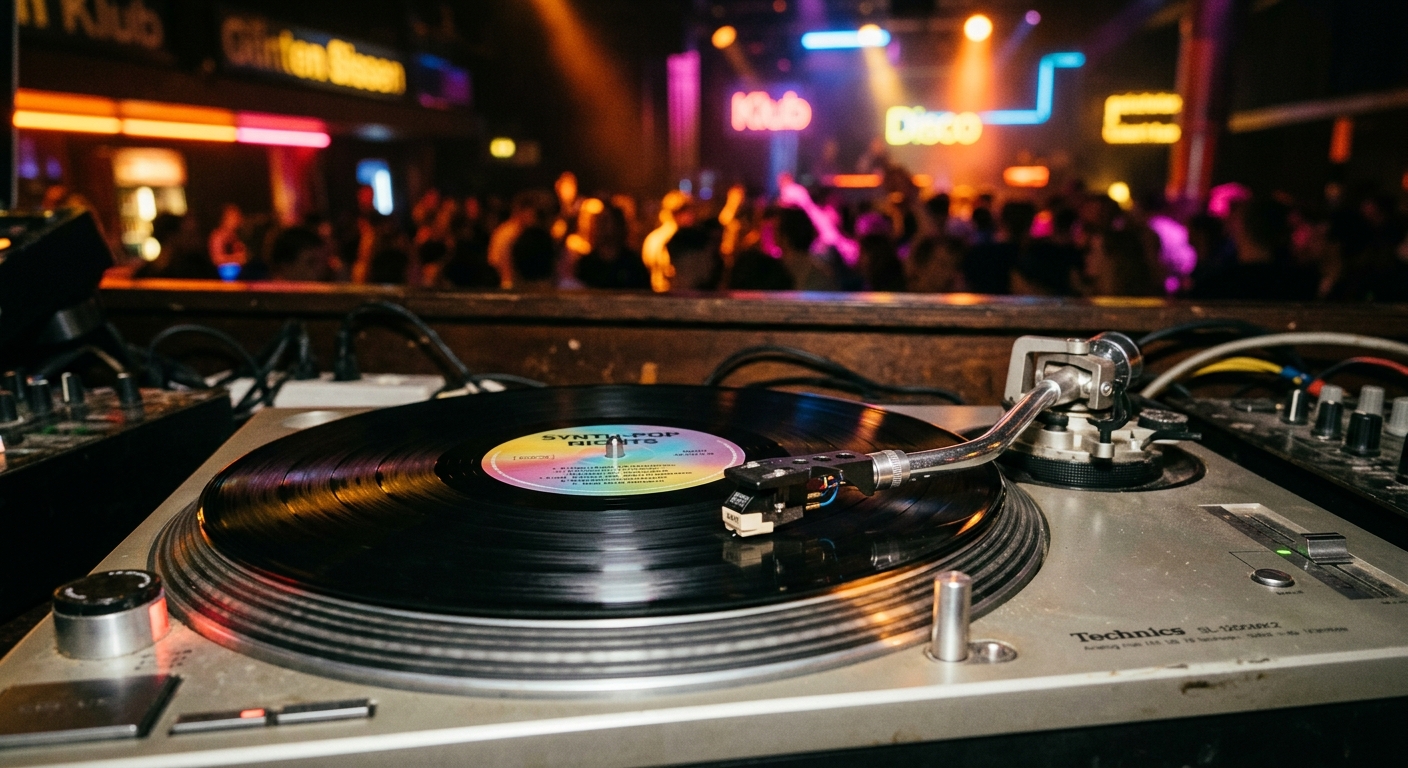
Synth-pop was the sound of the early 1980s freezing rock's energy into circuits. It was bands reaching for Kraftwerk's industrial geometry and finding pop melodies inside, then bending the two into something that fit on both radio and dance floors. The ten records below are the ones every serious synth-pop collection should hold, whether you came up with the bands in the 1980s or discovered them through the streaming-era reissue wave.
For collectors, the genre also has a particularly strong vinyl story. Most of these albums were originally cut at a moment when major labels still treated the LP as the primary format, and the tide of 2010s audiophile reissues has brought almost all of them back into print on 180-gram vinyl with restored artwork and original mastering credits. The notes below cover both the original pressings worth hunting and the modern reissues worth buying first.
This list runs from 1979 to 1990, the core years of the genre, and includes only records that hold up as full-album listens rather than compilations of singles. Every album here has at least one canonical pressing on 180-gram vinyl currently in print, so you can build the set without chasing original pressings unless you want to.
The 10 best synth-pop albums on vinyl
-
Violator by Depeche Mode (1990, Mute Records)
Released in March 1990 on Mute Records, Violator is the album where Depeche Mode stopped being a synth-pop band and started being the dark electronic institution the world now knows. Producer Flood, working with the band at his home in London, pushed the songwriting into stripped-down, almost industrial territory without losing the melodic core that made hits like "Personal Jesus" and "Enjoy the Silence" inescapable. The single "Enjoy the Silence" remains one of the most-played tracks in modern rock radio history, and the album as a whole spent 74 weeks on the Billboard 200. The 1990 UK first pressing on Mute STUMM 64 is a worthwhile find, though the 2007 Mute reissue and the 2013 vinyl reissue both press cleanly and remain widely available. For a true audiophile pressing, the original Sire 1-26092 US LP is the version to hunt, but the 2007 reissue at mid-price is the practical pick for most collectors.
-
Music for the Masses by Depeche Mode (1987, Mute Records)
The 1987 album that put Depeche Mode on stadium stages. Music for the Masses was recorded at Guillaume Tell studios in Paris and mixed at Konk Studios in London, with the band's songwriting now fully mature and Flood's production balancing the synth textures with real guitar work, particularly on the lead single 'Strangelove' and the anthemic title track. The 101 tour that followed was documented in the D.A. Pennebaker concert film of the same name, and the album's reach extended far beyond the band's earlier UK synth-pop audience. The Mute STUMM 47 first pressing is the canonical UK release, while the 2007 reissue on Mute presses cleanly and is the affordable route. The album was certified platinum in the US in 1991 and has never gone out of print on vinyl.
-
Power, Corruption & Lies by New Order (1983, Factory Records)
Recorded in 1982 at Jam Studios in London with producer Michael Johnson, Power, Corruption & Lies was New Order's second album and the moment the band fully committed to the dance-floor merge of post-punk guitars and electronic sequencing that would define the rest of their career. The Peter Saville-designed sleeve, using Henri Fantin-Latour's 1882 painting 'A Basket of Roses' on the cover, became one of the most-referenced album designs of the 1980s. Singles 'Blue Monday' (released separately) and 'True Faith' came later, but the album version of tracks like 'Age of Consent' and 'Your Silent Face' are the heart of the record. The Factory FACT 75 first pressing is the original UK issue; later pressings on London Records and the 2015 Rhino reissue on 180-gram vinyl are both reliable choices. The 2015 reissue is widely available and pressed from the original analog masters.
-
Technique by New Order (1989, Factory Records)
Recorded in 1988 and released in early 1989, Technique was New Order's sixth studio album and the most overtly dance-influenced record they ever made. Recorded at Windmill Lane Studios in Dublin and Real World Studios in Bath with engineer Stephen Street, the album absorbed the acid-house wave the band had been exposed to in clubs like the Haçienda in Manchester. Singles 'Fine Time' and 'Round and Round' were both club hits, and 'Run' remains one of the band's most-covered tracks. The Factory FACT 275 first pressing is the UK version; the 2014 reissue on Mute is the modern collector's choice and presses cleanly on 180-gram vinyl. The album entered the UK charts at number 1, the only New Order studio album to do so.
-
Actually by Pet Shop Boys (1987, Parlophone)
Released in September 1987, Actually is Pet Shop Boys' second studio album and the record that turned Neil Tennant and Chris Lowe from a one-hit UK curiosity into global pop stars. The album contains four UK top-10 singles including 'It's a Sin' (UK number 1), 'Rent', 'Heart' and 'Always on My Mind'. The production, handled by Stephen Hague and the duo themselves, balances the synth-pop foundations of their debut with more ambitious string and brass arrangements, particularly on the title track and the dusted-off Elvis cover. The Parlophone PCS 7325 first pressing is the original UK issue; the 2001 reissue and the 2018 reissue on 180-gram vinyl are both reliable modern pressings. The album has sold over 4 million copies worldwide.
-
Dazzle Ships by Orchestral Manoeuvres in the Dark (1983, Dindisc / Virgin)
Dazzle Ships is the most experimental album OMD ever released and the one that temporarily cost them commercial momentum. Conceived as a sound-collage response to the Cold War broadcasts the band were sampling on shortwave radio, the album leans into the abrasive, fragmented textures of tracks like 'Radio Prague' and 'ABC Auto-Industry' while still finding room for the more conventional singles 'Telegraph' and 'Talking Loud and Clear'. The 1983 release was a commercial disappointment in the UK compared to predecessor 'Architecture and Morality', but has been re-evaluated as one of the band's most distinctive records. The Dindisc/Virgin DID 12 first pressing is the canonical UK release; the 2023 reissue on 180-gram vinyl is well-regarded and brings the album back into print. A modern remastered pressing from the 2018 reissue series is also widely available.
-
Upstairs at Eric's by Yazoo (1982, Mute Records)
The 1982 debut from the short-lived duo of Alison Moyet and Vince Clarke (fresh from leaving Depeche Mode), Upstairs at Eric's is one of the most concentrated synth-pop albums ever made. The singles 'Only You' and 'Don't Go' were both UK top-3 hits, but the deep cuts like 'Winter Kills', 'Goodbye 70's' and the closing 'In My Room' are where the album shows its real range. Moyet's voice, a powerful blues-and-soul instrument against Clarke's minimalist electronics, makes the record feel like nothing else from the era. The Mute STUMM 7 first pressing is the original UK issue; the 2008 reissue and the 2017 reissue on 180-gram vinyl are both reliable modern pressings. Yazoo split after one further album, 'You and Me Both' (1983), and the two members went on to Erasure and a solo career respectively.
-
The Innocents by Erasure (1988, Mute Records)
Released in April 1988, The Innocents is Erasure's third album and their commercial peak. The singles 'A Little Respect', 'Chains of Love' and 'Stop!' were all UK top-10 hits, and the album reached number 1 on the UK Albums Chart. The production, again by Stephen Hague in collaboration with the duo, balances Vince Clarke's increasingly confident songwriting with Andy Bell's now-fully-developed voice. The Mute STUMM 67 first pressing is the original UK issue and the most collectable; the 2013 reissue on 180-gram vinyl and the 2018 reissue are both well-regarded. The album's title track, with its string arrangement by the London Philharmonic, hints at the more ambitious territory Erasure would explore on subsequent records.
-
Songs from the Big Chair by Tears for Fears (1985, Mercury / Phonogram)
The 1985 album that turned Tears for Fears from UK critical favorites into global pop stars. Songs from the Big Chair was recorded at various studios in the UK with producer Chris Hughes, and the singles 'Everybody Wants to Rule the World', 'Shout' and 'Head over Heels' all became staples of mid-1980s pop radio. The album topped charts in the US, UK, Canada, Australia and several other territories, eventually selling over 5 million copies worldwide. The Mercury/Phonogram 824 300-1 first pressing is the canonical UK release; the 1999 reissue and the 2014 reissue on 180-gram vinyl are both reliable modern pressings. The album was also released as a Picture Disc in 1985, which is now a collector's item.
-
The Pleasure Principle by Gary Numan (1979, Beggars Banquet)
Released in September 1979, The Pleasure Principle is Gary Numan's third solo album and the record that made him a household name. Recorded with Numan playing almost all instruments himself (with the help of a small group of session musicians), the album stripped the guitars from his earlier Tubeway Army work and replaced them with Minimoog and Polymoog synthesizers, creating a cold, mechanical sound that anticipated a decade of synth-pop. The lead single 'Cars' was a UK number 1 and a US top-10 hit. The Beggars Banquet BEGA 11 first pressing is the original UK issue; the 2019 reissue on 180-gram vinyl for the album's 40th anniversary is the modern collector's choice and well-regarded. The album's influence on the next decade of electronic music is hard to overstate.
What to buy first
If you are starting a synth-pop vinyl collection from scratch, the practical path is to take advantage of the 2010s reissue wave rather than chase original pressings. Every album on this list has a 180-gram reissue currently in print, and the modern pressings are uniformly clean and quiet.
The first three to buy, in this order:
1. Depeche Mode - Violator (1990) - The most-played synth-pop record of the 1990s and the easiest entry point. The 2007 Mute reissue is the version most collectors have on their shelf.
2. New Order - Power, Corruption & Lies (1983) - The peak of the band's post-punk-to-synth-pop transition. The 2015 Rhino reissue is pressed on 180-gram vinyl and is the affordable choice.
3. Yazoo - Upstairs at Eric's (1982) - The most concentrated 35 minutes of synth-pop ever committed to vinyl, and Alison Moyet's voice against Vince Clarke's electronics is unlike anything else from the era. The 2017 reissue is the modern pick.
After those three, the rest of the list is roughly in chronological order. Gary Numan's The Pleasure Principle is the oldest record here and worth having for the historical context alone; Tears for Fears and Erasure are the most accessible entry points to the more pop-leaning end of the genre.
Why synth-pop belongs on vinyl
Synth-pop is an unusual genre for vinyl collectors because most of it was originally designed to be heard on FM radio, Walkman headphones, and 7-inch singles. The full-album LPs were a secondary format for many of these artists, and the original pressings sometimes show up with audible tape hiss or compressed mastering. The 2010s reissue wave was the moment the audiophile community got serious about synth-pop, and the new 180-gram pressings from labels like Mute, Rhino, and Parlophone are uniformly better-mastered than the originals.
For What's Spinning collectors, the practical reason to own these records on vinyl is that they are the only way to hear the bass weight that the genre's original producers built into the mixes. The Roland Jupiter-8 and Sequential Prophet-5 synthesizers that defined the era are fundamentally low-frequency instruments, and the streaming versions of these albums are often high-pass filtered in a way the original mixes were not. A clean vinyl pressing preserves the low end the way the producers intended.
The cover art also matters. Peter Saville's work for New Order Factory, the Beggars Banquet sleeves for Gary Numan, and the late-1980s Mute sleeves for Erasure and Depeche Mode are all 12-inch gallery pieces in their own right, and the LP format is the only way to see them at their full size.
Frequently asked questions
What was the first synth-pop album?
There is no single agreed-upon first synth-pop album, but the strongest candidates are Kraftwerk's Autobahn (1974) and Gary Numan's The Pleasure Principle (1979). Kraftwerk is the more obvious influence on the genre; Numan is the more obvious pop-art translation of the Kraftwerk sound into the language of British new wave. The 1980 Depeche Mode debut Speak and Spell is often cited as the first true synth-pop record to come out of the post-punk synth-pop wave.
Is synth-pop still being made?
Yes, though the genre is no longer the dominant form of popular music. Contemporary artists working in the lineage include CHVRCHES, Purity Ring, Years & Years, and Christine and the Queens. These artists all sell well on vinyl and have at least one record in print on 180-gram pressing.
Where should I start with synth-pop vinyl collecting?
Depeche Mode, New Order, and Pet Shop Boys are the three most-represented synth-pop acts in the modern reissue market, and starting with one of their catalog albums is the practical entry point. The records on this list are all currently in print on 180-gram vinyl, with the partial exception of Tears for Fears' Songs from the Big Chair, which has a 2014 reissue but is sometimes out of stock.
Are original 1980s pressings worth more than reissues?
For most of the albums on this list, the original 1980s pressings are not dramatically more valuable than the 2010s reissues, because the modern reissues are pressed from the original analog masters in most cases. The exceptions are Gary Numan's The Pleasure Principle (the 1979 UK Beggars Banquet pressing has appreciated meaningfully) and Depeche Mode's Violator (the 1990 US Sire pressing is the most-collected version). For most of the other albums, the modern reissue is the smarter buy.
A spreadsheet tracks what you own. What's Spinning identifies what's playing.
On-device vinyl ID logs your listening history automatically. 7-day free trial.
Looking for Shazam for vinyl?
What's Spinning identifies what's playing on your turntable on-device, logs history, and AirPlays now-playing to your TV.
Comparing vinyl ID apps?
Analog requires Discogs and is iPhone-first (iPad coming). What's Spinning works without Discogs on iPhone and iPad with AirPlay.
Try What's Spinning Free
Turn your iPad into a live now-playing display. Track every record you spin.
START FREE TRIALThen $4.99/mo or $39.99/yr · Cancel anytime