The Best Trip-Hop Albums on Vinyl
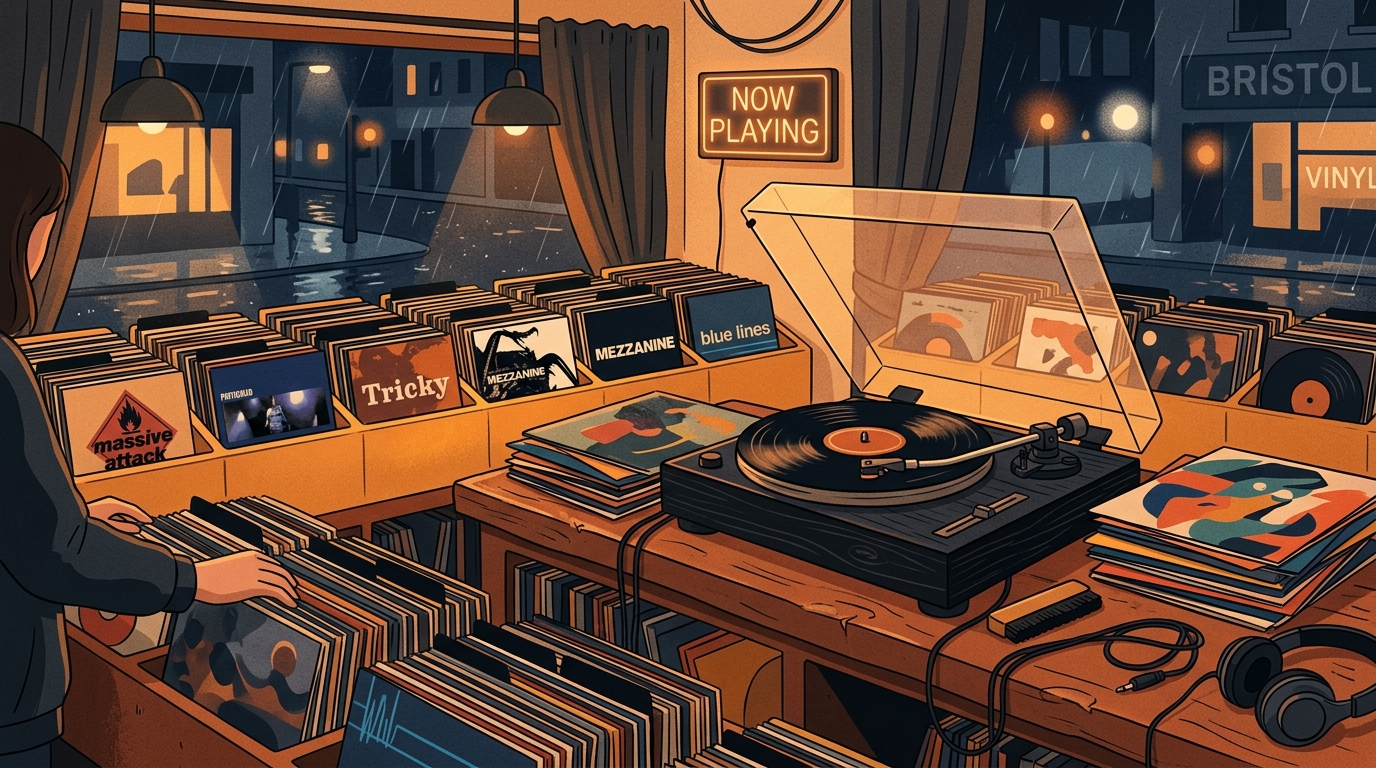
Trip-hop is one of the great vinyl genres because it was built from records in the first place: breakbeats, dub bass, soul fragments, library music, film-score mood, and studio experiments that still feel physical when they come through speakers. The best trip hop albums vinyl collectors chase are not only famous 1990s titles. They are records where sequencing, surface texture, cover art, and pressing choices change the experience. Some are Bristol landmarks, some belong to Mo Wax sample culture, and some stretch the term into downtempo, lounge, or electronic pop.
This guide focuses on albums that reward ownership as objects, not just as playlists. I researched release dates, studios, personnel, chart notes, certifications, and cover-art context from sources including Wikipedia album histories, Official Charts references, BPI certification notes, and label-era documentation linked throughout. If you track your collection in What's Spinning, this is also a useful checklist for separating must-own cornerstones from later nice-to-have upgrades.
The best trip-hop albums to own on vinyl
Blue Lines by Massive Attack, 1991

The first thing to know about Blue Lines is that it does not feel like a museum piece, even though it is often treated as the genre's starting gun. Released by Wild Bunch and Virgin on 8 April 1991, Massive Attack's debut joined Bristol sound-system culture, hip-hop breaks, dub pressure, soul phrasing, and reggae bass weight into a shape that critics later called trip-hop. The recording credits matter to collectors because this was not a faceless studio project. Grant Marshall, Robert Del Naja, Adrian Thaws, Andrew Vowles, and co-producer Jonny Dollar built a record that still moves like a crew tape, with Shara Nelson and Horace Andy bringing human gravity to the machine rhythms.
On vinyl, the album's 45-minute length is a gift. It gives the cutting engineer room compared with later 60-plus-minute trip-hop LPs, and the sequencing feels balanced rather than cramped. Original UK copies have obvious appeal, but clean reissues are often the sensible route because bass-heavy early 1990s records were not always treated gently at parties. For a first trip-hop purchase, this is the foundation stone: approachable, historically important, and still playable from front to back.
Dummy by Portishead, 1994

Portishead's Dummy arrived on Go! Beat in August 1994 and quickly became the album that pulled trip-hop out of specialist shops and into a much wider conversation. Its facts are unusually strong: it won the 1995 Mercury Music Prize, was certified triple platinum in the UK by 2019, had sold 920,000 copies in the UK by September 2020, and had reached 3.6 million worldwide sales by 2008. Those numbers do not explain its staying power, but they do explain why so many listeners discovered the genre through this record rather than through club 12-inches or Bristol imports.
The vinyl appeal is partly cinematic. Geoff Barrow's production leans into crackle, spy-film guitar, heavy drum loops, and negative space, while Beth Gibbons sings as if the room has gone quiet for reasons nobody wants to discuss. A good pressing should keep her voice centered and let the low end land without turning the album into fog. Because Dummy has been reissued many times, condition and mastering reputation matter more than the mere presence of a famous sleeve. If your shelf has room for only one Portishead LP, most collectors still start here, not because it is polite, but because it remains strange after hundreds of plays.
Maxinquaye by Tricky, 1995
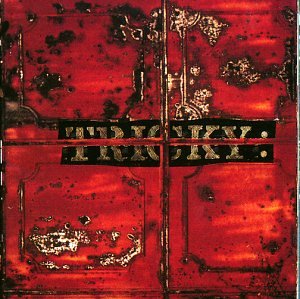
Maxinquaye is the point where trip-hop stops sounding like a city scene and starts sounding like one person's nervous system. Tricky released the album through 4th & B'way in February 1995 after feeling boxed in by his role around Massive Attack, and he named it for his late mother, Maxine Quaye. The album was recorded mainly in London, including work at Tricky's home setup, with Martina Topley-Bird becoming the central vocal presence. That home-studio origin matters. Maxinquaye does not have the clean architectural feel of expensive 1990s pop; it is smoky, clipped, close, and unstable.
For vinyl buyers, this is one of the genre's texture tests. The record moves through dub techniques, altered samples, hip-hop drag, rock abrasion, and ambient unease, so a copy that looks fine but plays with groove wear can blunt exactly what makes it powerful. The strongest moments are not just the singles. They are the spaces where Topley-Bird's calm voice sits next to Tricky's mutter and the drums feel slightly wrong in the best possible way. If Dummy is noir projected on a wall, Maxinquaye is the light leak under the door.
Endtroducing..... by DJ Shadow, 1996

Built almost entirely from vinyl samples, Endtroducing..... is a record collector's record in the most literal sense. DJ Shadow made it over roughly two years with an Akai MPC60 MKII and a deep diet of overlooked records, then Mo Wax released it in September 1996. Its inclusion here stretches trip-hop toward instrumental hip-hop, but that stretch is exactly why it belongs. The album gave downtempo listeners a new way to hear the archive: not nostalgia, not crate-digging as flex, but a full emotional language built from fragments.
The vinyl issue is format and patience. At more than an hour, Endtroducing..... can feel dense on a single continuous listen, but the side breaks help. They make the album less like a beat tape and more like chapters in a nocturnal essay. Collectors often care about the Mo Wax aura as much as the audio, because James Lavelle's label created a whole visual and cultural world around sleeve design, remixes, and import mystique. Still, do not treat it as shelf jewelry. This is one of the rare sample-based albums where the quiet passages are as important as the drums, so a clean copy earns its keep.
Mezzanine by Massive Attack, 1998
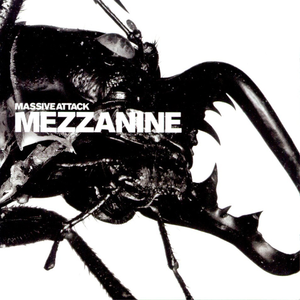
By the time Mezzanine appeared in April 1998, Massive Attack had made the genre darker, heavier, and more physically imposing. The record topped charts in the UK, Australia, Ireland, and New Zealand, became the group's most commercially successful album, and has sold more than 2.5 million copies worldwide. It also marked a major personnel and production shift: Tricky was gone, Andrew Vowles would soon leave, and Neil Davidge became a crucial collaborator with Robert Del Naja.
Collectors love Mezzanine because it sounds expensive without sounding glossy. Elizabeth Fraser's vocal on "Teardrop" floats above a pulse that never quite relaxes, Horace Andy brings dread to "Angel", and the post-punk and industrial influences give the album a hard edge that was not present on Blue Lines. On vinyl, though, length is the catch. Around 63 minutes of bass-rich material needs careful mastering, and some editions are more satisfying than others. This is where reading pressing notes, checking matrix comments, and buying from a seller who grades honestly can make a real difference. It is not background trip-hop. It is architecture in low light.
Protection by Massive Attack, 1994

Protection tends to get caught between the origin story of Blue Lines and the monolith of Mezzanine, which is unfair to one of Massive Attack's most elegant records. Released in September 1994, it brought in Nellee Hooper as co-producer and expanded the group's palette with guests including Tracey Thorn and Nicolette. The title track alone makes a persuasive vinyl argument, because Thorn's voice has the warmth and grain that reward a decent cartridge and a quiet room.
The collector angle here is the relationship between Protection and Mad Professor's 1995 dub reinterpretation No Protection. Owning both turns the album into a before-and-after study in space. The original is song-led, urbane, and carefully lit; the remix version strips and warps the material until bass and echo become the story. That pairing is one of the most enjoyable rabbit holes in the Massive Attack catalog. Protection is also a reminder that trip-hop was never just gloom. It could be graceful, romantic, and club-aware without losing its weight.
Portishead by Portishead, 1997

Portishead's self-titled second album, released in September 1997, is the difficult follow-up that made difficulty the point. Portishead was recorded across State of Art in Bristol, Ridge Farm, and Moles in Bath, and it sounds less like Dummy's haunted film reel than a band dragging its own machinery through a room. The beats are harsher, the arrangements feel less inviting, and Beth Gibbons often sounds cornered rather than merely melancholy.
That mood makes it a rewarding vinyl record for people who already know they like the group. The self-titled LP asks more from the listener, and in return it gives more detail: turntable scratches that cut like stage directions, guitar lines that arrive as threats, and drum sounds with real physical menace. It is also a useful test of what you want from trip-hop collecting. If you want the canonical gateway, buy Dummy first. If you want the album that proves Portishead were not interested in repeating a successful formula, this is the keeper. The sleeve's stark portrait matches the music's refusal to flatter you.
Psyence Fiction by UNKLE, 1998

Psyence Fiction is what happens when trip-hop collides with late-1990s event-album ambition. Released by Mo Wax in August 1998, UNKLE's debut was produced by James Lavelle and DJ Shadow, with Shadow doing much of the musical construction while Lavelle assembled a guest list that included Thom Yorke, Richard Ashcroft, Mike D, Kool G Rap, and others. The result is not as seamless as Endtroducing....., but its sprawl is part of the artifact.
Vinyl collectors often approach this album through design as much as sound. Mo Wax understood packaging, mythology, toys, remixes, and visual identity, and Psyence Fiction sits squarely in that collector culture. Musically, it can feel like a compilation from an alternate universe where alternative rock, sample culture, and cinematic hip-hop all signed the same lease. That makes pressing choice interesting: you want enough clarity for the vocal cameos, but enough low-end authority for Shadow's drums. It is not the first trip-hop LP I would hand to a newcomer, but it is one of the best documents of how far the genre's orbit had expanded by 1998.
Smokers Delight by Nightmares on Wax, 1995
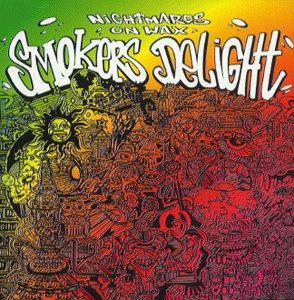
Nightmares on Wax brought a different kind of gravity to the conversation with Smokers Delight. Released by Warp in 1995, the album runs more than 72 minutes and folds trip-hop into chill-out, jazzstep, breakbeat, and downtempo. That length is important for vinyl buyers because it changes the object. This is not a tight 40-minute statement; it is a long, couch-level environment built from bass lines, relaxed drums, and late-night repetition.
Where Bristol trip-hop often carries tension, Smokers Delight leans into ease. George Evelyn, recording as E.A.S.E., makes the groove feel lived in rather than dramatic. The album is especially useful for collectors who want trip-hop adjacent records that work during a full evening, not only during a focused listen. Because of its runtime, audiophile expectations should be realistic unless you are buying a version spread in a way that gives the grooves more room. The charm is not microscopic detail. It is warmth, continuity, and the feeling that Warp's experimental reputation could also make space for something deeply comfortable.
Becoming X by Sneaker Pimps, 1996

Becoming X is the glamorous, messy, pop-facing cousin in the trip-hop family. Sneaker Pimps released it in the UK in August 1996, then in the US in February 1997, with Kelli Dayton as lead singer for the only time in the band's album catalog. The singles "6 Underground" and "Spin Spin Sugar" carried the record well beyond genre circles, and the album spent 23 consecutive weeks on the Billboard 200 according to contemporary reporting cited in the album's history.
The reason to own it on vinyl is not purity. Becoming X borrows from electronic pop, alternative radio, club remix culture, and trip-hop atmosphere, which makes it more accessible than a lot of the records around it. Jim Abbiss, Line of Flight, Peter Collins, and Flood are all linked to the album's production credits, and that range shows in the finish. It is sleek, but not sterile. For collectors, Kelli Dayton's presence gives the LP a one-off quality, because the band changed vocal direction afterward. If your trip-hop shelf is too Bristol-heavy, this record adds chart-era sparkle without losing the shadows.
Big Calm by Morcheeba, 1998

Morcheeba's Big Calm, released in March 1998, is the album to buy when you want trip-hop's sunnier side without tipping into bland lounge wallpaper. Skye Edwards' voice is the obvious immediate pleasure, but the record's craft sits in how the Godfrey brothers frame her: acoustic guitar, mellow breaks, soft psychedelic touches, and enough low end to keep the music grounded. The album reached the top 20 of the UK Albums Chart, and "Part of the Process" reached the UK top 40, which explains why it turns up often in collections that are not otherwise genre-complete.
One neat cover-art detail is that Big Calm's sleeve was inspired by the 1966 Ray Conniff compilation Hi Fi Companion, a nod that makes sense once you hear the album's easy-listening ghosts. On vinyl, that visual joke becomes part of the charm. It looks like a thrift-store artifact, but the music is very much late-1990s studio pop. Buyers should look for copies that preserve Skye's vocal smoothness without flattening the percussion. Big Calm is not the darkest or most radical pick here. It is the one you can play for someone who thinks trip-hop means permanent rain.
Lamb by Lamb, 1996

Lamb's self-titled debut is where trip-hop meets drum and bass without sanding down either side. Released by Fontana in September 1996, Lamb was recorded in Manchester spaces including The Toyshop, Lou Rhodes' home, and Ridge Farm. Andy Barlow's programming can be busy and agile, but Rhodes keeps the songs emotionally legible. That contrast is the album's signature: breakbeats that threaten to sprint away, vocals that pull them back toward intimacy.
The vinyl buyer should pay attention to surface noise because Lamb's quieter passages can make crackle more intrusive than it is on heavier, murkier records. The album also rewards people who like side-to-side contrast. It can move from club-informed percussion to open, almost folk-like vocal space without feeling like a compilation. In a genre often described through smoke, dub, and noir, Lamb brought kinetic motion. It is not just a trip-hop album with faster drums. It is a careful balancing act between tenderness and programming nerve, and that balance still feels fresh.
Londinium by Archive, 1996
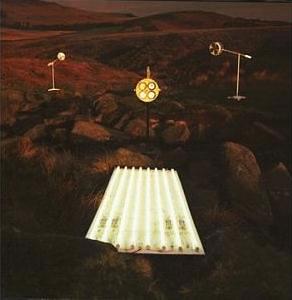
Londinium gives the list a London counterweight to the Bristol mythology. Archive released the debut in September 1996 on Island, with Roya Arab as the main vocalist and Rosko John providing rapping. The title reaches back to Roman London, but the music is pure 1990s city weather: downtempo beats, alternative hip-hop mood, long shadows, and a sense of urban scale. One small but telling fact is that "Skyscraper" uses a sample from Underworld's "Mmm Skyscraper... I Love You", while Karl Hyde played bass on "Headspace".
Collectors prize Londinium partly because Archive's later career moved through different shapes, making the debut feel like a distinct island in the catalog. It is less universally known than Dummy or Mezzanine, which can make finding a clean copy more satisfying. The album's 60-minute length means pressing quality matters, but the music benefits from the format's physicality: the title track especially feels larger when it has to occupy a side of wax instead of disappearing into a playlist. For anyone building beyond the obvious names, this is an essential next layer.
A New Stereophonic Sound Spectacular by Hooverphonic, 1996

Hooverphonic's debut, A New Stereophonic Sound Spectacular, widens the map to Belgium. Released in July 1996, initially under the shortened band name Hoover, it is the group's only album with lead singer Liesje Sadonius. The singles included "2Wicky", "Inhaler", "Wardrope", and "Barabas", and the album had sold more than 140,000 copies worldwide by June 1998. Those figures are modest next to Dummy, but they show how quickly the sound traveled beyond its UK roots.
The record's collector appeal starts with "2Wicky", a track built around the same Isaac Hayes source that many listeners know from another context, then deepens as the album leans into ambient pop and widescreen arrangements. It has a cleaner, glossier surface than the Bristol classics, which makes it a useful palate shift in a listening session. On vinyl, Sadonius' voice and the cinematic strings need space, so avoid beat-up bargain copies unless you only want the sleeve. The album captures a brief lineup and a very specific late-1990s atmosphere: stylish, European, and slightly unreal.
The Mirror Conspiracy by Thievery Corporation, 2000
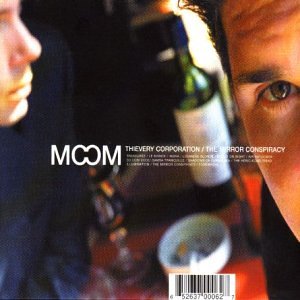
By 2000, trip-hop had become an international language, and The Mirror Conspiracy shows what happened when Washington, D.C.'s Thievery Corporation translated it through lounge, dub, bossa nova, and downtempo club culture. Released by ESL Music and 4AD, the album was written, recorded, and produced by Rob Garza and Eric Hilton, with Pam Bricker contributing vocals to several tracks including "Lebanese Blonde". It later became the duo's best-selling US album, with more than 224,000 units sold according to Nielsen SoundScan data cited in album histories.
This is a different buying proposition from the darker UK records. The Mirror Conspiracy is polished, worldly, and deliberately stylish, the kind of LP that makes sense near cocktail jazz and dub compilations as much as beside Massive Attack. That does not make it lightweight. Its bass lines and percussion are carefully placed, and a good vinyl copy gives the arrangements a relaxed depth that streaming can turn into tasteful wallpaper. If your collection already covers Bristol, Mo Wax, and Portishead's haunted rooms, this album adds the after-hours lounge where everyone finally exhales.
What to buy first
If you are building from zero, buy in this order: Dummy for the classic vocal trip-hop gateway, Blue Lines for the Bristol foundation, Endtroducing..... for sample-based vinyl culture, Mezzanine for scale and darkness, then Maxinquaye for the genre's most personal left turn. After that, choose by mood. Want warmer social listening? Pick Big Calm or The Mirror Conspiracy. Want collector mystique? Go toward Psyence Fiction, Londinium, and original Mo Wax-related pressings.
FAQ
What makes an album trip-hop?
Trip-hop usually blends hip-hop breakbeats with dub bass, soul or jazz harmony, sampling, electronic production, and a slower, moodier sense of space. The label was applied after the scene was already forming, so many essential records also overlap with instrumental hip-hop, downtempo, acid jazz, and electronic pop.
Are original trip-hop pressings worth the money?
Sometimes, but not automatically. Original UK and Mo Wax pressings can be collectible, yet condition, mastering, and side length matter more than age. A clean modern reissue can beat a noisy original that was played hard in the 1990s.
Which trip-hop album should I buy first on vinyl?
Start with Dummy if you want the most iconic gateway, Blue Lines if you want the historical foundation, or Mezzanine if you want the biggest, darkest sound. If you collect sample-based hip-hop, Endtroducing..... is the natural first purchase.
Why are some trip-hop albums expensive on vinyl?
Many 1990s albums were pressed during the CD boom, when vinyl runs were smaller than earlier rock and soul releases. Add cult demand, limited reissues, import-only editions, and condition problems from bass-heavy playback, and prices can climb quickly.
A spreadsheet tracks what you own. What's Spinning identifies what's playing.
On-device vinyl ID logs your listening history automatically. 7-day free trial.
Looking for Shazam for vinyl?
What's Spinning identifies what's playing on your turntable on-device, logs history, and AirPlays now-playing to your TV.
Comparing vinyl ID apps?
Analog requires Discogs and is iPhone-first (iPad coming). What's Spinning works without Discogs on iPhone and iPad with AirPlay.
Try What's Spinning Free
Turn your iPad into a live now-playing display. Track every record you spin.
START FREE TRIALThen $4.99/mo or $39.99/yr · Cancel anytime