The Best Vinyl Albums of 1973
Ask ten record collectors about 1973 and you will get ten different starting points: the prism, Stevie Wonder's classic-period run, Bowie's lightning bolt, the Wailers entering the global rock market, Herbie Hancock bringing jazz-funk into a new body, or a teenage Mike Oldfield turning a long-form instrumental into a surprise blockbuster. That is why a guide to the best vinyl albums 1973 cannot be just a classic-rock list. The year was bigger than that.
The LP was still the main canvas for ambitious music, and artists were using the format in wildly different ways. Some albums below are expensive first-press trophies; others are common enough that you can build a killer shelf without draining the turntable fund. What matters is how the record works as vinyl: side breaks, sleeves, mastering, quiet passages, and whether a copy rewards repeat plays. If you use What's Spinning to log what you actually play, this is the kind of year that separates shelf prestige from records that keep earning time on the platter.
For research, I checked album histories, release data, chart notes, certification context, and cover sources from Wikipedia, MusicBrainz, Cover Art Archive, the RIAA database, and Grammy records. The ranking below balances cultural weight, collector interest, and listening value, not just resale price.
The 20 best vinyl albums of 1973
The Dark Side of the Moon by Pink Floyd, 1973
Start with the obvious masterpiece, because this is one of the rare obvious answers that still earns its place. Pink Floyd built The Dark Side of the Moon from material tested onstage, then refined it at Abbey Road with engineer Alan Parsons, tape loops, EMS synthesizers, spoken interviews, and a side structure that made the LP feel like one uninterrupted thought. For collectors, the prism sleeve is only half the pull. The real reason clean vinyl copies remain so satisfying is the record's control of space: clocks erupt from silence, Clare Torry's vocal on The Great Gig in the Sky blooms without crowding the mix, and Money lands with that cash-register loop locked to the groove. It also became a commercial monster, spending years on the Billboard 200 and becoming one of the best-selling albums ever. Early UK Harvest pressings are premium objects, but the catalog is reissued often enough that a quiet modern copy is a perfectly defensible daily player. Source.
Innervisions by Stevie Wonder, 1973
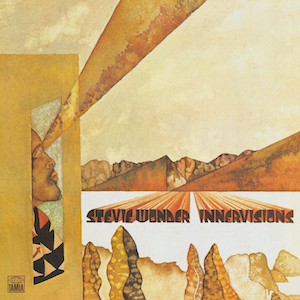
Nothing about Innervisions sounds like a compromise. Stevie Wonder wrote, produced, and largely played the album himself during the run people now call his classic period, and the result compresses funk, gospel, jazz harmony, political observation, and spiritual resolve into a single LP. The collector detail worth noticing is how much of the record depends on texture rather than volume. The clavinet in Higher Ground is not just a hook, it is the engine; the synthesizer colors in Living for the City feel urban and cinematic without turning the track into a novelty. Released in August 1973, the album won the Grammy for Album of the Year, a remarkable outcome for a record this musically adventurous. On vinyl, Innervisions rewards a cartridge that tracks inner grooves well, since Side Two carries some of the most emotionally charged material. Motown pressings vary, so prioritize a clean, low-noise copy over label minutiae unless you are collecting variants. Source.

Goodbye Yellow Brick Road by Elton John, 1973
A double album can collapse under its own confidence; Goodbye Yellow Brick Road mostly turns that confidence into range. Recorded at the Château d'Hérouville in France, it moves from the grand title track to Bennie and the Jets, Candle in the Wind, Saturday Night's Alright for Fighting, and deep cuts that make the four sides feel less like filler and more like a tour through Elton John's early-70s peak. Vinyl matters here because the format gives the sprawl a sensible architecture. Each side has its own temperature, and the gatefold sleeve turns the record into the kind of object people remember discovering on a living-room floor. Original DJM and MCA copies are common in many markets, but condition is everything because piano-led rock exposes groove wear fast. If you are ranking the best vinyl albums 1973 gave collectors, this one belongs near the top for sheer value per side. Source.
Quadrophenia by The Who, 1973
Quadrophenia is not just an album with a story, it is an album designed as a physical dossier. The Who's second full-scale rock opera follows Jimmy, a young mod in 1960s Britain, and the original LP package used a booklet of black-and-white photographs to make the narrative feel lived-in rather than summarized. Pete Townshend's synthesizer programming and home-studio demos gave the record a density that separates it from Tommy, while Keith Moon's drumming keeps the concept from becoming museum theater. The sea sounds, recurring musical themes, and side breaks all matter on vinyl because they pace Jimmy's unraveling in chapters. A clean original with booklet intact is a lovely find, but later reissues can be easier for actual listening, especially when the climactic Love, Reign o'er Me needs room to rise without crackle turning the drama into sandpaper. Source.
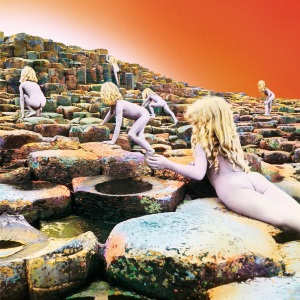
Houses of the Holy by Led Zeppelin, 1973
Led Zeppelin could have made another heavy blues-rock monolith and sold millions anyway. Instead, Houses of the Holy lets the band wander: reggae parody on D'yer Mak'er, crystalline folk colors on The Rain Song, slippery funk on The Crunge, and arena-sized propulsion on The Ocean. The album followed the band members' growing use of home and mobile studio work, and that looseness comes through in the arrangements. For vinyl buyers, the appeal is partly the famous Hipgnosis sleeve, partly the way Side One refuses to sit still. Original pressings have cachet, but Zeppelin records were played hard by generations of owners, so visual grading is not enough. Ask about playback, especially through No Quarter, where surface noise can flatten the atmosphere. The best copy is not the most mythical pressing if it sounds like it survived a dorm party in a laundry basket. Source.
Raw Power by Iggy and the Stooges, 1973
Raw Power is the 1973 record that still sounds like it is fighting the room. The Stooges recorded with James Williamson's guitar pushed into a bright, serrated attack, then the album reached stores in a David Bowie mix that listeners have argued about ever since. Later remixes made the chaos louder and more confrontational, which means collectors are really choosing an aesthetic position as much as a pressing. Do you want the thin, dangerous original feel, or the brick-wall assault that treats distortion like a philosophy? Either way, Search and Destroy, Gimme Danger, and Your Pretty Face Is Going to Hell made the album a future punk reference point. On vinyl, Raw Power is not about audiophile polish. It is about whether your system can keep the guitar from turning into one white-hot smear while still letting Iggy sound gloriously ungovernable. Source.
Berlin by Lou Reed, 1973
The first thing to know about Berlin is that it was not greeted as a safe classic. Lou Reed's concept album about a collapsing couple, addiction, jealousy, and emotional damage received harsh contemporary reactions, then slowly gained status as one of his most ambitious solo records. Producer Bob Ezrin gives it theatrical scale, with arrangements that can feel lush one minute and brutally exposed the next. That makes the LP a strange but rewarding collectible: it is not a party record, yet it has a completeness that shorter Reed records sometimes dodge. The title track's cabaret atmosphere and the devastating sequence around The Kids and The Bed are more effective when heard as sides, not shuffled as isolated songs. If Transformer is the easy Lou Reed vinyl recommendation, Berlin is the one that tells you how much darkness you actually want in the listening chair. Source.
For Your Pleasure by Roxy Music, 1973
Before Roxy Music became a byword for elegance, they sounded like art-school glamour wired to something unstable. For Your Pleasure, the final Roxy album with Brian Eno, expands the debut's weirdness into longer, stranger shapes: Do the Strand turns sophistication into a command, In Every Dream Home a Heartache makes luxury feel sinister, and the title track drifts into a hypnotic fade that seems to dissolve the band in real time. The famous sleeve, with Amanda Lear and a black panther, is not decoration; it announces the record's whole world of style, threat, and performance. UK Island pink-rim copies are collector favorites, but later editions still communicate the point if the vinyl is quiet. This is a record where synth treatments, saxophone, and Bryan Ferry's phrasing occupy different corners of the stereo picture, so setup and speaker placement genuinely change the experience. Source.
Band on the Run by Paul McCartney and Wings, 1973
Band on the Run has a backstory almost too convenient for rock mythology: Wings arrived in Lagos to record, faced equipment and security problems, and still emerged with Paul McCartney's strongest post-Beatles album. The record feels sunny from a distance, but the arrangements are full of little structural tricks. The title track alone moves through multiple sections without sounding stitched together, while Jet and Let Me Roll It prove McCartney could still turn melodic economy into radio muscle. As a vinyl object, it is approachable because copies are plentiful, yet that abundance hides a grading trap. Many were played on modest 1970s systems and show inner-groove wear, especially on hot vocal passages. The album also works beautifully as a first Wings LP because it balances Beatles-adjacent craft with a band identity sturdy enough to stand on its own. Source.
Let's Get It On by Marvin Gaye, 1973
Marvin Gaye's Let's Get It On is often reduced to its title track, which is understandable and also unfair. The album is a carefully sustained mood piece recorded across sessions in Detroit and Los Angeles, with Gaye moving from the social anguish of What's Going On toward desire, devotion, vulnerability, and body language. The rhythm section never shoves; it glides. The strings do not simply sweeten the songs, they create a humid atmosphere around the voice. On vinyl, that matters because the record depends on touch: a noisy copy can make the sensual quiet feel fussy instead of intimate. Original Tamla copies are not impossible to find, but they deserve play grading. When the pressing is right, the bass feels soft-edged but deep, and Gaye's layered vocals sit close enough that the whole room seems to lean in. Source.
Catch a Fire by The Wailers, 1973
Catch a Fire was the record that introduced Bob Marley, Peter Tosh, Bunny Wailer, and Jamaican roots reggae to a much wider rock audience. Island's first UK packaging famously used a Zippo-style lighter sleeve, now a serious collector object, while later editions used the more familiar Marley portrait. Musically, the album sits at a fascinating crossing point. The Wailers' Jamaican recordings were overdubbed for international release, adding guitar and keyboard touches that helped rock listeners find a doorway without erasing the pulse of the original performances. Stir It Up is the welcoming track, but Concrete Jungle and Slave Driver show the album's sharper politics. Vinyl buyers should know which version they are chasing, because mixes and sleeves affect both price and meaning. A clean standard copy still gives you the essential thing: bass lines that breathe, drums that sit behind the beat, and songs that made reggae feel globally immediate. Source.
Head Hunters by Herbie Hancock, 1973
Jazz-funk does not get much more foundational than Head Hunters. Herbie Hancock stepped away from the more abstract Mwandishi period and built a leaner band around groove, electric keyboards, and a rhythm language that could speak to jazz heads, funk listeners, and sample-hungry producers decades later. Chameleon takes up nearly an entire side and earns the space, building from that synth-bass figure into a patient, elastic workout. Watermelon Man recasts Hancock's earlier tune through African-influenced vocal textures and studio imagination. For vinyl collectors, this is one of those records where a reissue can be a blessing because originals are often loved to death. Bass definition is the test. If your copy makes Paul Jackson's line on Chameleon sound like a foghorn, keep hunting. A good pressing turns the groove into architecture, not background wallpaper. Source.
Countdown to Ecstasy by Steely Dan, 1973
Countdown to Ecstasy catches Steely Dan in the brief moment when they were still a touring band but already thinking like studio obsessives. It did not produce a radio hit on the scale of Do It Again or Reelin' in the Years, which is part of why collectors tend to treat it as a connoisseur's album. The songs are sharper and stranger: Bodhisattva races, My Old School sneers, and King of the World ends the record with apocalyptic cool instead of a victory lap. The vinyl angle is simple: this is a guitar and keyboard record with lots of small moving parts, so clean mastering pays off. Early ABC pressings can sound lively, but later audiophile editions have made the album easier to appreciate without chasing a perfect used copy. It is the Steely Dan LP for people who like the band's precision before it became almost laboratory-grade. Source.
(Pronounced 'Lĕh-'nérd 'Skin-'nérd) by Lynyrd Skynyrd, 1973
The debut by Lynyrd Skynyrd is remembered for Free Bird, but the album is more than an eight-minute guitar summit. Produced by Al Kooper for MCA's Sounds of the South label, it established the band's three-guitar identity, Ronnie Van Zant's plainspoken authority, and a Southern rock vocabulary that was tougher and less jam-band loose than the cliché suggests. Tuesday's Gone and Simple Man show how much weight the group could carry at slower tempos, while Gimme Three Steps turns barroom storytelling into a compact single. On LP, the record has the satisfying feel of a band captured before myth hardened around them. Free Bird also makes side sequencing matter, since it closes the album like a curtain call rather than just appearing as a classic-rock monument. Used copies are common, but groove damage is common too. That final guitar build deserves a copy that can stay composed. Source.
Aladdin Sane by David Bowie, 1973
Aladdin Sane is Ziggy Stardust after America got under David Bowie's skin. Written largely while touring, it keeps glam rock's flash but adds a harder, more fractured mood, especially through Mike Garson's piano on the title track. The sleeve, shot by Brian Duffy with Bowie's lightning-bolt makeup, became one of the most recognizable album covers of the decade, which means condition-conscious collectors look at jackets almost as closely as discs. Musically, it is messier than Ziggy and often more interesting for that reason. Watch That Man sounds crowded by design, Drive-In Saturday glows with sci-fi nostalgia, and Jean Genie brings blues sleaze into Bowie's alien theater. UK RCA copies can be desirable, but do not ignore reissues if you want a reliable player. The album's piano transients and bright guitars punish worn grooves quickly. Source.
Greetings from Asbury Park, N.J. by Bruce Springsteen, 1973
Bruce Springsteen's debut arrived in January 1973 with more words per square inch than most rock albums dared. Columbia marketed him in the shadow of the new Dylan conversation, but the LP is stranger than that shorthand: seaside characters, boardwalk speed, folk-rock density, and an E Street sound still finding its final shape. Blinded by the Light and Spirit in the Night later reached broader audiences through Manfred Mann's Earth Band, yet the original versions have a nervous, hungry charm. Collectors should listen for vocal clarity because Springsteen's early phrasing can turn congested if the pressing or setup is dull. The cover is a postcard, which is exactly right. Before Born to Run turned New Jersey into widescreen myth, Greetings made the local scene feel overcrowded, comic, and bursting through the margins. Source.
Desperado by Eagles, 1973
Desperado is the Eagles before the California machine became too polished to question. The outlaw concept can look heavy-handed on paper, but the record's best moments use Western imagery to talk about ambition, loneliness, and band identity. Tequila Sunrise is relaxed almost to the point of floating, while the title track became a standard despite not being released as a single at the time. For vinyl collectors, the album is interesting because it sits between country-rock warmth and the more exacting production that would define the band's later blockbusters. The sleeve photography leans fully into the outlaw theme, making clean jackets part of the appeal. Sonically, the harmonies are the grading test. Surface noise during quieter passages turns the intimacy brittle, so a near mint later copy may beat a scarred first pressing unless you are chasing label history. Source.
New York Dolls by New York Dolls, 1973
The New York Dolls' debut is a thrift-store explosion of girl-group hooks, Rolling Stones swagger, trash-glam styling, and pre-punk attitude. Todd Rundgren's production has been debated for decades, with some fans wanting more rawness and others appreciating the way the songs remain legible under the mascara and clatter. Personality Crisis opens the record like a dare, but the deeper pleasure is how Human Being, Trash, and Looking for a Kiss turn sloppiness into theater. The cover art mattered immediately, with the band posing in drag against a lurid pink background, and original sleeves in strong condition have become collectible for reasons beyond the music. On vinyl, do not expect polite audiophile behavior. You want enough clarity to hear Johnny Thunders and Sylvain Sylvain slash around each other without sanding off the reckless charm that made the album a seedbed for punk. Source.
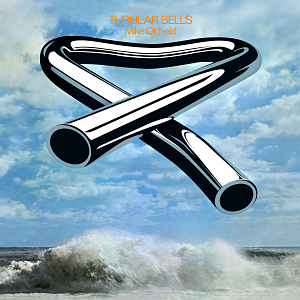
Tubular Bells by Mike Oldfield, 1973
Tubular Bells is the oddball success story every record collector should know. Mike Oldfield recorded the mostly instrumental work while still a teenager, layering guitars, organs, percussion, and other instruments into two long side-length pieces. It became the first album released by Virgin Records and later gained a second life in popular culture when its opening theme was used in The Exorcist. The LP format is central here because the music is literally divided into two large arcs, asking the listener to treat a side flip as an intermission. A clean copy can be mesmerizing on a good system, especially when the repeated motifs shift by small degrees rather than big rock gestures. Original UK Virgin copies can be expensive, but the album has been pressed many times. Avoid noisy vinyl because quiet passages and gradual builds make crackle feel like an unwanted percussion track. Source.

Billion Dollar Babies by Alice Cooper, 1973
Billion Dollar Babies turns shock rock into full-scale packaging, and that is meant literally. Original copies arrived with a giant wallet-style sleeve and a billion-dollar bill insert, the sort of tactile gimmick that makes vinyl collecting more than sound files in a different costume. The album hit No. 1 in both the United States and the United Kingdom, helped by songs like Elected and No More Mr. Nice Guy, but the production is more detailed than the stage-blood reputation suggests. Bob Ezrin gives the band punch, backing vocals, and theatrical segues without making the record feel sterile. When buying used, completeness matters: missing inserts reduce both value and fun. Musically, it is the Alice Cooper band at its commercial peak, snarling enough for hard rock shelves yet witty enough that the horror-show act never completely swallows the hooks. Source.
What to buy first
If you are starting a 1973 shelf from scratch, buy five records before you get precious about matrix codes: The Dark Side of the Moon, Innervisions, Head Hunters, Catch a Fire, and Goodbye Yellow Brick Road. That group gives you progressive rock, soul, jazz-funk, reggae, and pop songwriting at a very high level. Add Raw Power or New York Dolls if you want the punk lineage, then decide whether your taste points toward the theatrical records like Quadrophenia and Berlin or the more immediate pleasures of Band on the Run and Desperado.
Do not let collectible packaging trick you into buying a trashed copy unless you want it as an artifact. For 1973 albums, play grading matters because so many copies lived through stacked changers, heavy tracking force, parties, and decades of less-than-gentle storage. Clean reissues are not failures. They are often the version that lets the music do what made it collectible in the first place.
FAQ
What is the best 1973 album to buy first on vinyl?
If you want one safe starting point, buy a clean copy of Pink Floyd's The Dark Side of the Moon. If you already own it, Innervisions, Head Hunters, Catch a Fire, and Goodbye Yellow Brick Road give you a stronger picture of how wide 1973 really was.
Are original 1973 pressings always better than reissues?
No. Original pressings can have historical charm, unique mastering, and collectible packaging, but many were played hard for decades. A quiet, well-mastered reissue often beats a noisy original for everyday listening.
Why were so many classic albums released in 1973?
The LP was the dominant serious album format, major studios were well developed, and rock, soul, funk, reggae, jazz-funk, and singer-songwriter scenes were all expanding at once. That overlap made 1973 unusually rich for collectors.
How should I track different pressings in a vinyl collection?
Record the label, catalog number, matrix notes when visible, condition, and when you last played it. That matters more as you start comparing original copies with later reissues, imports, and audiophile editions.
Sources and further checking
Album data and historical notes were checked against public album pages for Pink Floyd, Stevie Wonder, Elton John, The Who, Led Zeppelin, Iggy and the Stooges, Lou Reed, Roxy Music, Paul McCartney and Wings, Marvin Gaye, The Wailers, Herbie Hancock, Steely Dan, Lynyrd Skynyrd, David Bowie, Bruce Springsteen, Eagles, New York Dolls, Mike Oldfield, and Alice Cooper. Cover art was sourced from Wikipedia image files or Cover Art Archive release-group artwork. For certification and awards context, see the RIAA Gold and Platinum database and Grammy awards database.
A spreadsheet tracks what you own. What's Spinning identifies what's playing.
On-device vinyl ID logs your listening history automatically. 7-day free trial.
Looking for Shazam for vinyl?
What's Spinning identifies what's playing on your turntable on-device, logs history, and AirPlays now-playing to your TV.
Comparing vinyl ID apps?
Analog requires Discogs and is iPhone-first (iPad coming). What's Spinning works without Discogs on iPhone and iPad with AirPlay.
Try What's Spinning Free
Turn your iPad into a live now-playing display. Track every record you spin.
START FREE TRIALThen $4.99/mo or $39.99/yr · Cancel anytime