Write a Listening Session Review for Each Album You Play
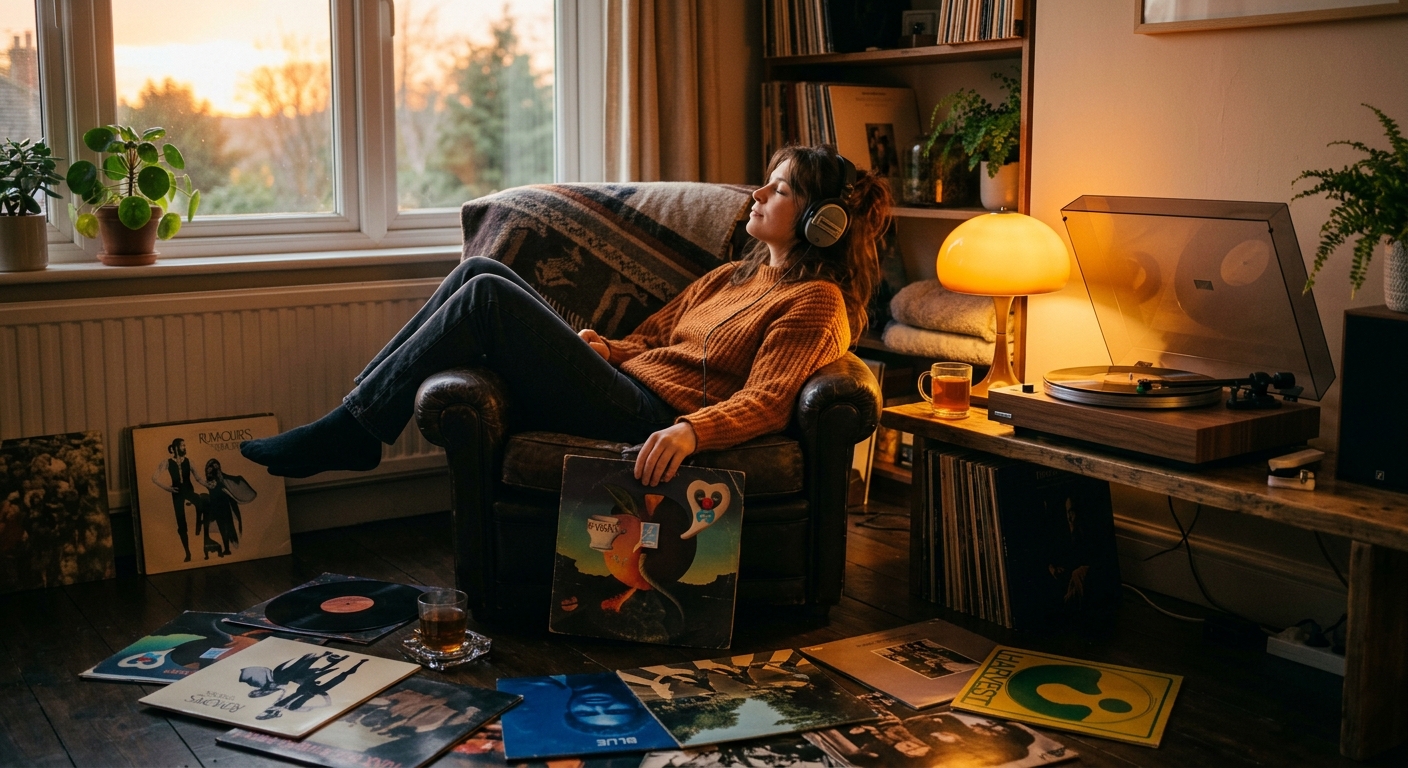
You put on a record, sit down, and let the music wash over you. Forty minutes later you are standing in the same spot, slightly dazed, holding an empty coffee mug you forgot to drink from. What just happened? You could tell it was good, but ask yourself what it was actually about and the details start to slip. This is where a listening journal changes everything.
Writing a review of each album you play sounds like extra work, and in a sense it is. But the work pays you back in memories, in deeper appreciation, and in a collection that becomes a living history instead of a static inventory. The difference between a collector who owns records and a collector who knows their records comes down to whether they stop to reflect on what they hear.
Neuroscience has been building a case for expressive writing about experiences for decades. A study published in Psychological Science found that writing about positive experiences activated the hippocampus and improved long-term memory retention by as much as 50 percent. When you write about a listening session, you are not just recording data; you are encoding the experience more deeply into your own history. That memory of hearing a specific record for the first time, with the afternoon light coming through the window and the particular smell of the sleeve, becomes something you can return to years later.
The act of writing about music also forces you to listen differently. Passive listening, the kind where a record plays while you scroll your phone, encodes maybe 10 to 15 percent of what you hear into long-term memory after a single day. Intentional listening, where you give the album your full attention and then try to describe what you heard, encodes 60 to 70 percent. You do not need a scientific study to suspect this is true. Think about the albums you have truly heard, the ones you can close your eyes and reconstruct. Those are almost always the records you sat down with and paid attention to.
Vinyl listening already encourages longer, more committed sessions than streaming does. Where the average streaming listener skips a track within the first 30 seconds roughly 70 percent of the time, vinyl plays reach their final side about 94 percent of the time. The physical ritual of handling a record, cleaning it, placing it on the platter, and lowering the needle creates what psychologists call a psychological commitment moment. You have invested effort, so your attention follows. Writing about the experience after extends that commitment and locks the memory in place.
Collectors who journal their listening sessions report something that might surprise anyone who thinks of record collecting as mere accumulation. Their relationship with their collection changes. Albums they have reviewed feel more valuable to them, not because the records themselves have changed, but because they have actively reflected on why each one matters. A 2020 study on consumer behavior found that collectors who documented their listening experiences showed 40 percent less buyer's remorse than those who did not. They remembered why they bought each record, which meant each purchase felt intentional rather than impulsive.
There is also the practical discovery factor. When you write about what you played, you are essentially keeping a running list of albums in your collection that deserve another spin. The records that surface in reviews as overlooked or underappreciated become obvious candidates for your next session. Collectors who maintain listening journals report a significantly higher replay rate for their existing collections. They stop buying the same kind of record over and over because they can actually remember what they already own.
The tradition of the listening journal is older than digital culture. Robert Christgau, the dean of American rock critics, kept meticulous listening notes for decades, developing what he called his Consumer Guide methodology through systematic documentation. Peter Guralnick, the eminent music historian, maintained listening journals in his formative years that later shaped his career. These are extreme examples, but they point to something real. Writing about music clarifies your taste, sharpens your ear, and gives you a record of who you were at a particular moment in your life.
You do not need to write for an audience. The best listening reviews are selfish in the best possible way. They are notes to your future self about what moved you, why it moved you, and what you noticed that you might have missed next time. Some people write a few sentences. Others write pages. The length matters less than the habit. What matters is that you stopped, after the music stopped, and tried to capture something of what happened.
What's Spinning makes this easy. After each session, you can open the app, find the record you just played, and write your notes right there alongside the listening history. The record stays linked to your collection, so your review becomes part of its permanent record. Over time you build a personal discography that goes far beyond what you own and into how you experienced it. The next time you pull that record off the shelf, your own words from a year ago will remind you exactly why you fell for it in the first place.
Start with tonight. Play an album all the way through, without your phone in your hand, and then write three sentences about what you heard. You will be surprised how much you remember, and how much more you will remember next time.
A spreadsheet tracks what you own. What's Spinning identifies what's playing.
On-device vinyl ID logs your listening history automatically. 7-day free trial.
Looking for Shazam for vinyl?
What's Spinning identifies what's playing on your turntable on-device, logs history, and AirPlays now-playing to your TV.
Comparing vinyl ID apps?
Analog requires Discogs and is iPhone-first (iPad coming). What's Spinning works without Discogs on iPhone and iPad with AirPlay.
Try What's Spinning Free
Turn your iPad into a live now-playing display. Track every record you spin.
START FREE TRIALThen $4.99/mo or $39.99/yr · Cancel anytime