How Indie Record Stores Survive in the Streaming Era
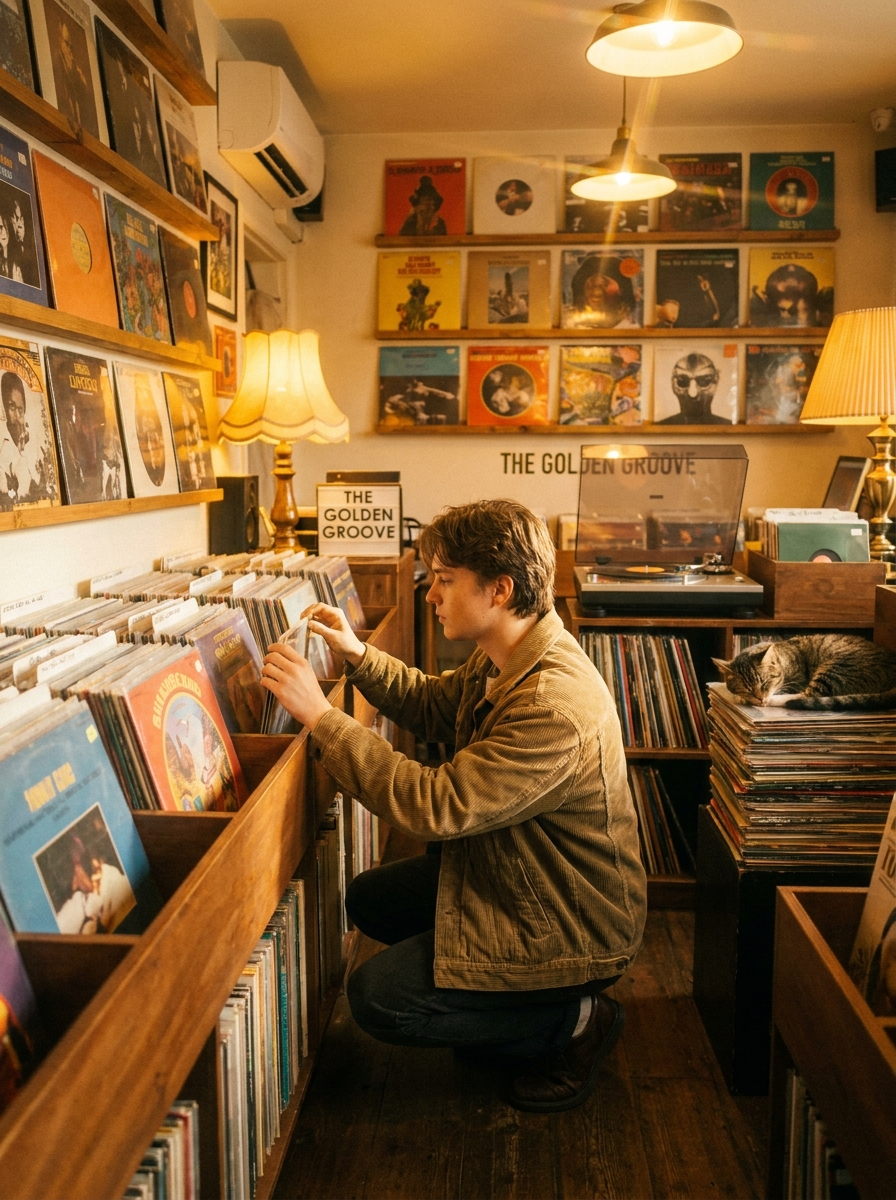
Every Thursday morning, Derek Burkhardt unlocks the door to his record shop in Portland, Oregon, and waits. Not for a crowd. Not for a sale. For something a lot harder to manufacture in 2025: a reason for someone to walk through his door instead of streaming whatever they want on their phone.
Derek is one of roughly 2,000 independent record stores still operating in the United States, down from a peak of over 5,000 in the 1980s. He opened Flashbacks Records in 2012, right when vinyl was staging its remarkable comeback. For the first few years, it felt like the revival would save him. Sales climbed 17% year over year, and his shop became a destination for collectors who wanted more than a algorithm-curated playlist.
Then the pandemic hit. And when it passed, something unexpected happened: vinyl kept selling, but the economics of running a record store got harder, not easier.
The Vinyl Revival Did Not Save Record Stores
Here is what the headline numbers hide. Vinyl record sales hit $1.2 billion in the United States in 2022, the sixteenth consecutive year of growth. That sounds like a renaissance. But that revenue is distributed across thousands of stores, and it comes with a set of realities that mainstream music reporting rarely unpacks.
Record stores earn their margin on the gap between what they pay for inventory and what collectors will pay for rare or well-curated stock. A used pressing of a Blue Note jazz original might cost a store $3 and sell for $40. That spread is healthy. But that kind of inventory is finite, and it requires expertise, time, and relationship-building that no amount of streaming-era foot traffic can substitute for.
The stores that struggle are the ones caught in the middle: too small to negotiate meaningful distribution terms with major labels, too large to run on the personal passion model that sustains a one-person operation. Between 2003 and 2008, more than 3,000 record stores closed across the United States. The revival slowed the bleeding but did not close the wound.
What Streaming Actually Did to Record Store Economics
Streaming did not kill record stores by replacing music purchases. It killed the ambient reason people used to have for walking into one. In the CD era, you needed to hear an album before you bought it. You went to the store, put it on the listening station, and made a decision. That behavior was the economic engine of every record store in America.
Streaming removed that friction entirely. You can now hear almost anything, instantly, for free. That is genuinely good for music fans. It is genuinely hard for record stores, which lost the browsing behavior that used to generate half their impulse purchases.
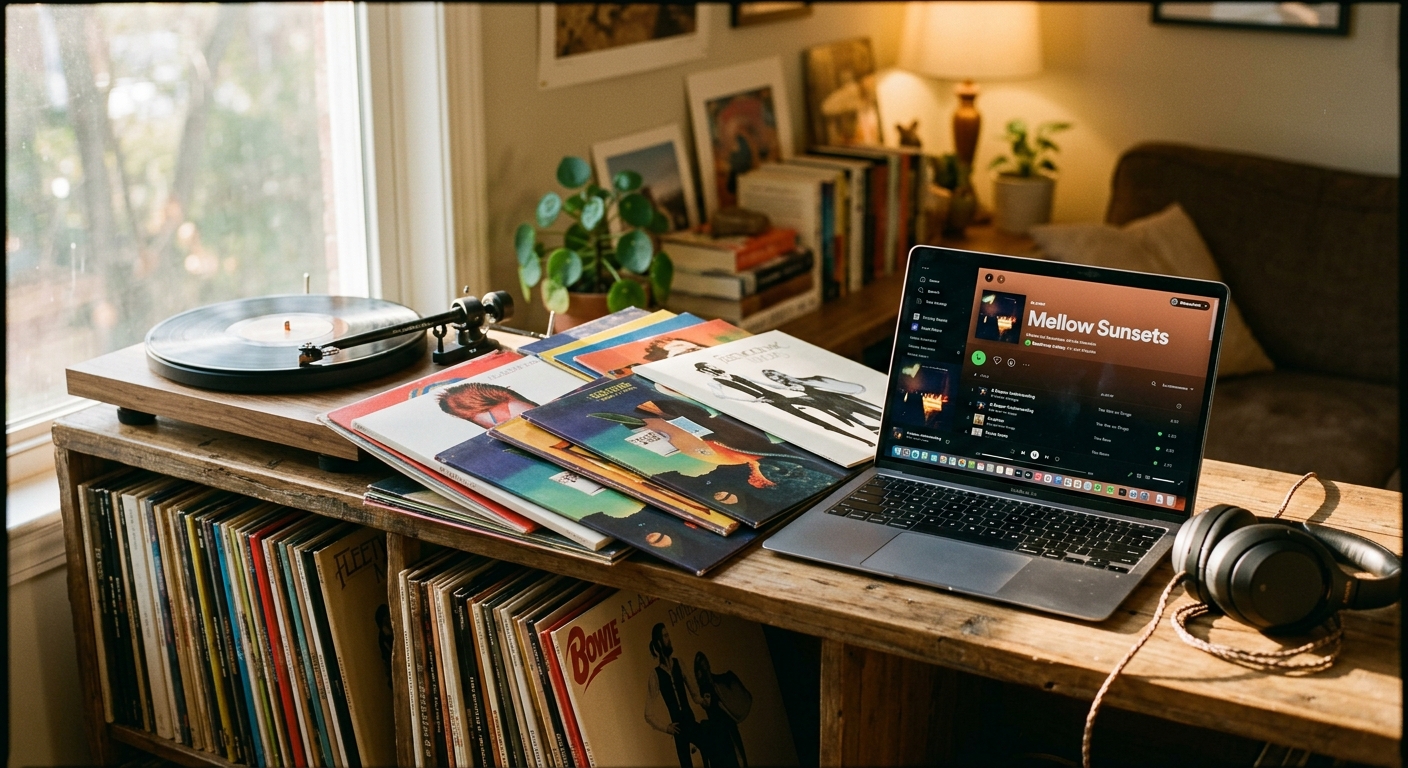
But here is the twist that the doomsayers missed: streaming also created the vinyl revival. When music became infinitely available and essentially free, the physical object became meaningful again. Not as a playback medium. As a cultural artifact, a collectible, a deliberate choice to own something permanent in a world of playlists and ephemeral streams.
That shift brought new customers into record stores. People who had never owned a turntable walked in and bought their first record. The customer base broadened from dedicated collectors to casual enthusiasts, and that diversification helped many stores survive the post-pandemic contraction of the collector market.
The Taylor Swift Effect on Record Store Traffic
In 2021, something unusual happened. Taylor Swift's album Evermore sold 102,000 vinyl LPs in a single week, breaking the record for biggest vinyl sales week since MRC Data began tracking in 1991. That was not an anomaly. It was a signal.
Swift's fanbase is disproportionately young and predominantly female, a demographic that record stores had largely lost in the CD era. When her vinyl releases started selling out in hours, it meant something: a new generation was treating record stores as destinations for fandom, not just music retrieval.
For Derek in Portland, the Swift Effect was tangible. His store sold more vinyl in 2021 than in any prior year. Not because Swift fans were audiophiles. Because they wanted a physical object tied to something they cared about. They wanted a poster-sized insert. They wanted a disc with artwork they could hold. Streaming gave them the song; the record store offered something fundamentally different.
By 2023, vinyl sales reached 49.61 million units in the United States, a 14% increase from the prior year. Swift alone was responsible for roughly 7% of all vinyl sold in the country. Her catalog moved 1.695 million LPs in 2022, more than the next two biggest sellers combined: Harry Styles and the Beatles.
The Business Model That Actually Works
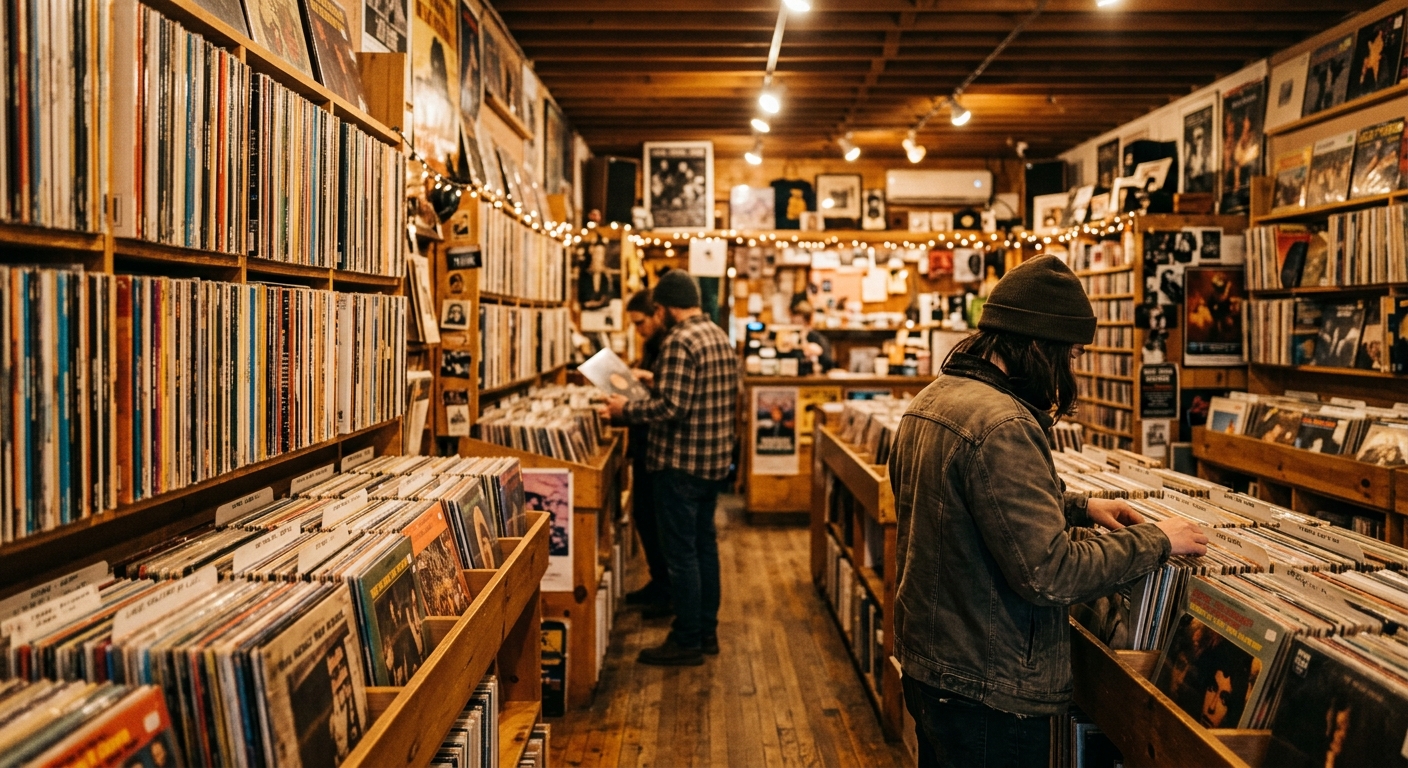
The record stores thriving in 2025 share a few traits that have nothing to do with vinyl revival PR. They have leaned into curation over volume. They host in-store events. They cultivate community around specific genres or artist fandoms. They treat their floor staff as music experts, not retail associates.
One of the most resilient models is the consignment arrangement. Stores that accept records from private sellers on commission earn 30 to 40% of the sale price but carry zero inventory risk. It lets a small shop offer the deep catalogs that made them essential without requiring capital tied up in stock that might not move for three years.
The most successful indie shops have also embraced the concept of the record store as a third place: neither home nor work, but a space where people with shared interests gather. In-store listening parties, artist meet-and-greets, and genre-specific nights generate foot traffic that no amount of Instagram advertising can replicate.
Record Store Day, the annual celebration of independent record shops held every April, has become economically essential for many stores. The limited-edition releases it generates draw customers who spend far more than the $25 to $35 typical for a new LP. For a store like Derek's, Record Store Day can represent 8 to 10% of monthly revenue in a single Saturday.
What the Numbers Actually Say
The data is mixed when you look past the headline vinyl revival numbers. Americans bought 49.61 million vinyl records in 2023, representing about 8% of total music sales by unit volume. CDs still outsell vinyl in absolute terms in most years, though the gap narrows annually. Streaming accounts for more than 80% of music consumption by revenue.
Record stores earn their survival one customer at a time, one carefully curated section at a time, one event that brings someone through the door who had never planned to buy anything at all. It is not a business model that scales. It is a business model that endures if you are willing to treat it as a calling rather than a career.
Derek Burkhardt is still unlocking his door every Thursday. He is not getting rich. But he is still here, and on any given Saturday, his shop is full of people who chose to be there, which in 2025 counts as something close to a miracle.
A spreadsheet tracks what you own. What's Spinning identifies what's playing.
On-device vinyl ID logs your listening history automatically. 7-day free trial.
Looking for Shazam for vinyl?
What's Spinning identifies what's playing on your turntable on-device, logs history, and AirPlays now-playing to your TV.
Comparing vinyl ID apps?
Analog requires Discogs and is iPhone-first (iPad coming). What's Spinning works without Discogs on iPhone and iPad with AirPlay.
Try What's Spinning Free
Turn your iPad into a live now-playing display. Track every record you spin.
START FREE TRIALThen $4.99/mo or $39.99/yr · Cancel anytime