Track Your Vinyl Collection in Real Time
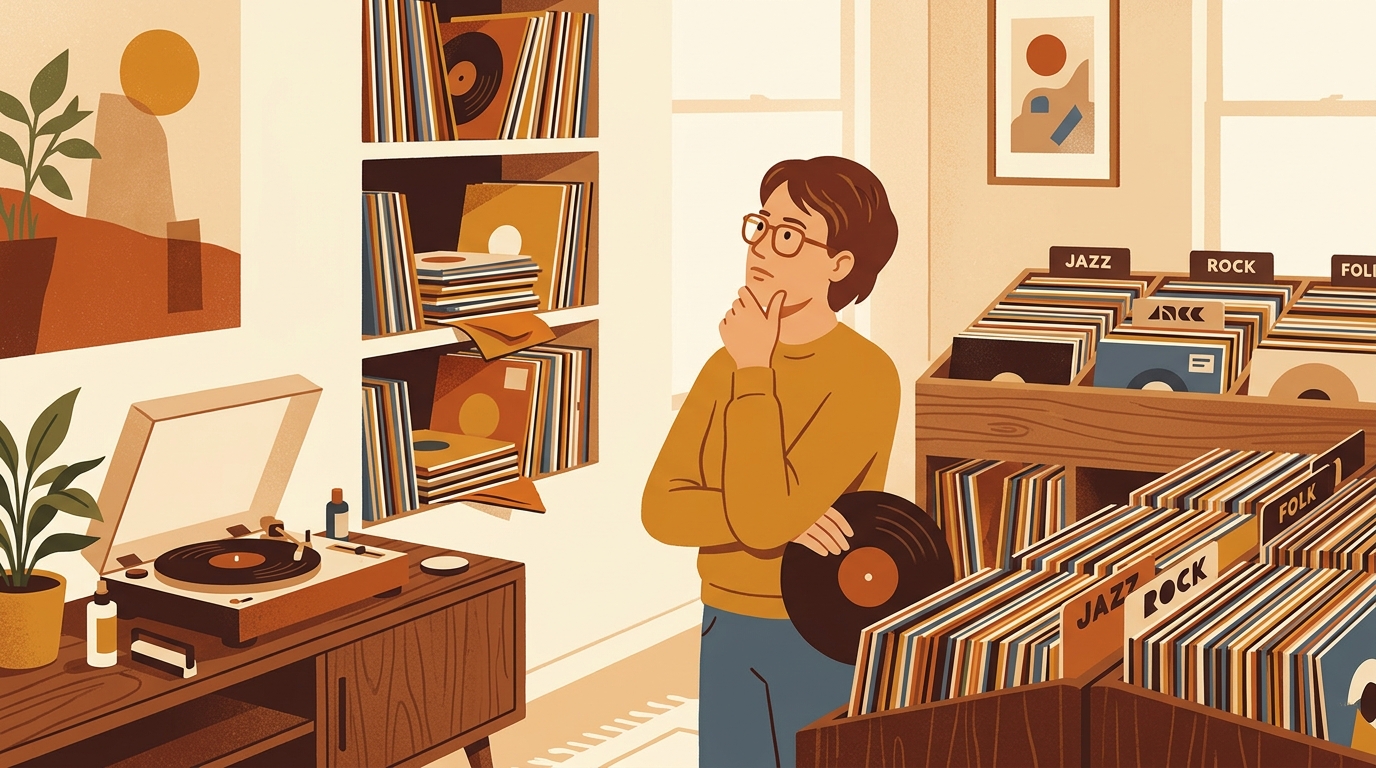
You are standing in the used record section at your local shop, flipping through a stack of LPs, when something catches your eye. It is a copy of an album you have been meaning to track down for months. You pull it out, flip it over to check the pressing details, and then that familiar feeling hits you. You are almost certain you already own this one, but you cannot quite remember. Was it the blue pressing or the black one? Did it end up in the stack of records you still have not catalogued?
If you have been collecting vinyl for any length of time, this moment probably feels familiar. The problem is not just the inconvenience of an accidental duplicate purchase. It is the quiet frustration of owning a collection you cannot fully see, a library of music that exists mostly as vague memories and undiscovered stacks on your shelves. Real-time vinyl collection tracking is the solution, and once you start, you will wonder how you ever managed without it.
The Vinyl Revival Is Real, and Collections Are Growing Fast
Vinyl has been making a comeback for nearly two decades now. Sales have grown for seventeen consecutive years, and in 2022 vinyl records officially outsold CDs in the United States for the first time since the 1980s. The Recording Industry Association of America reported $1.2 billion in vinyl revenue in 2023, and analysts see no sign of this trend slowing. The interesting part is who is driving it. Gen Z is now the fastest-growing demographic in vinyl, with nearly half of all new vinyl buyers under the age of 35. These are not people replacing a lost habit from their parents' era. They are discovering vinyl for the first time and investing in setups of their own.
What does this mean for collectors? It means the market is more active than ever, with more people building collections that range from a handful of carefully chosen records to hundreds of pressings that fill an entire room. With so many records changing hands at shops, online marketplaces, and garage sales, the risk of losing track of your own holdings has never been higher.
Why Collectors Track Their Records
There are several reasons vinyl enthusiasts start paying attention to what is in their collection, and they tend to build on each other. The first is practical. Duplicate purchases are surprisingly common. Roughly 67% of vinyl collectors have accidentally bought a record they already owned, and for medium-volume collectors that mistake can cost anywhere from $120 to $400 per year in wasted spending on albums sitting on shelves in duplicate form.
Beyond the financial angle, there is the question of rediscovery. Most vinyl collectors report that they only actively listen to about 40% of their collection at any given time. The rest sits filed away, forgotten, until a late-night dig through the shelves turns up something buried. Tracking your collection changes this dynamic. When you can see everything you own in a searchable list, you are far more likely to pull a record off the shelf and give it a spin instead of defaulting to the same familiar handful of albums you always reach for.
Then there is the investment angle. Vinyl has become a genuine alternative asset class, particularly for rare pressings. A first US pressing of Miles Davis "Kind of Blue" in good condition can fetch anywhere from $2,000 to $5,000 depending on the specifics. Collectors who track their holdings can monitor trends in their collection's value, spot appreciation in their wantlist, and make informed decisions about what to hold and what to let go.
And honestly, there is something deeper than all of this. Vinyl collecting is an emotional pursuit. These are physical objects that carry memories, sleeve art, liner notes you actually read, and a ritual of listening that streaming simply cannot replicate. A tracked collection becomes a diary of your taste over time, a map of the music that has mattered to you across different phases of your life.
The Problem with Letting Your Collection Run Itself
Without a tracking system in place, most collectors rely on memory and physical organization. Alphabetical by artist works fine until you start collecting compilations, box sets, and records that do not fit neatly into a single artist folder. Multi-artist samplers break alphabetical schemes. Records you acquired before you got serious about organizing end up in a catch-all section that you rarely revisit.
The result is something researchers call shelf blindness, a phenomenon where collectors stop seeing portions of their own collection because the volume is too large to hold in memory. You know you own more than you can actively recall, and that uncertainty changes how you interact with your records. You become less likely to lend a record to a friend because you are not sure you can find it again. You avoid selling duplicates because you cannot confidently identify what you have. The collection stops being a living part of your listening life and starts to feel like storage.
What Real-Time Tracking Looks Like
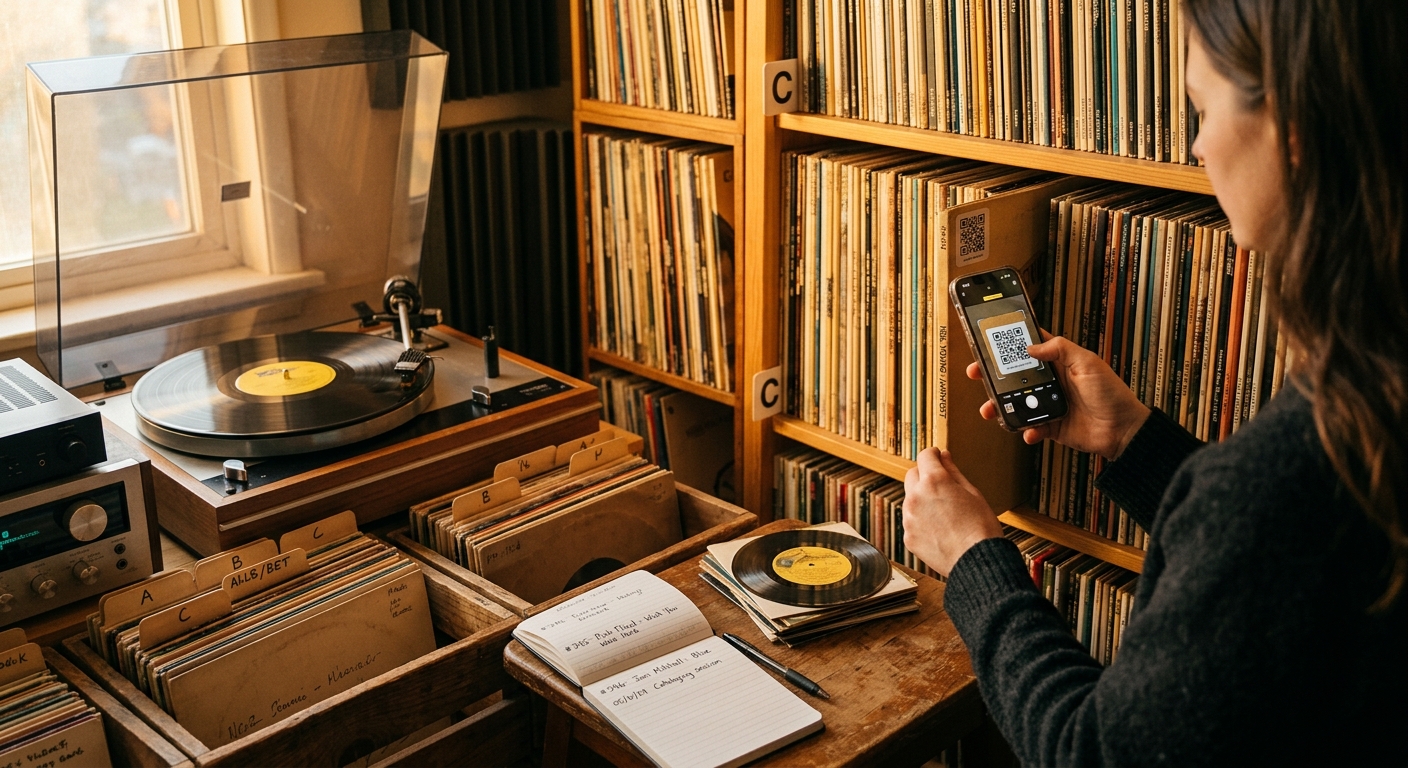
Modern vinyl collection tracking apps like What's Spinning are designed around the way collectors actually behave. Instead of treating your record library as a database to be maintained in a separate workflow, real-time tracking keeps your collection up to date as you use it. When you come home from a record store with a haul, you log it immediately. When you pull a record off the shelf for a listening session, that activity gets recorded. The result is a collection that feels more alive, more knowable, and more genuinely useful.
The tracking data also helps you make better decisions over time. You can see which genres dominate your collection and which gaps might be worth filling. You can track your spending and set realistic budgets for the month. You can build wantlists that actually complement what you already own instead of accidentally adding more records in styles you already have plenty of.
For collectors who have spent years with untracked collections, the shift does not have to happen all at once. Start with what you have today, log new acquisitions as they come in, and let the habit build naturally. Within a few months you will have a collection you can actually see and explore, and you will notice yourself making smarter, more intentional choices about what joins your shelves.
A spreadsheet tracks what you own. What's Spinning identifies what's playing.
On-device vinyl ID logs your listening history automatically. 7-day free trial.
Looking for Shazam for vinyl?
What's Spinning identifies what's playing on your turntable on-device, logs history, and AirPlays now-playing to your TV.
Comparing vinyl ID apps?
Analog requires Discogs and is iPhone-first (iPad coming). What's Spinning works without Discogs on iPhone and iPad with AirPlay.
Try What's Spinning Free
Turn your iPad into a live now-playing display. Track every record you spin.
START FREE TRIALThen $4.99/mo or $39.99/yr · Cancel anytime