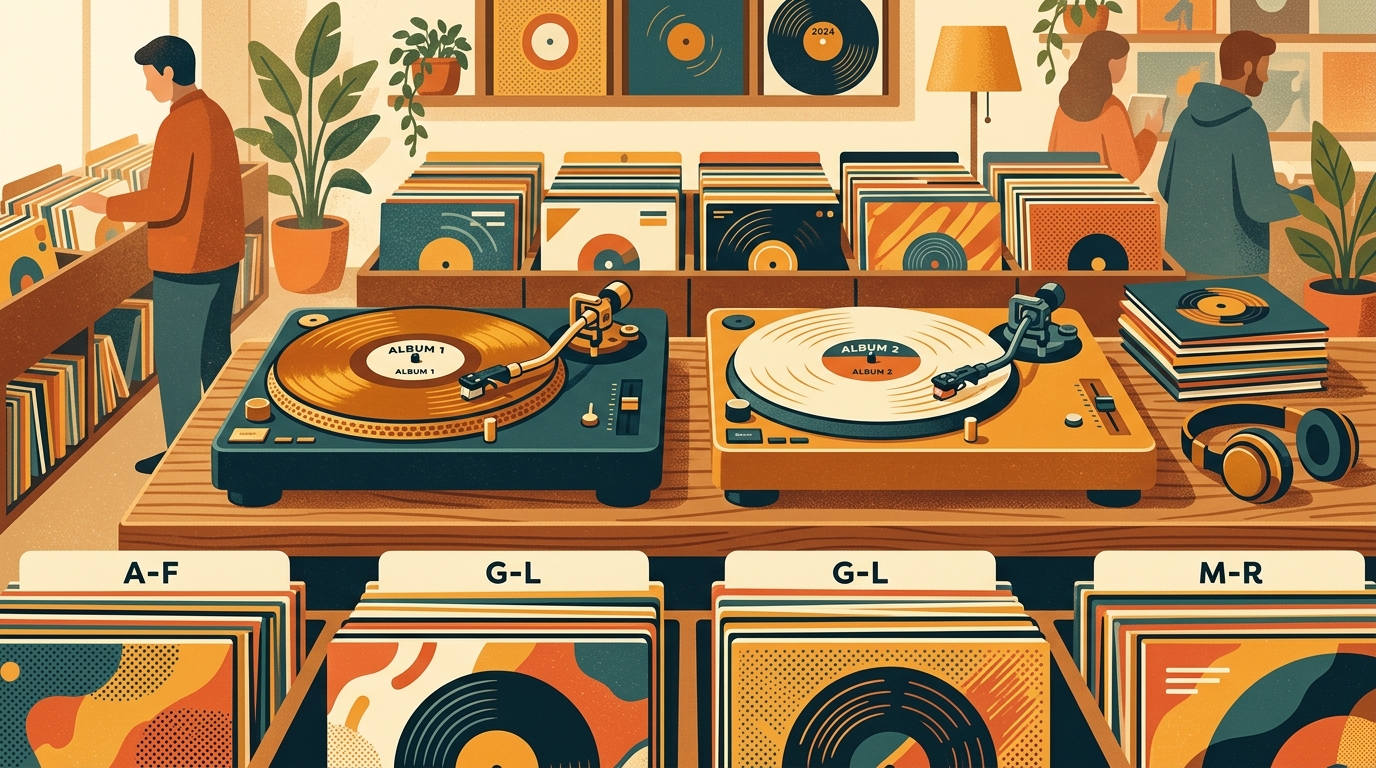
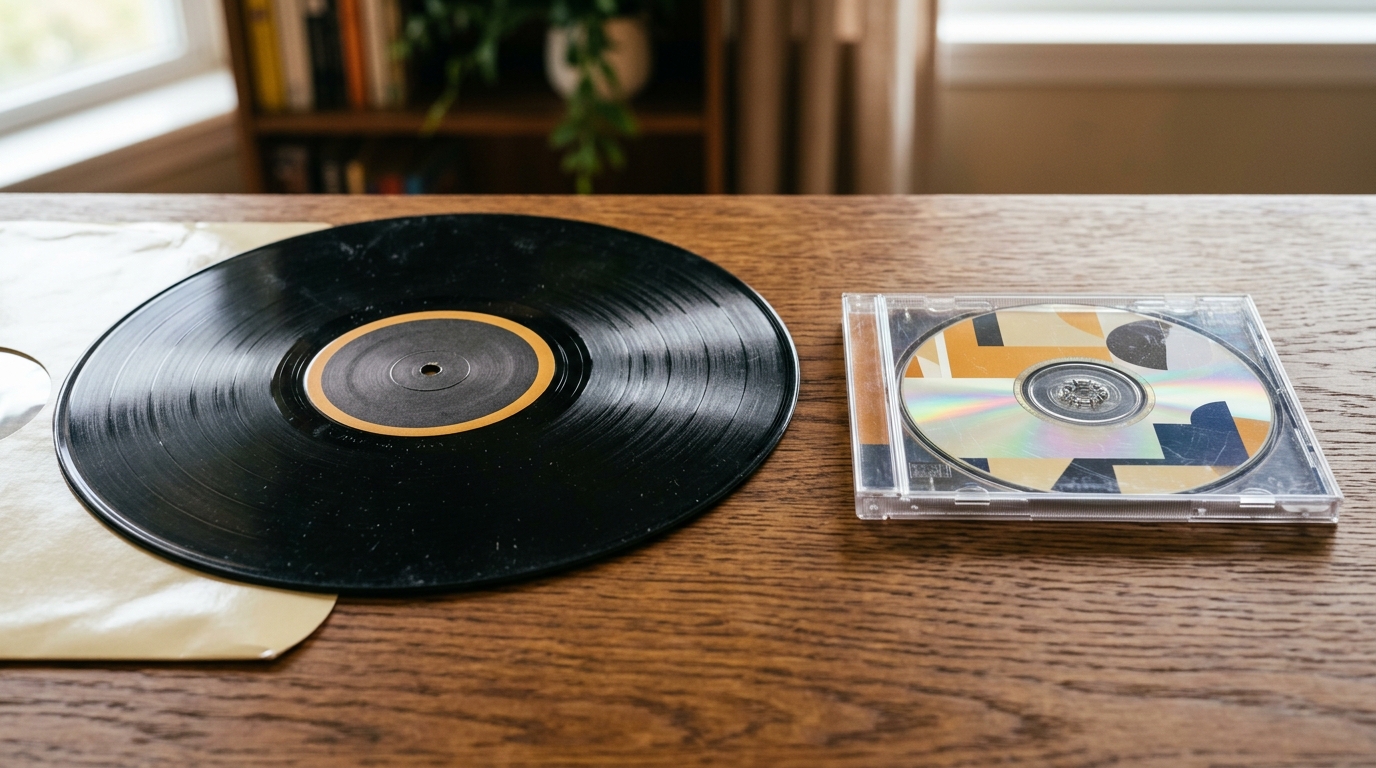
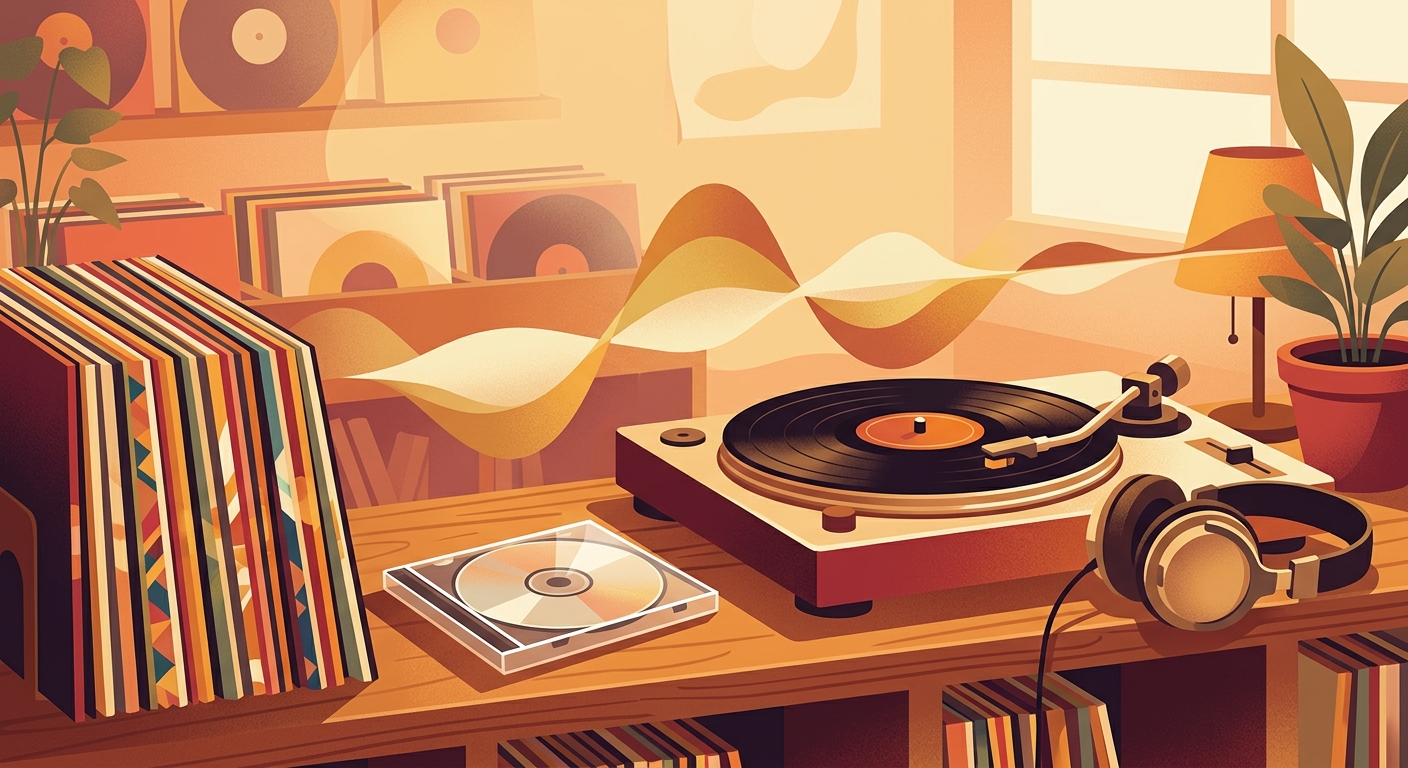
Why Vinyl Sounds Different Than Digital (And Why It Matters)
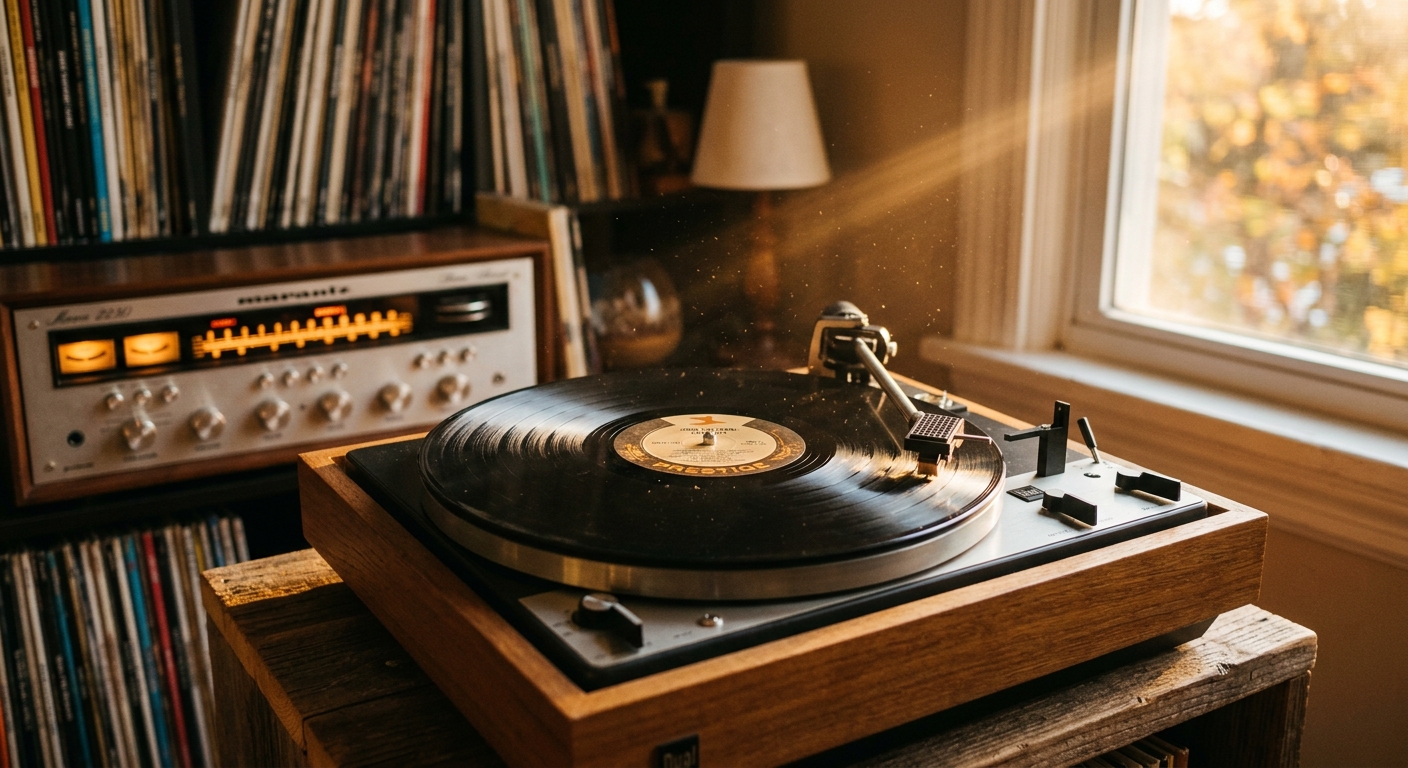
Pick up a vinyl record and drop the needle. What you hear is not just music, it is a living document of sound, captured in a physical groove and translated into movement, vibration, and air. Digital music, by contrast, arrives as a sequence of numbers, reconstructed several thousand times per second into something that approximates the original. The difference between these two paths to your ear is not merely technical; it is the difference between a river and a frozen snapshot of one.
The vinyl record stores sound as a continuous physical waveform. A cutter etches a groove into lacquer-coated metal, translating the musical signal directly into a spiraling landscape of peaks and valleys. When the stylus traces this landscape, it moves in perfect proportion to those original vibrations. There is no intermediary step of measuring amplitude at discrete intervals and encoding those measurements into binary form. The waveform on the record is the sound itself, reproduced through pure mechanical motion.
Compact discs and digital streaming take the opposite approach. An analog signal is sampled at regular intervals, typically 44,100 times per second for CD-quality audio, and each sample is assigned a numeric value based on its amplitude. This process is called quantization, and it introduces a small but real error called quantization noise. The more bits used per sample, the quieter this noise becomes, which is why higher bit depths reduce digital artifacts. Yet no amount of bits eliminates the fundamental fact that what lies between the samples is interpolated, estimated from neighboring data points rather than captured directly.
This is why vinyl advocates often describe digital as sounding harsh or clinical. The human ear is exquisitely sensitive to timing details in sound. Transient information, such as the initial attack of a drum strike or the pluck of a guitar string, carries enormous perceptual weight. Digital reconstruction can smear these transients slightly, not because the technology is faulty, but because the act of sampling creates finite time gaps that the reconstruction algorithm must fill. Vinyl has no such gaps. The groove flows continuously from the outer edge to the center, and the stylus follows every undulation without approximation.
There is also the matter of harmonic distortion, which vinyl frequently produces in forms that the ear finds pleasing rather than objectionable. When a phonograph cartridge traces a groove, its cantilever responds to the lateral movement of the stylus. This mechanical interaction generates harmonic distortions, but many of these are even-order harmonics, which tend to sound octave-like and consonant to human ears. Digital clipping, by contrast, creates odd-order harmonics that are more perceptually dissonant. A perfectly clean digital recording may contain less total harmonic distortion than vinyl, yet the distortion vinyl adds is often described as warmth rather than brightness.
The RIAA equalization curve plays a significant role in shaping the vinyl listening experience as well. When a record is cut, low frequencies are reduced and high frequencies are boosted during recording. On playback, the inverse occurs, with low frequencies restored and high frequencies rolled off. This pre-emphasis and de-emphasis was adopted as an industry standard in 1954, and it accomplishes several things simultaneously. It reduces groove width by limiting low-frequency excursions, allowing more music to fit on a disc. It attenuates surface noise, which concentrates in high frequencies. And it places less physical stress on the stylus during playback. The result is a system that trades one kind of fidelity for another, emphasizing musical coherence over laboratory precision.
None of this means digital audio is inferior in every respect. CDs and streaming offer wider frequency response, lower noise floors in ideal conditions, and perfect reproducibility without wear. A digital file copied one thousand times is identical to the original. Every time you play a vinyl record, the stylus deposits microscopic debris in the groove, and the groove itself suffers tiny deformations. After dozens of plays, a record sounds measurably different than it did fresh from the pressing plant. Digital does not degrade in this way, and for many listeners that consistency is exactly what they want.
But the vinyl resurgence among younger listeners suggests that measurables do not capture everything that matters about music. Record sales have grown for seventeen consecutive years in the United States, with Generation Z driving much of that growth. These listeners grew up entirely in the digital era and have access to any album ever recorded through their phones. They choose vinyl not because it measures better, but because it feels different to use. The ritual of selecting a record, cleaning it, and lowering the arm creates a different relationship with the music than tapping a play button. And the sound itself, with its subtle surface noise and unhurried transients, rewards that attention in ways that digital does not.
The debate between analog and digital will not be settled, nor should it be. What matters is that both exist as options, each offering something the other cannot. Vinyl delivers a continuous acoustic experience shaped by physics, engineering trade-offs, and a century of refinement. Digital delivers precision, convenience, and perfect duplication. The question of which sounds better is ultimately a question of what you are listening for. For anyone who wants to feel the music as much as hear it, the answer is often sitting right there on the turntable, waiting for the needle to drop.
A spreadsheet tracks what you own. What's Spinning identifies what's playing.
On-device vinyl ID logs your listening history automatically. 7-day free trial.
Looking for Shazam for vinyl?
What's Spinning identifies what's playing on your turntable on-device, logs history, and AirPlays now-playing to your TV.
Comparing vinyl ID apps?
Analog requires Discogs and is iPhone-first (iPad coming). What's Spinning works without Discogs on iPhone and iPad with AirPlay.
Try What's Spinning Free
Turn your iPad into a live now-playing display. Track every record you spin.
START FREE TRIALThen $4.99/mo or $39.99/yr · Cancel anytime