Vinyl vs Streaming Sound Comparison for Audiophiles
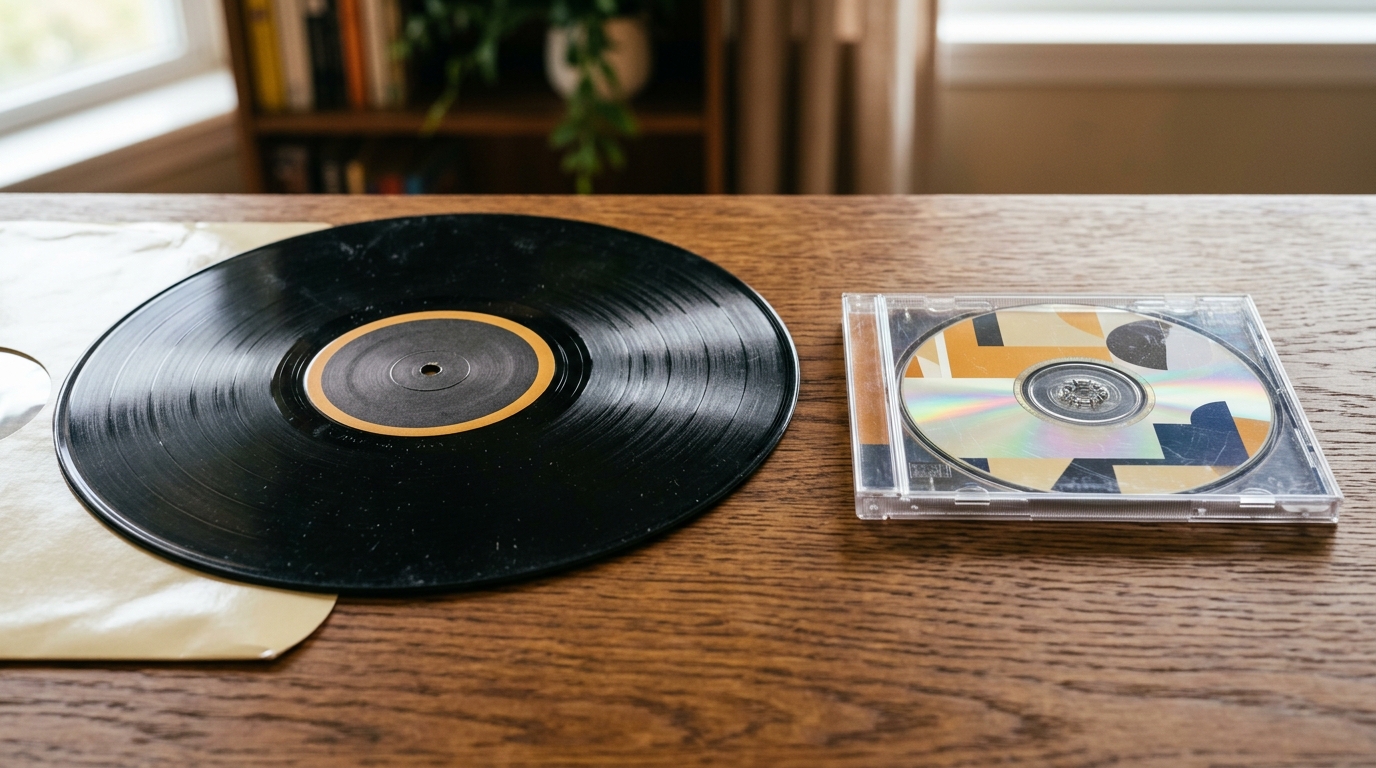
Ask a room full of audiophiles whether vinyl beats streaming and you will quickly learn that “sound quality” is not one argument. It is at least four: measured fidelity, mastering, playback gear, and the way a format changes your attention. For the keyword version of the question, vinyl vs streaming sound, the honest answer is simple but not simplistic: lossless streaming usually wins on technical accuracy, while vinyl can win when the pressing, mastering, and listening ritual make the record more enjoyable.
Streaming is no longer just low bitrate background music. Spotify lists Premium quality up to about 320 kbit/s, and its Lossless option as up to 24-bit/44.1 kHz FLAC.[1] Apple says most of Apple Music is available in ALAC from 16-bit/44.1 kHz, which is CD quality, up to 24-bit/192 kHz.[2] Qobuz describes CD quality as 16-bit/44.1 kHz FLAC and hi-res as 24-bit up to 192 kHz.[3] In other words, a modern lossless stream can deliver a cleaner digital signal than almost any domestic vinyl playback chain.
The measurement case for streaming
Digital audio has two big advantages: a very low noise floor and repeatability. A 16-bit digital file has roughly 96 dB of theoretical dynamic range, while SoundGuys cites vinyl around 70 dB and notes that digital files can exceed vinyl by a wide margin in dynamic range and channel separation.[4] Streaming also does not add groove roar, ticks, off-center wow, inner-groove tracing distortion, stylus wear, or dust. If you play the same lossless file today and a year from now, the file has not physically aged.
That matters on revealing systems. A good DAC feeding a quiet amplifier can make room ambience, reverb tails, and stereo placement feel locked in. Digital channel separation can exceed 90 dB, while vinyl playback is constrained by the mechanical relationship between the stylus, groove walls, cartridge, arm, and phono stage.[4] For classical music, sparse jazz, acoustic records, and any recording with very quiet passages, streaming can sound less like a format and more like a clear window.
Why vinyl still sounds better sometimes
The plot twist is mastering. Many audiophile comparisons accidentally compare two different masters, not two formats. A vinyl cut may be made from a more dynamic source because excessive bass, sibilance, level, and brickwall limiting create physical cutting and tracking problems. A streaming version may use a louder master designed to survive playlists, earbuds, car speakers, and normalization systems. When that happens, the record can sound bigger, calmer, and more three-dimensional even though the format measures worse.
The opposite is also true. Plenty of new LPs are cut from the same compressed digital master used for streaming, then pressed on noisy vinyl. That is not analog magic. It is the same master with added surface noise and a $30 to $45 price tag. Audiophiles should ask a better question than “which format is better?” Ask: which release uses the best master, and can my system reveal it?
The “warmth” question
Vinyl warmth is real as a perception, but it is not proof of higher fidelity. The record chain can add harmonic distortion, subtle frequency-response changes, cartridge coloration, crosstalk, and mechanical artifacts. Some of those effects are musically flattering. A slightly rounded top end can make harsh cymbals easier to live with; a cartridge with character can make vocals feel more tactile; gentle distortion can read as body rather than damage. That is preference, not perfect accuracy.
A 2015 Audio Engineering Society convention e-brief by Michael Uwins studied perceptions of vinyl audio quality using double-blind listening tests and later usability tests with physical media and playback equipment.[5] The takeaway for collectors is that perceived quality is not purely auditory. Handling the sleeve, cueing the record, and committing to a side can change how carefully you listen.
Care and setup change the vinyl result
Vinyl is brutally dependent on setup. Cartridge alignment, tracking force, anti-skate, record cleanliness, turntable isolation, phono preamp gain, and speaker placement all affect the result. A great pressing with a worn stylus can sound worse than a 256 kbit/s stream.
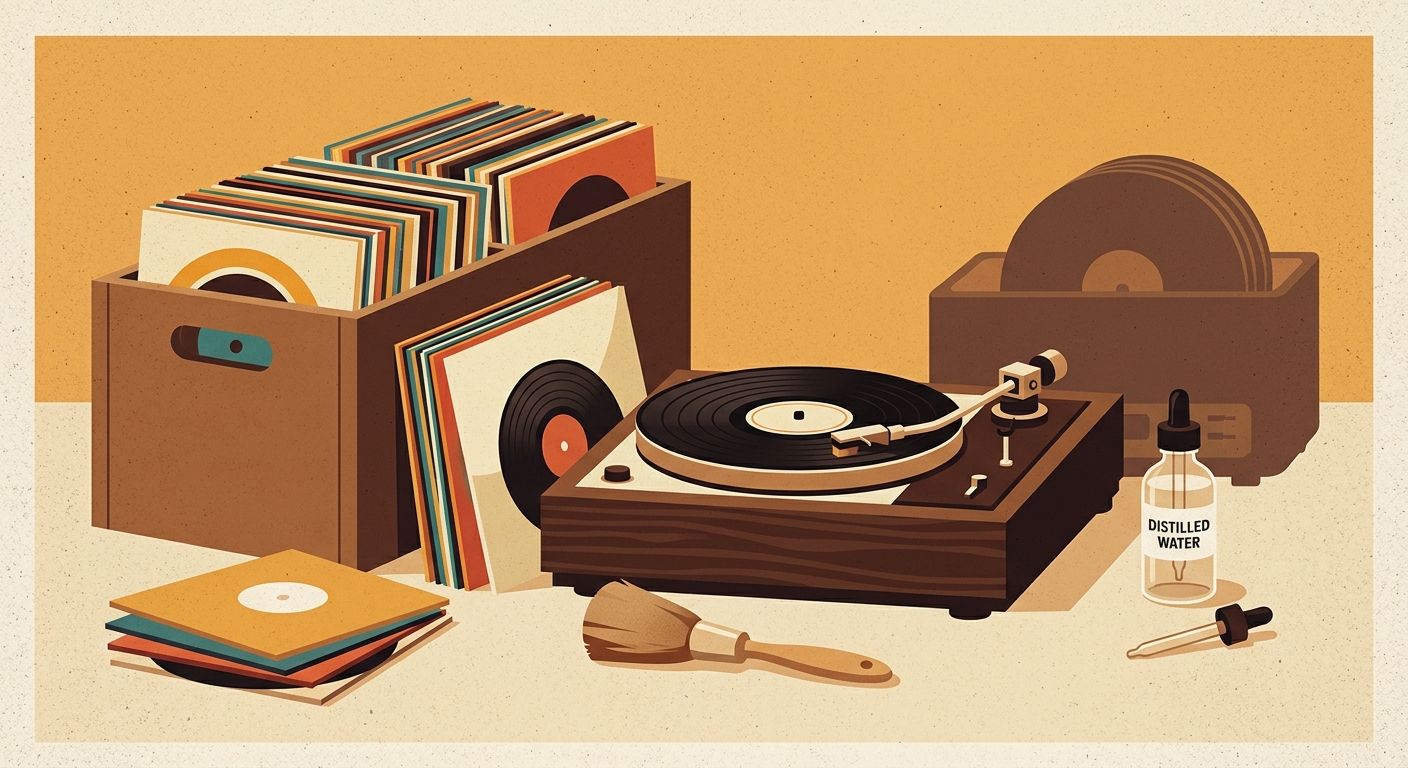
Storage also matters. The Library of Congress recommends storing discs upright, keeping playback equipment clean and well maintained, avoiding direct light and environmental extremes, and keeping home collections cool, stable, and relatively dry, around 35 to 40 percent relative humidity.[6] Audiophile vinyl sound is not just bought, it is maintained.
The market says listeners want both
The format war is mostly over in real life. RIAA reported that U.S. recorded music revenues reached $17.7 billion in 2024, with streaming at $14.9 billion, or 84 percent of total revenues. Vinyl still grew for the eighteenth straight year to $1.4 billion, with 44 million vinyl albums sold compared with 33 million CDs.[7] Modern collectors stream for discovery, then buy the pressings that earn shelf space.
That is where a collection tracker like What’s Spinning can help. If you compare an original LP, a modern remaster, and a hi-res stream, keep notes on pressing details, cartridge, and listening impressions.
How to compare fairly at home
First, level-match. Even a small volume difference can make one version seem clearer. Second, compare the same mastering when possible. Third, use wired playback for lossless streaming, since Bluetooth adds codec limits. Fourth, listen to whole passages, not just the loud chorus. Inner-groove tracks, piano decay, vocal sibilance, room tone, cymbal texture, and bass stability tell you more than a five-second A/B flip.
For audiophiles, the answer is streaming for reach and cleanliness; vinyl for ownership, specific masterings, artwork, and listening.
FAQ
Is vinyl higher quality than streaming?
Usually not by measurement. Lossless streaming has lower noise, wider theoretical dynamic range, and no physical wear. Vinyl can still sound better when the LP uses a better master or when your turntable system presents the music in a way you prefer.
Can audiophiles hear the difference between vinyl and lossless streaming?
Often, yes, but the difference may come from mastering, cartridge coloration, surface noise, level mismatch, or speaker setup rather than the format alone. Fair comparisons require close volume matching and, ideally, the same master.
Does hi-res streaming make vinyl obsolete?
No. Hi-res streaming can exceed vinyl on technical specifications, but records still offer ownership, artwork, pressing history, and a focused album experience. Hi-res is the cleaner signal; vinyl is the more collectible object.
What is the best way to test vinyl vs streaming sound at home?
Pick one album you know well, clean the record, align the turntable, use a wired lossless stream, match volume carefully, and listen for noise floor, vocal texture, bass control, cymbal decay, and fatigue over a full side.
Sources
- Spotify Support, Audio quality
- Apple Support, About lossless audio in Apple Music
- Qobuz, Understanding music in high sound quality
- SoundGuys, Does vinyl sound better than streaming?
- Michael Uwins, Analogue Hearts, Digital Minds?, AES 138th Convention e-brief
- Library of Congress, Care, Handling, and Storage of Audio Visual Materials
- RIAA, 2024 Year-End Music Industry Revenue Report announcement
A spreadsheet tracks what you own. What's Spinning identifies what's playing.
On-device vinyl ID logs your listening history automatically. 7-day free trial.
Looking for Shazam for vinyl?
What's Spinning identifies what's playing on your turntable on-device, logs history, and AirPlays now-playing to your TV.
Comparing vinyl ID apps?
Analog requires Discogs and is iPhone-first (iPad coming). What's Spinning works without Discogs on iPhone and iPad with AirPlay.
Try What's Spinning Free
Turn your iPad into a live now-playing display. Track every record you spin.
START FREE TRIALThen $4.99/mo or $39.99/yr · Cancel anytime