Vinyl vs Streaming Sound Quality: Which Sounds Better?
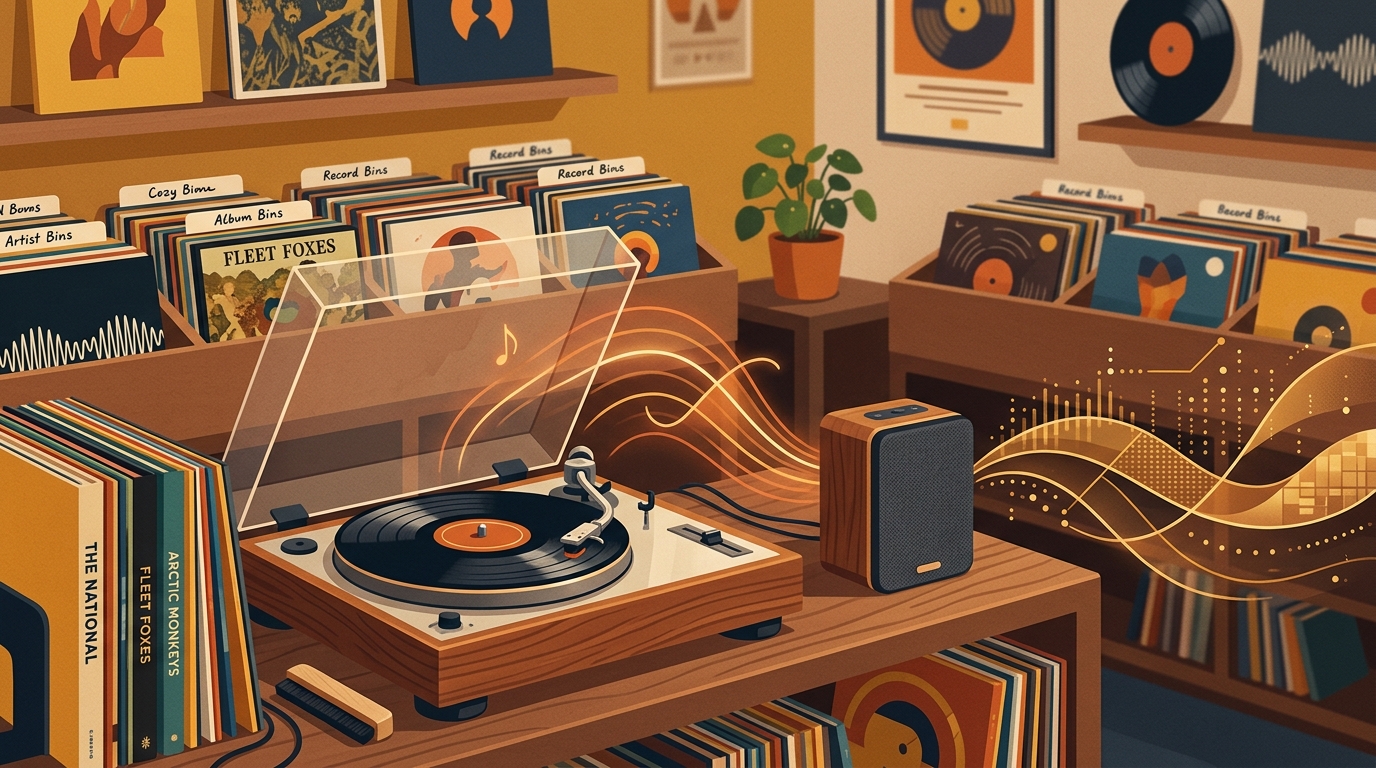
The honest answer in the vinyl vs streaming sound quality debate is not the one most format wars want. Streaming can be more accurate, quieter, wider in dynamic range, and closer to the master file when you use a good lossless service. Vinyl can still sound more involving, physical, and satisfying when the pressing is good and the turntable is set up correctly. Better is not one format. Better is the specific master, played through a specific system, for a specific listener.
That distinction matters for collectors. If you use What's Spinning to remember what actually hits your turntable, you already know the emotional side of playback is real. The record you reach for on a Friday night may not be the mathematically cleanest version. It may simply be the version that makes you listen all the way through side two.
What streaming does better
Modern streaming is not the tinny compromise it was in the early smartphone era. Spotify lists its very high setting as roughly 320 kbit/s, and its lossless tier as up to 24-bit/44.1 kHz FLAC. Apple says most of the Apple Music catalog is available in ALAC, ranging from 16-bit/44.1 kHz, described as CD Quality, up to 24-bit/192 kHz. In plain English, the best streaming options can deliver clean, quiet, full-frequency audio without groove wear, off-center pressings, dust, mistracking, or rumble from the turntable.
Streaming also wins on consistency. Play the same track ten times and the file does not become noisier. There is no stylus dragging through a groove, no inner-groove distortion near the label, and no pressing defect baked into your copy. If the master is good, a competent DAC and lossless stream can sound extremely transparent.
Where vinyl still has an edge
Vinyl's advantage is not perfect measurement. It is presentation. A well-cut LP can make music feel big, dimensional, and human in a way many listeners love. Part of that comes from mastering choices. Vinyl often requires a dedicated mastering pass because extreme bass, harsh sibilance, and excessive side length create physical problems for the cutting engineer. That constraint can encourage less aggressive EQ and limiting than some digital releases, although it is not guaranteed.
The playback chain also shapes the sound. Cartridge, stylus profile, phono preamp, tracking force, alignment, platter mat, and speaker placement all matter. That is why two people can own the same record and hear different things. A clean copy played on a careful setup can sound wonderful. A worn copy on a misaligned cartridge can make the same album sound dull, distorted, and noisy.
The measurements favor digital
If the question is pure technical headroom, digital usually wins. CD-quality audio is 16-bit/44.1 kHz PCM, and modern lossless streaming can match or exceed that. SoundGuys summarizes the broad measurement gap by noting that digital files can allow more than 90 dB of dynamic range, while vinyl is closer to about 70 dB. The exact number varies by record and system, but the direction is clear: digital has a lower noise floor and more measurable room between silence and loud peaks.
Vinyl also has format-specific limits. Bass must be managed so the stylus can track the groove. Very long album sides often require lower cutting levels or narrower grooves. The inside of an LP side has lower linear speed than the outside, so inner tracks can be harder to reproduce cleanly, especially if the record is hotly cut or the cartridge alignment is off.
The real culprit is mastering
Format arguments often ignore the biggest variable: mastering. A compressed streaming master can sound flat and fatiguing. A carefully mastered vinyl edition can breathe. The reverse is just as common. Some modern LPs are cut from the same loud digital master used for streaming, then pressed on noisy vinyl. Some streaming versions are excellent high-resolution transfers from original tapes. The label, engineer, source, and release history matter more than the logo on the playback format.
A famous example is how collectors compare different pressings of the same album. A first UK pressing, a 1970s US reissue, a half-speed master, and a modern remaster can all have different EQ, compression, tape sources, and cutting decisions. Streaming has version differences too, but they are less visible. The app may show one album title while quietly serving a later remaster.
The market says people want both
RIAA's 2025 year-end report shows how large streaming has become: total streaming revenue reached $9.47 billion in the United States, with paid streaming growing to 106.5 million accounts. Vinyl is smaller but culturally powerful. The same report says vinyl revenue rose 9.3% to $1.04 billion, with 46.8 million units shipped, and that vinyl has grown for 19 straight years. People are not buying records because streaming disappeared. They are buying records because ownership, ritual, artwork, and focused listening still matter.
So, which sounds better?
For accuracy, quiet backgrounds, and reliable playback, lossless streaming usually sounds better. For ritual, tactile presence, and certain masterings, vinyl can be the more rewarding listen. If you want the practical rule, use streaming to compare versions, discover music, and hear clean reference playback. Buy vinyl when the album earns the ritual, the pressing is well regarded, and you want a physical copy you will actually play.
The best answer is wonderfully inconvenient: judge releases, not formats. A great record beats a bad stream. A great stream beats a bad record. Your ears, your room, and your habits get the final vote.
FAQ
Not technically in most cases. Lossless streaming usually has lower noise and wider measurable dynamic range. Vinyl can still sound better to a listener when the mastering, pressing, and turntable setup are excellent.
Yes. A lossless stream through a good DAC can sound exceptionally clean and detailed. Whether it feels as satisfying as vinyl depends on mastering, playback gear, and personal preference.
Warmth can come from mastering choices, cartridge character, phono preamp coloration, gentle distortion, and the way vinyl handles certain frequencies. It is a real listening impression, but it is not the same as higher accuracy.
Buy vinyl for albums you love enough to play as objects, not because every LP will outperform streaming. Streaming is better for discovery and convenience; vinyl is better for focused listening and collecting.
Sources
A spreadsheet tracks what you own. What's Spinning identifies what's playing.
On-device vinyl ID logs your listening history automatically. 7-day free trial.
Looking for Shazam for vinyl?
What's Spinning identifies what's playing on your turntable on-device, logs history, and AirPlays now-playing to your TV.
Comparing vinyl ID apps?
Analog requires Discogs and is iPhone-first (iPad coming). What's Spinning works without Discogs on iPhone and iPad with AirPlay.
Try What's Spinning Free
Turn your iPad into a live now-playing display. Track every record you spin.
START FREE TRIALThen $4.99/mo or $39.99/yr · Cancel anytime