Where to Start with Jazz Vinyl: Recommendations
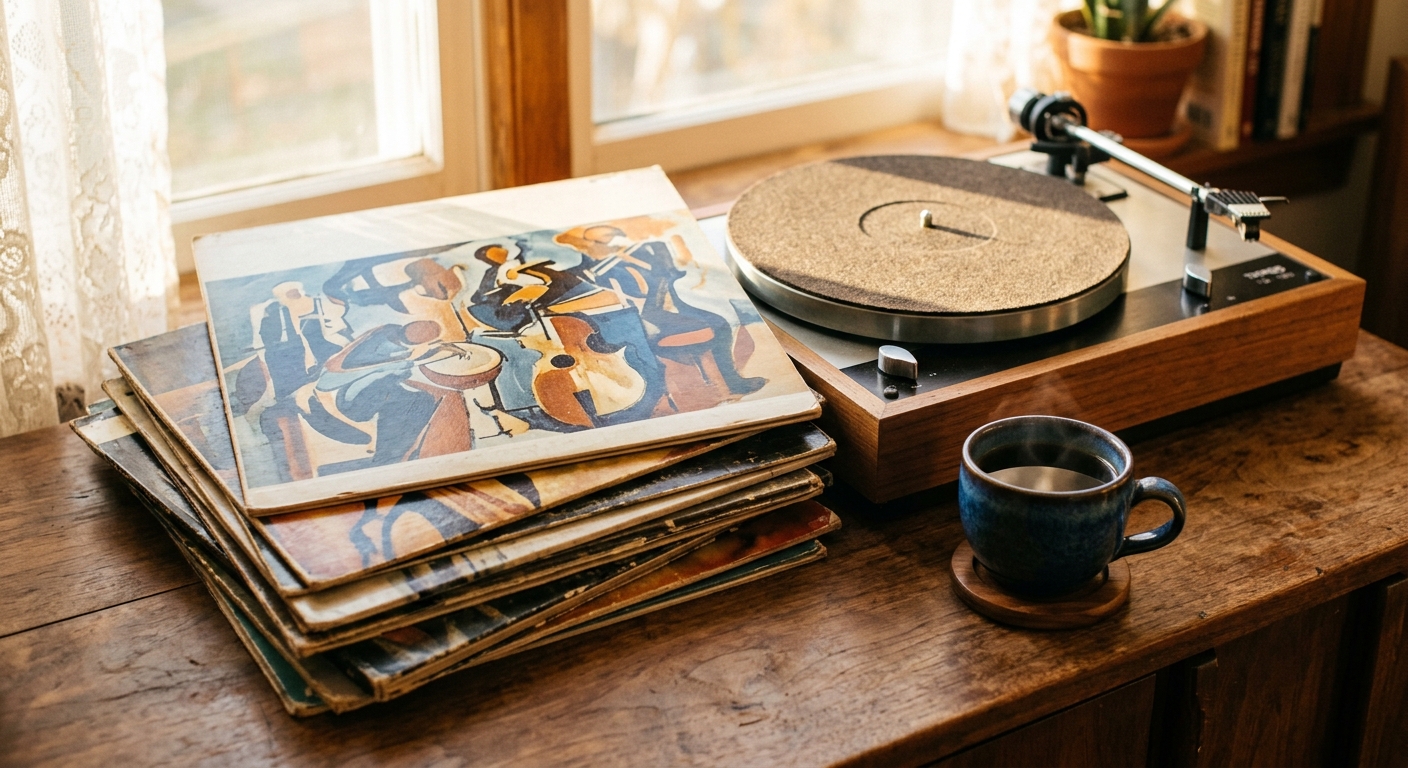
If you have ever stared at a jazz section and felt your eyes glaze over, you are not alone. Walk into any decent record store and the jazz bins stretch wall to wall: Blue Note spines, Prestige yellow labels, Riverside, Impulse, Verve, Columbia six-eyes. The good news is that almost every jazz record you actually need to own as a newcomer has been remastered in the last decade, and the modern reissue market is unusually friendly to first-time buyers. Vinyl LP sales in the U.S. hit 46.8 million units in 2025 and grew for a nineteenth straight year, and jazz was one of the genres that benefited from that growth because reissue programs got more ambitious. You are shopping in a deep market. The trick is knowing which ten to buy first.
Start With One Album From Each Door Into the Music
The most common beginner mistake is buying seven Miles Davis records in a row. Miles is great, but if you start there you miss the actual breadth of jazz. A more useful starter shelf mixes one album from each major door into the music: one modal classic, one hard bop session, one cool or west coast record, one vocal or bossa nova album, one live piano trio date, one spiritual or large-ensemble record, and one electric fusion record from the 1970s. Ten LPs that hit each of those notes will teach your ears more than thirty albums from a single subgenre. The list below uses that frame, and every pick is available as a clean modern reissue for between twenty and forty-five dollars.
The Ten Albums Worth Owning First
1. Miles Davis, Kind of Blue (Columbia, 1959)
The most obvious pick in jazz is also the right one. Kind of Blue was recorded in one day in Columbia's 30th Street Studio in 1959 with a small group that included Bill Evans, John Coltrane, Cannonball Adderley, Paul Chambers, and Jimmy Cobb. It is modal jazz, meaning the chords are simple and the improvisations do most of the talking. The Columbia/Legacy 180-gram reissue is widely available for around twenty-five to thirty dollars and sounds excellent. If you buy only one jazz record, this is it.
2. Art Blakey and the Jazz Messengers, Moanin' (Blue Note, 1958)
If Kind of Blue is the quiet door into jazz, Moanin' is the loud one. Blakey's Messengers were a hard bop cooperative that launched dozens of important soloists, including Lee Morgan, Benny Golson, and Bobby Timmons. The title track is one of the most infectious grooves in jazz. The Blue Note Classic Vinyl reissue series prices most of its hard bop titles at or under thirty dollars, and Moanin' is one of the most accessible entries. Look for the RVG-engineered remaster with Tony Bennett's liner notes on the back cover.
3. John Coltrane, Blue Train (Blue Note, 1957)
Blue Train is Coltrane's only album as leader for Blue Note, and it is one of the few recordings where he plays straight-ahead hard bop without the harmonic fire that would define his later work. The title track is a textbook composition, and the rhythm section features Kenny Drew, Paul Chambers, and Philly Joe Jones. The Blue Note Tone Poet series reissue, cut by Kevin Gray at Cohearent Audio on 180-gram vinyl, runs about forty dollars and is widely considered to sound better than most original pressings.
4. Dave Brubeck Quartet, Time Out (Columbia, 1959)
Time Out includes Take Five, which is probably the most famous jazz single ever recorded. The whole album is built on unusual time signatures, with Blue Rondo a la Turk shifting between 9/8 and 4/4. Brubeck's approach is more accessible than most avant-garde jazz, and the album rewards repeat listens. The Columbia/Legacy 180-gram reissue is the standard pick.
5. Cannonball Adderley, Somethin' Else (Blue Note, 1958)
This is a quiet, bluesy album with Miles Davis sitting in as a sideman. The title track and the closing Love for Sale are two of the best ballad performances in hard bop. Somethin' Else is the album to play when you want jazz as background but still want every note to count.
6. Stan Getz and Joao Gilberto, Getz/Gilberto (Verve, 1964)
The album that brought bossa nova to American listeners, featuring The Girl from Ipanema in Portuguese and English. Getz's tenor sax tone is one of the most beautiful in jazz, and Gilberto's guitar work is hypnotic. The Acoustic Sounds Verve reissue is reference-grade and worth the slight price premium.
7. Bill Evans Trio, Waltz for Debby (Riverside, 1961)
Recorded live at the Village Vanguard, this is the definitive jazz piano trio album. Evans, Scott LaFaro on bass, and Paul Motian on drums play with the kind of three-way conversation that defines small-group jazz at its best. The original Riverside mono pressing is collectible, but the Original Jazz Classics reissue is the smart buy at around twenty-five dollars.
8. Charles Mingus, Mingus Ah Um (Columbia, 1959)
Mingus's compositional masterpiece. The album includes Goodbye Pork Pie Hat, a tribute to Lester Young, and the protest track Fables of Faubus. It is the most ambitious writing on this list and the one that shows what large-ensemble jazz can do when the leader is a composer, not just a bandleader.
9. John Coltrane, A Love Supreme (Impulse, 1965)
Coltrane's spiritual masterwork, recorded in one session in late 1964 with his classic quartet. The four-part suite is structured like a prayer, and the interplay between Coltrane, McCoy Tyner, Jimmy Garrison, and Elvin Jones is peerless. The Acoustic Sounds Impulse reissue, pressed at Quality Record Pressings, is the version to own. Mono pressings of this album have sold for over twenty-seven thousand dollars at auction, which tells you how seriously collectors take it.
10. Herbie Hancock, Head Hunters (Columbia, 1973)
The bridge between acoustic jazz and the electric 1970s. Head Hunters includes Chameleon and the jazz-funk single Watermelon Man, and it is the album that taught a generation of listeners that jazz could groove. The original Columbia pressing is what most collectors want, but the 180-gram reissue is excellent.
How to Spend Less on All Ten
Buy modern reissues from reputable audiophile series rather than chasing original pressings. Blue Note Classic Vinyl and Tone Poet, Acoustic Sounds, Original Jazz Classics, Music Matters Jazz, and the Columbia/Legacy 180-gram line all use original analog tapes, heavyweight vinyl, and proper mastering. The reissue market has matured to the point where a forty-dollar Tone Poet copy of Blue Train will sound better than a third or fourth pressing original from the Liberty-era 1970s. Skip original pressings until you know the music well enough to hear the difference. A noisy vintage copy is a lousy teacher. A clean, well-mastered reissue that lets the bass, piano, and cymbals breathe is the smarter start.
What to Buy Next
Once you have the ten above, the natural next move is to go deeper on the artist that grabbed you most. If Coltrane was the moment, add Crescent, Giant Steps, and the Impulse quartet albums. If Mingus was the moment, add The Black Saint and the Sinner Lady and Mingus Mingus Mingus Mingus Mingus. If Bill Evans was the moment, add Sunday at the Village Vanguard and Portrait in Jazz. The shelf will grow on its own from there. A listener who builds deliberately usually winds up with a deeper, more coherent collection than someone who buys everything at once.
A spreadsheet tracks what you own. What's Spinning identifies what's playing.
On-device vinyl ID logs your listening history automatically. 7-day free trial.
Looking for Shazam for vinyl?
What's Spinning identifies what's playing on your turntable on-device, logs history, and AirPlays now-playing to your TV.
Comparing vinyl ID apps?
Analog requires Discogs and is iPhone-first (iPad coming). What's Spinning works without Discogs on iPhone and iPad with AirPlay.
Try What's Spinning Free
Turn your iPad into a live now-playing display. Track every record you spin.
START FREE TRIALThen $4.99/mo or $39.99/yr · Cancel anytime