The Best Sophomore Albums Ever: 15 Essential Second Records for Vinyl Collectors
Sophomore albums are where the myth usually gets tested. A debut can run on surprise, scene energy, or one unavoidable single, but the second record has to prove the artist can build a world on purpose. For vinyl collectors, that makes the best sophomore albums especially fun to own: they often sit at the exact point where ambition, better studios, bigger budgets, and still-hungry songwriting collide.
This list focuses on second studio albums that matter as records, not just as cultural memories. That means chart performance and certification count, but so do pressing stories, original labels, mastering quirks, cover art, and the way each LP rewards a front-to-back turntable listen. If your shelves are built around albums that changed what came next, these are the sophomore records worth hunting first.

The Freewheelin' Bob Dylan by Bob Dylan (1963)
Key collector facts: original label and catalog family, Columbia CL 1986 / CS 8786; chart performance, No. 22 on the Billboard LP chart, No. 1 in the United Kingdom; certification highlights, RIAA platinum, BPI gold. Source: Wikipedia album entry.
Bob Dylan's second album is the moment the idea of the singer songwriter LP snaps into focus. His 1962 debut leaned heavily on traditional material, while The Freewheelin' Bob Dylan put eleven Dylan originals in front of the listener and opened with Blowin' in the Wind, a song that became one of the defining protest anthems of the decade. Released by Columbia in May 1963, the album reached No. 22 on the Billboard LP chart and No. 1 in the United Kingdom, an important reminder that not every canonical sophomore album exploded immediately in its home market. The record's authority grew through covers, campus listening rooms, folk clubs, and the slow work of collectors passing copies around.
For vinyl buyers, the original Columbia mono pressing is the mythic version because the voice and guitar sit in a direct, intimate space. Early U.S. copies are often discussed by matrix numbers, label variation, and the famous withdrawn-track history, since a very small number of copies escaped with four songs that were quickly replaced before the standard commercial version settled. That makes Freewheelin' both musically essential and genuinely fascinating as an object, one of those records where sleeve details and deadwax notes can change the story. Clean six-eye and two-eye Columbia copies are prized because surface noise matters when the arrangement is this spare.
The production is simple by modern standards, yet that is exactly why it matters to a turntable owner. The record gives you breath, room tone, finger movement, and phrasing without much studio gloss. Put on A Hard Rain's a-Gonna Fall or Don't Think Twice, It's All Right and you hear how a great pressing turns a living room into a coffeehouse. Its influence reaches far beyond folk, because it proved an album could be a literary statement rather than a batch of singles. As a sophomore leap, it is almost impossible to beat: a young artist moving from interpreter to author, then changing what rock and folk albums were allowed to say.
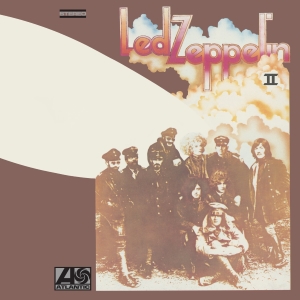
Led Zeppelin II by Led Zeppelin (1969)
Key collector facts: original label and catalog family, Atlantic SD 8236; chart performance, No. 1 on the Billboard 200 and UK Albums Chart; certification highlights, RIAA 12x platinum. Source: Wikipedia album entry.
Led Zeppelin II is the sound of a road band turning exhaustion into volume. Recorded between January and August 1969 in studios across North America and the United Kingdom, it was produced by Jimmy Page and engineered in key sessions by Eddie Kramer, which helps explain the record's charging, room-shaking personality. Atlantic released it in October 1969, and it climbed to No. 1 in both the United States and the United Kingdom. In the U.S. it eventually earned multi-platinum certification, which is fitting for a record that effectively codified hard rock as an album format rather than a singles style.
Collectors care about Led Zeppelin II because it has one of the most famous pressing stories in classic rock. Early U.S. copies mastered by Robert Ludwig, commonly called the RL cut, are legendary for explosive low end and hot levels. The story goes that the cut was considered too aggressive for some consumer turntables, so later pressings were recut with tamer sonics. Whether you buy every detail of the folklore or not, play an RL copy of Whole Lotta Love and the difference is not subtle. The drums and bass arrive with a physical push that later issues often soften.
As a sophomore album, it also shows a band tightening its identity. The debut had blues power and mystique, but II gives the template sharper edges: monster riffs, abrupt dynamics, stereo motion, and a rhythm section that sounds larger than the room. Heartbreaker, Ramble On, and Bring It On Home are not just songs, they are demonstrations of how heavy music could breathe on vinyl. The album sleeve, adapted from a World War I photograph, adds to the tactile mythology, especially in clean gatefold or early label variants.
For a record collector, this is one of those albums where the hunt is part of the pleasure. You can start with a clean 1970s Atlantic copy and still hear why it matters, but the deeper you go into deadwax, label addresses, and mastering notes, the more the album becomes a lesson in how lacquer cutting shapes rock history. It is not merely one of the best sophomore albums ever, it is one of the best arguments for why pressing details matter.

Paranoid by Black Sabbath (1970)
Key collector facts: original label and catalog family, Vertigo 6360 011 in the UK, Warner Bros. WS 1887 in the U.S.; chart performance, No. 1 on the UK Albums Chart, No. 12 on the Billboard 200; certification highlights, RIAA 4x platinum. Source: Wikipedia album entry.
Black Sabbath's second album was recorded quickly after the band's debut, but nothing about Paranoid feels incidental now. Released by Vertigo in the UK in September 1970 and Warner Bros. in the U.S. in early 1971, it contains War Pigs, Paranoid, Iron Man, and Fairies Wear Boots, which is an absurd concentration of genre-defining material. The album reached No. 1 in the UK and No. 12 in the United States, then kept selling until it became a multi-platinum cornerstone. Heavy metal has many origin stories, but this is the one most collectors can drop on a platter and explain in eight tracks.
The original UK Vertigo swirl pressing is a trophy item because it combines the music with one of the most collectible label designs of the era. Those early copies have a weight and darkness that suits the record's sound, with Geezer Butler's bass and Tony Iommi's guitar occupying a thick midrange that rewards a properly aligned cartridge. U.S. Warner copies can be more affordable, though condition is everything because the quieter, ominous passages expose groove wear. Later reissues are plentiful, but early Vertigo copies remain the dream for collectors who want the artifact as much as the album.
What makes Paranoid such a remarkable sophomore record is that it turns a debut's atmosphere into a complete vocabulary. War Pigs stretches anti-war dread over a lurching arrangement, Planet Caravan drifts into psychedelic softness, and Iron Man makes the guitar riff feel like machinery. Producer Rodger Bain did not polish away the band's working-class heaviness, and that decision is part of why the record still sounds alive. On vinyl, the sequencing matters too, because side one moves from apocalypse to hit single to cosmic blues without losing the room.
Collectors should listen for early signs of metal's future: tuned-down menace, political horror, theatrical vocals, and riffs that behave like architecture. If you are building a rock shelf, Paranoid is not optional. It is the record where Sabbath became Sabbath in full, and it remains one of the cleanest examples of a sophomore album that did not just improve on a debut, it named a genre.

The Bends by Radiohead (1995)
Key collector facts: original label and catalog family, Parlophone PCS 7372 / Capitol in the U.S.; chart performance, No. 4 on the UK Albums Chart, No. 88 on the Billboard 200; certification highlights, BPI 4x platinum, RIAA platinum. Source: Wikipedia album entry.
Radiohead's The Bends is the classic sophomore escape act. After Pablo Honey and the giant shadow of Creep, the band could have become a one-song 1990s footnote. Instead, working with producer John Leckie and engineer Nigel Godrich in the orbit of RAK and Abbey Road, Radiohead made a guitar record with unusual emotional range and studio depth. Released by Parlophone in 1995, it reached No. 4 in the UK and later became a platinum seller in the United States, a slow-burn success that paved the way for OK Computer.
For vinyl collectors, early UK pressings are desirable because the album arrived during the compact disc era, when many major-label LP runs were smaller than they would have been a decade earlier or later. That scarcity gives original vinyl copies an aura, especially compared with the very common CD. The album's production also rewards analog playback. The guitars on Planet Telex, Fake Plastic Trees, and Just are layered without becoming mush, while the quieter passages have enough space for Thom Yorke's voice to feel fragile rather than thin.
The record matters because it captures Radiohead before they fully abandoned traditional rock forms, yet the restless experimentation is already audible. My Iron Lung critiques the band's own breakthrough while delivering a bruising riff, Street Spirit (Fade Out) closes the album with hypnotic arpeggios, and High and Dry demonstrates how carefully the group could shape a melody. The result is not simply a set of better songs; it is a band discovering scale, texture, and dread.
Collectors often debate whether The Bends is overshadowed by OK Computer, but on a turntable its identity is distinct. It is less architectural, more human, and still connected to the physical sound of amps in rooms. That makes it a perfect sophomore album for rock shelves, because it documents the instant when promise becomes command. If Pablo Honey asked whether Radiohead had a future, The Bends answered with a record that still sounds like a nervous system lighting up.
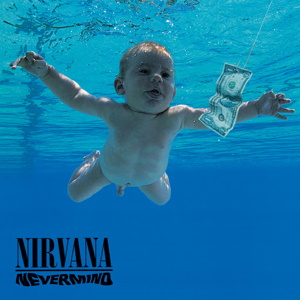
Nevermind by Nirvana (1991)
Key collector facts: original label and catalog family, DGC DGC-24425; chart performance, No. 1 on the Billboard 200; certification highlights, RIAA diamond, BPI multi-platinum. Source: Wikipedia album entry.
Nevermind is probably the most commercially explosive sophomore album in rock history. Released by DGC on September 24, 1991, Nirvana's second studio album and major-label debut replaced Michael Jackson's Dangerous at No. 1 on the Billboard 200 in January 1992. Produced by Butch Vig, recorded at Sound City in Van Nuys with earlier work at Smart Studios in Madison, and mastered at the Mastering Lab, it carried underground dynamics into the mainstream without sanding away the tension. Its diamond certification in the United States tells the commercial story, but the cultural story is even larger.
Vinyl collectors know Nevermind through several listening paths. Original U.S. DGC vinyl copies are coveted because the LP was issued when CD and cassette dominated, making clean early copies much less common than the album's sales numbers might suggest. The ORG and later audiophile reissues also have strong followings, especially among listeners who want the drums to hit with more depth than many early digital versions provide. The album cover is instantly recognizable, but a quiet, flat copy is the real prize because Come as You Are and Something in the Way reveal more subtlety than the radio mythology suggests.
The production is central to why the album works on wax. Vig captured Dave Grohl's drums with clarity and force, Krist Novoselic's bass with enough melodic weight to anchor the choruses, and Kurt Cobain's guitar as both abrasion and hook machine. Smells Like Teen Spirit is the obvious historical event, but Lithium, In Bloom, and Drain You show how carefully the band balanced punk attack with pop structure. That balance changed what labels thought alternative rock could sell.
For collectors, Nevermind is also a reminder that mass popularity does not erase pressing nuance. Different cuts emphasize different parts of the album's personality: the sheen, the low end, the vocal rasp, the room around the drums. As a sophomore leap, it is seismic. Nirvana moved from Sub Pop promise to a record that rearranged radio, fashion, major-label A&R, and the used bins for decades.
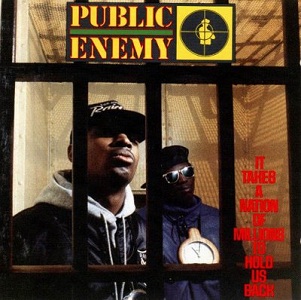
It Takes a Nation of Millions to Hold Us Back by Public Enemy (1988)
Key collector facts: original label and catalog family, Def Jam FC 44303 / Columbia; chart performance, No. 42 on the Billboard 200, No. 1 on Top R&B/Hip-Hop Albums; certification highlights, RIAA platinum. Source: Wikipedia album entry.
Public Enemy's second album is a pressure system. Released in 1988 by Def Jam and Columbia, It Takes a Nation of Millions to Hold Us Back reached No. 1 on Billboard's Top R&B/Hip-Hop Albums chart and crossed into the Billboard 200 while pushing hip-hop's album ambitions forward. Chuck D has described the group's goal as making the hip-hop equivalent of Marvin Gaye's What's Going On, and the comparison makes sense because the record treats the album as a political broadcast. The Bomb Squad's production is dense, fast, and confrontational, a collage of sirens, funk fragments, scratches, crowd noise, and impact.
On vinyl, the album is a test of system energy and tracking. Early Def Jam and Columbia copies can sound thrilling when clean, but inner-groove distortion and groove wear can punish a weak setup because the production is so packed. Bring the Noise, Don't Believe the Hype, and Rebel Without a Pause are not audiophile in the polite sense, but they are absolutely hi-fi as cultural documents. A good pressing lets you hear the layers as intentional architecture rather than chaos.
Collector interest is strong because the album sits at the intersection of golden age hip-hop, political music, and sample-based production before later legal pressures changed the landscape. Original pressings on Def Jam with period-correct labels carry historical weight, while reissues make the record accessible to listeners who want a clean play copy. The cover image, with Chuck D and Flavor Flav behind bars, is one of the great visual summaries of an album's thesis.
What makes it a great sophomore album is not only improvement. It is acceleration. Public Enemy's debut had force, but It Takes a Nation sounds like a fully built communications network. For vinyl collectors who care about how hip-hop translates to the format, this is essential because it proves an LP can hold density, urgency, and sequencing in a way a single cannot. Drop the needle and the record still feels like news breaking in real time.

Paul's Boutique by Beastie Boys (1989)
Key collector facts: original label and catalog family, Capitol C1-91743; chart performance, No. 14 on the Billboard 200; certification highlights, RIAA 2x platinum. Source: Wikipedia album entry.
Paul's Boutique is the sophomore album that turned a perceived commercial stumble into a crate-digging monument. Released by Capitol in 1989 after the Beastie Boys left Def Jam, it did not match the immediate sales of Licensed to Ill, although it eventually reached double-platinum status in the United States. Produced with the Dust Brothers and built from a famously broad universe of funk, soul, rock, jazz, and novelty samples, the record now feels like a last grand statement before sample clearance economics changed what a mainstream rap album could be.
Vinyl collectors love it for both sound and object value. The original Capitol LP has a panoramic gatefold sleeve showing Ludlow Street in Manhattan, and the visual sprawl mirrors the music's collage logic. Clean originals are desirable, but many collectors also keep later reissues as playable copies because this is a record you want to handle often. The bass, drums, and sample fragments move like a busy sidewalk, and a good pressing keeps the humor and detail from collapsing into clutter.
The album's production history is central to its collector appeal. Much of it was assembled in Los Angeles, including work at Matt Dike's apartment and the Record Plant, with the Dust Brothers constructing tracks that feel like impossible DJ sets. Shake Your Rump, Hey Ladies, and the side-closing suite B-Boy Bouillabaisse reward repeated listening because new details keep jumping out of the groove. The record is funny, technical, self-aware, and musically encyclopedic.
As a sophomore album, Paul's Boutique represents a radical pivot. The Beastie Boys moved from frat-rap caricature toward a record that serious collectors and producers still study. Its reputation grew slowly, which is part of the fun: early buyers were hearing the future before consensus caught up. For vinyl people, it is also a reminder that hip-hop collecting is not only about rarity or sealed copies. It is about records that teach you how records talk to one another. Paul's Boutique is basically a record store arguing with itself, and somehow every aisle wins.
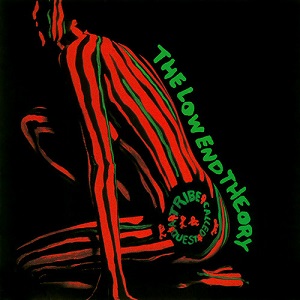
The Low End Theory by A Tribe Called Quest (1991)
Key collector facts: original label and catalog family, Jive 1418-1-J; chart performance, No. 45 on the Billboard 200, No. 13 on Top R&B/Hip-Hop Albums; certification highlights, RIAA platinum. Source: Wikipedia album entry.
A Tribe Called Quest's The Low End Theory made restraint feel revolutionary. Released by Jive on September 24, 1991, the same day as Nevermind, the album reached No. 45 on the Billboard 200 and eventually went platinum in the United States. Its commercial numbers do not fully capture its importance, because the record helped define the sound of jazz rap and alternative hip-hop. Q-Tip's production pared the music down to bass, drums, and carefully chosen jazz samples, creating negative space that made Phife Dawg's emergence feel even sharper.
For vinyl collectors, the album is a low-frequency pleasure. Original Jive pressings are valued because the record's title is not kidding: the bass lines carry the emotional center. Excursions, Check the Rhime, Jazz (We've Got), and Scenario all depend on groove, swing, and the relationship between kick drum and upright bass feel. A good copy on a properly set up system gives the music warmth without blurring the minimalist design.
The recording sessions were held mostly at Battery Studios in New York, and that studio context matters. The album sounds urban, dry, and intimate rather than glossy. It also arrived at a moment when hip-hop albums were proving they could be conceptually unified without losing block-party energy. The cover art, with the painted figure that became central to Tribe's visual identity, is a collector icon in its own right.
What makes this a great sophomore record is the leap from charming debut to unmistakable language. People's Instinctive Travels and the Paths of Rhythm had imagination, but The Low End Theory has discipline. It influenced producers, MCs, jazz musicians, and the entire idea of what a laid-back rap album could do. On vinyl, it feels like a conversation happening in the room, with Phife and Q-Tip passing lines across a rhythm section that never overplays. If your collection has a hip-hop shelf, this should be near the front, not filed as a footnote.

Late Registration by Kanye West (2005)
Key collector facts: original label and catalog family, Roc-A-Fella / Def Jam B0004813-01; chart performance, No. 1 on the Billboard 200; certification highlights, RIAA 4x platinum. Source: Wikipedia album entry.
Late Registration is the rare sophomore album that expands in every direction without losing the artist's voice. Released in 2005 by Roc-A-Fella and Def Jam, Kanye West's second studio album debuted at No. 1 on the Billboard 200 and later earned multi-platinum certification. The key creative twist was West's collaboration with Jon Brion, whose orchestral instincts pushed the sped-up soul of The College Dropout into a more cinematic space. Strings, brass, layered keyboards, and detailed arrangements make the album feel expensive in the best possible way.
Vinyl copies are attractive to collectors because the album sits in the mid-2000s window when major rap LPs were issued, but not always in quantities that matched their cultural footprint. Original Def Jam vinyl can command serious attention, and later reissues are useful for listeners who want a clean, affordable play copy. The album's length means sequencing and side breaks matter, and the best listening experience comes when the pressing preserves the depth of tracks like We Major, Gone, and Drive Slow without making the orchestration feel congested.
The production details are the point. Touch the Sky flips Curtis Mayfield into triumph, Gold Digger turns a Ray Charles interpolation into a giant pop single, and Diamonds from Sierra Leone builds drama around a Shirley Bassey sample. Yet the album also has quieter emotional turns, including Roses and Hey Mama, that keep the scale from becoming empty spectacle. West was already a star, but this record proved he was thinking in albums, not just singles.
As a sophomore statement, Late Registration matters because it made ambition audible. It showed that mainstream rap could be lush, funny, wounded, self-mythologizing, and musically extravagant in the same package. For vinyl collectors, it also bridges crate-digging sample culture and orchestral studio craft. Whether you are approaching it as a hip-hop landmark, a pop blockbuster, or a production study, it earns its shelf space.

good kid, m.A.A.d city by Kendrick Lamar (2012)
Key collector facts: original label and catalog family, Top Dawg / Aftermath / Interscope B0017695-01; chart performance, No. 2 on the Billboard 200; certification highlights, RIAA 3x platinum. Source: Wikipedia album entry.
Kendrick Lamar called good kid, m.A.A.d city a short film by Kendrick Lamar, and the description is accurate. Released in 2012 by Top Dawg, Aftermath, and Interscope, it was his second studio album after Section.80 and his first major-label release. It debuted at No. 2 on the Billboard 200, became a long-running seller, and later earned multi-platinum certification. More importantly, it reasserted the narrative album as a mainstream rap force, using skits, recurring voices, sequencing, and perspective shifts to tell a coming-of-age story in Compton.
Collectors value the vinyl because the album's structure benefits from uninterrupted attention. It is not just a playlist of great tracks, although Backseat Freestyle, Money Trees, Poetic Justice, and Swimming Pools (Drank) all stand on their own. The side changes give the story physical chapters, and that can make the record feel closer to cinema than streaming does. Original pressings and later variants have become steady sellers, with condition, color, and completeness affecting secondary-market interest.
The production lineup is deep: Dr. Dre, Just Blaze, Pharrell Williams, Hit-Boy, Scoop DeVille, T-Minus, and others contribute, yet the album remains cohesive. That cohesion comes from Kendrick's writing and from the sonic world around him, warm, tense, and often nocturnal. The low end is important, but so are the pockets of silence, the phone-message textures, and the way voices move between memory and present action.
As a sophomore album, good kid, m.A.A.d city is a leap in narrative control. It turned the promise of Section.80 into a fully realized, commercially successful concept album without flattening its local detail. For collectors, it is already one of the canonical 2010s rap LPs, the kind of modern record that feels increasingly permanent with every anniversary pressing. If your shelves are meant to trace how album storytelling evolved from Dylan to Public Enemy to the streaming era, Kendrick's second record belongs in that line.

A Rush of Blood to the Head by Coldplay (2002)
Key collector facts: original label and catalog family, Parlophone 7243 5 40504 1 2 / Capitol; chart performance, No. 1 in the UK, No. 5 on the Billboard 200; certification highlights, BPI 10x platinum, RIAA 4x platinum. Source: Wikipedia album entry.
Coldplay's second album is easy to underrate because its biggest songs became background music for an entire decade. Hear it fresh on vinyl, though, and A Rush of Blood to the Head reveals itself as a beautifully constructed sophomore leap. Released by Parlophone and Capitol in 2002, produced by the band with Ken Nelson, it reached No. 1 in the UK and No. 5 in the United States. EMI reportedly shipped more than two million copies worldwide in its first week, and the album later became one of the UK's biggest sellers of the 21st century.
Vinyl collectors should pay attention because early 2000s rock LPs often occupy an odd place in the market. They were released in the CD era, but vinyl copies exist and can be more desirable than casual listeners expect. The album's cover, based on a 3D scan by photographer Sølve Sundsbø, also has the kind of instantly recognizable design that makes a clean jacket satisfying to own. Sonically, the record benefits from a pressing that gives the piano and guitar enough air, especially on Clocks, The Scientist, and Amsterdam.
The album's production is more muscular than Parachutes. Politik opens with force, In My Place turns a simple guitar figure into a stadium signal, and God Put a Smile upon Your Face gives the band a sharper edge. Yet the arrangements are still spacious. That combination of size and restraint is why the record translated so well to arenas without becoming faceless.
As a sophomore album, it matters because Coldplay moved from promising British guitar band to global institution while still sounding vulnerable. Vinyl can restore some intimacy to songs that overexposure dulled on radio. Put on a clean copy and the record's sequencing feels deliberate, not merely hit-loaded. For collectors building a 2000s rock section, this is one of the most important mainstream LPs of the period, a record that explains how post-Britpop melancholy became a global language.

Discovery by Daft Punk (2001)
Key collector facts: original label and catalog family, Virgin 7243 8 49606 1 2; chart performance, No. 2 in France and the UK, No. 23 on the Billboard 200; certification highlights, RIAA gold, BPI platinum. Source: Wikipedia album entry.
Daft Punk's Discovery is a sophomore album about memory, shine, and the emotional life of machines. Released by Virgin in 2001, it moved away from the raw Chicago-house pressure of Homework toward disco, post-disco, garage house, R&B, and pop songcraft. Recorded largely at Thomas Bangalter's home in Paris between 1998 and 2000, the album reached No. 2 in France and the UK and became a global electronic landmark. Its singles, One More Time, Digital Love, Harder, Better, Faster, Stronger, and Face to Face, made dance music feel both futuristic and nostalgic.
For vinyl collectors, Discovery is pure pleasure when the pressing is right. The album depends on sheen, compression, and bass control, so a noisy or flat copy can dull the magic. Original Virgin pressings and well-regarded reissues are sought because the record's surface needs to stay quiet around vocoder hooks and filtered loops. The cover is minimal, but the music is maximal, and the LP format gives its long arcs more ceremony than a shuffled digital listen.
The production is famous for sampling, although Daft Punk also created and replayed material, blurring the line between crate digging and studio invention. Digital Love turns a soft-rock sample into airborne yearning, Harder, Better, Faster, Stronger makes the voice a machine instrument, and Veridis Quo proves the album can be patient and cinematic. It is one of the great records for testing whether your system can keep electronic low end tight without losing sparkle.
As a sophomore leap, Discovery is massive because it refused to repeat the debut's formula. Daft Punk built an album that invited club listeners, pop fans, anime obsessives, DJs, and record collectors into the same room. It remains essential for anyone who wants electronic music on vinyl to feel tactile rather than merely convenient. Few second albums have ever sounded so confident about pleasure.

Demon Days by Gorillaz (2005)
Key collector facts: original label and catalog family, Parlophone / Virgin 7243 8 73838 1 7; chart performance, No. 1 in the UK, No. 6 on the Billboard 200; certification highlights, BPI 6x platinum, RIAA 2x platinum. Source: Wikipedia album entry.
Demon Days is where Gorillaz became more than a clever virtual-band idea. Released in 2005 by Parlophone and Virgin, the group's second studio album was primarily produced by Danger Mouse with Damon Albarn and collaborators including De La Soul, Neneh Cherry, MF Doom, Ike Turner, Shaun Ryder, and Dennis Hopper. It reached No. 1 in the UK and No. 6 in the United States, and its certifications show how far its strange blend of alternative rock, hip-hop, dub, pop, and electronic melancholy traveled. Feel Good Inc. became the obvious gateway, but the album is much darker and more unified than the single's ubiquity suggests.
Vinyl collectors have several reasons to care. The four-panel character cover is iconic, and original pressings have become desirable as 2000s alternative LP collecting has intensified. The album's mood also benefits from side breaks, since tracks like Last Living Souls, Dirty Harry, El Mañana, and Every Planet We Reach Is Dead unfold like scenes in a polluted cartoon city. A good pressing lets Danger Mouse's bass, drum programming, and dusty textures sit under Albarn's weary melodies without turning grey.
The production at Studio 13 in London gives the record a coherent atmosphere despite the long guest list. It feels cinematic but not clean, pop-oriented but not cheerful. November Has Come gives MF Doom a perfectly foggy setting, Dare flips Shaun Ryder into a dance-floor apparition, and the closing choir on Demon Days offers one of the strangest moments of uplift in mid-2000s pop. This is an album that rewards playing front to back, which is exactly why vinyl suits it.
As a sophomore album, it matters because Gorillaz transformed from project to world. The debut introduced the concept, but Demon Days gave that concept emotional stakes and stronger songs. For collectors, it occupies a sweet spot: familiar enough to be loved, weird enough to stay interesting, and visually distinctive enough to make the physical copy feel necessary. It is one of the defining 2000s albums for people who file records by mood as much as genre.

Melodrama by Lorde (2017)
Key collector facts: original label and catalog family, Lava / Republic B0026720-01; chart performance, No. 1 on the Billboard 200; certification highlights, RIAA platinum, RMNZ platinum. Source: Wikipedia album entry.
Lorde's Melodrama is a modern example of the sophomore album as emotional enlargement. Released in 2017 by Lava and Republic, it followed the minimalist teenage cool of Pure Heroine with a brighter, messier, more theatrical record about heartbreak, solitude, parties, and self-recognition. Working primarily with Jack Antonoff, Lorde built a synth-pop and art-pop album that debuted at No. 1 on the Billboard 200 and received one of the decade's strongest critical responses. Its reputation has only grown as listeners have returned to the full-album arc rather than treating it as a singles campaign.
Collectors value Melodrama partly because it represents a streaming-era pop album that still feels designed for complete listening. Vinyl editions, including colored variants, have become collectible among modern pop fans, and the Sam McKinniss cover painting looks especially good at LP scale. The music also benefits from analog playback when the pressing handles the contrast between huge choruses and intimate vocals. Green Light needs impact, but Liability needs quiet.
The production is full of details that reward a proper setup. Sober and Homemade Dynamite use percussion and vocal layering to create party-room motion, while Supercut turns memory into propulsion. The album's quieter tracks keep the drama grounded, and Lorde's phrasing often carries as much meaning as the lyric itself. Unlike many pop records from the period, Melodrama does not feel like a bundle of playlist pitches. It has a shape.
As a sophomore leap, Melodrama is essential because Lorde could have repeated the stark formula that made her famous. Instead she made a record that sounded riskier, warmer, and more adult without losing her specificity. For vinyl collectors, it is a reminder that new canonical albums are still being made, and that the format is not only nostalgia. Sometimes the best thing to put on a turntable is a recent record that already knows how memory will sound years later.

Back to Black by Amy Winehouse (2006)
Key collector facts: original label and catalog family, Island 171 421-3 / Universal Republic; chart performance, No. 1 in the UK, No. 2 on the Billboard 200; certification highlights, BPI 14x platinum, RIAA 2x platinum. Source: Wikipedia album entry.
Amy Winehouse's Back to Black is a devastating sophomore album because its retro surface never feels like costume. Released by Island in 2006 in the UK and later by Universal Republic in the U.S., it drew on 1960s girl groups, soul, jazz phrasing, and Winehouse's own turbulent relationship writing. With production by Mark Ronson and Salaam Remi, plus crucial playing from members of the Dap-Kings, the album reached No. 1 in the UK and No. 2 in the United States. Its certifications are enormous, including one of the highest BPI awards for a 21st-century British album.
Vinyl collectors are drawn to the record because the arrangement style suits the format beautifully. Horns, drums, upright-feeling bass lines, backing vocals, and Winehouse's close-miked voice all benefit from a pressing that can hold warmth without smearing detail. Original UK Island copies and later editions remain popular, and condition matters because the quieter emotional moments on Love Is a Losing Game and Wake Up Alone deserve a clean surface. The black-and-white cover also has a stark, classic quality that looks like it has always existed.
The album's production is both period-aware and contemporary. Rehab has handclaps and brass bite, You Know I'm No Good swings with menace, and the title track turns heartbreak into a funeral march with pop discipline. Ronson and Remi did not bury Winehouse in nostalgia; they built settings that made her timing, wit, and ache impossible to miss. On vinyl, that voice feels physical, especially when the band leaves enough room around her.
As a sophomore album, Back to Black is one of the great transformations from strong debut to undeniable classic. Frank introduced a sharp writer and jazz-rooted singer, but Back to Black created a complete world. For collectors, it belongs beside older soul records rather than merely in a modern pop section. It is heartbreaking, impeccably styled, and still startlingly direct every time the needle drops.
What to buy first
If you are starting from scratch, buy a clean playable copy before chasing the rarest pressing. My first five would be Nevermind for cultural impact, Led Zeppelin II for mastering lore, The Low End Theory for low-end system pleasure, Back to Black for vocal presence, and Discovery for electronic shine. If you love the hunt itself, look for a Robert Ludwig cut of Led Zeppelin II, an early UK Vertigo of Paranoid, or an original 1990s LP copy of The Bends.
FAQ
What counts as a sophomore album?
A sophomore album is an artist or band's second studio album. Live albums, compilations, EPs, and mixtapes can complicate the conversation, but this list follows the standard studio-album definition.
Are original pressings always the best copies to buy?
Not always. Original pressings are historically exciting, but condition and mastering matter more than age alone. A clean, well-mastered reissue will usually beat a worn original with groove damage.
Why do so many second albums become classics?
A strong debut often earns a bigger budget, better studio time, and more confidence, while the artist is still close to the urgency that made the debut work. That combination can create a huge creative leap.
Which sophomore album is the best entry point for a new vinyl collector?
For rock, start with Nevermind or Led Zeppelin II. For hip-hop, start with The Low End Theory. For modern pop and soul, Back to Black and Melodrama are both rewarding, widely loved choices.
A spreadsheet tracks what you own. What's Spinning identifies what's playing.
On-device vinyl ID logs your listening history automatically. 7-day free trial.
Looking for Shazam for vinyl?
What's Spinning identifies what's playing on your turntable on-device, logs history, and AirPlays now-playing to your TV.
Comparing vinyl ID apps?
Analog requires Discogs and is iPhone-first (iPad coming). What's Spinning works without Discogs on iPhone and iPad with AirPlay.
Try What's Spinning Free
Turn your iPad into a live now-playing display. Track every record you spin.
START FREE TRIALThen $4.99/mo or $39.99/yr · Cancel anytime