The Best Movie Soundtrack Albums on Vinyl
Movie soundtracks are a funny corner of record collecting because they can be three things at once: a document of a film, a pop artifact from a specific year, and a genuinely great album. The best soundtrack albums vinyl collectors keep returning to are not just famous because the movies were famous. They survive because the tracklists move well across two sides, the artwork matters at LP size, and the music has a life after the credits roll.
That is why this list mixes original scores, soul landmarks, disco blockbusters, grunge-era compilations, reggae gateway records, and modern franchise albums. Some sold in staggering numbers, like Saturday Night Fever and The Bodyguard. Others became collector staples because they introduced whole scenes to new listeners, like The Harder They Come or Singles. If you track your listening in What's Spinning, these are the kinds of records that reveal patterns fast: Saturday night party sides, Sunday morning folk sides, headphone scores, and the albums friends ask about when they see the cover in your stack.
The research below draws on album histories, chart notes, certifications, award records, and label context from sources including Wikipedia's soundtrack histories, RIAA Gold and Platinum certifications, Grammy award records, and soundtrack discographies. More importantly, each pick is judged as a vinyl object: sequencing, side breaks, sonic character, artwork, availability, and whether the record still earns repeat plays when the television is off.
15 essential movie soundtrack albums to own on vinyl
-
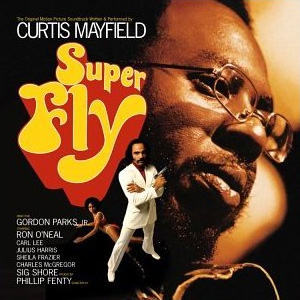
Super Fly, Curtis Mayfield, 1972
Curtis Mayfield did not merely decorate Gordon Parks Jr.'s film with songs; he wrote a moral argument that sometimes seems sharper than the movie itself. Released in 1972 on Curtom, Super Fly arrived during the blaxploitation boom, but its perspective is unusually conflicted, glamorous on the surface and deeply wary underneath. The title track and "Freddie's Dead" became hits, yet the album's real vinyl strength is how the grooves move from street-level funk to orchestral soul without losing the narrative thread.
Collectors should listen for the production balance: congas, wah-wah guitar, strings, and Mayfield's high, intimate voice are all fighting for space, but the best cuts keep everything elastic rather than crowded. Original Curtom copies have obvious appeal, especially with clean jackets, but they are often worn because this was a party record and a message record. A good reissue can be the better daily player. The album is also historically important as one of the rare soundtracks that arguably critiques the film it supports, a reason it still feels alive instead of frozen in 1972.
-

Saturday Night Fever, Bee Gees and Various Artists, 1977
Before Michael Jackson's Thriller reset the ceiling for blockbuster albums, the Saturday Night Fever soundtrack was widely described as the best-selling album in music history, and its scale still matters when you hold a clean double LP. RSO turned a film about Brooklyn nightlife into a global disco monument, powered by Bee Gees singles, Yvonne Elliman, Tavares, Kool and the Gang, KC and the Sunshine Band, and instrumental cues that keep the movie's dance-floor pulse intact.
The format is part of the appeal. Four sides give the album room to behave like a night out rather than a greatest-hits sampler. The first side is almost absurdly front-loaded, but the later sides are where collectors can hear how disco worked as arrangement craft: strings, rhythm guitar, hi-hat patterns, bass movement, and vocal stacks all engineered for bodies in motion. Because millions were pressed, this is not rare in the ordinary sense. The trick is condition. Many copies lived beside stackable changers and heavy tonearms. If the cover has ring wear but the vinyl plays quietly, that is often the smarter buy than a pretty jacket with groove burn.
-

Star Wars, John Williams and the London Symphony Orchestra, 1977
John Williams brought the grand symphonic score roaring back into mainstream film culture, and the original Star Wars double album remains one of the cleanest arguments for owning orchestral soundtracks on vinyl. Recorded with the London Symphony Orchestra at Anvil Studios, the music carries the film's mythic architecture without needing images. The main title is the obvious needle-drop moment, but the album's deeper reward is how themes return with new emotional weight across the sides.
On vinyl, Star Wars asks for a different kind of attention than a pop soundtrack. Surface noise matters because quiet passages and brass attacks expose worn copies quickly. Early pressings are collectible, especially with posters or inserts intact, but later audiophile-oriented reissues can be friendlier if your goal is listening rather than shelf archaeology. The cover art also does real work: the painted heroic composition turns the soundtrack into a piece of franchise mythology before the franchise had fully become one. For collectors who usually avoid scores, this is the gateway record because its melodies are direct, its recording has depth, and the album sequencing feels ceremonial.
-
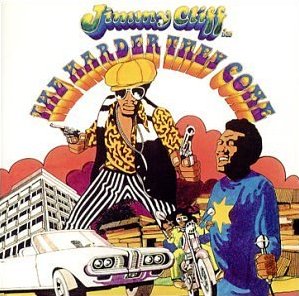
The Harder They Come, Jimmy Cliff and Various Artists, 1972
Reggae reached many American and British listeners through this album before they understood the full depth of Jamaican music. The soundtrack to Perry Henzell's film placed Jimmy Cliff alongside Toots and the Maytals, Desmond Dekker, The Melodians, and Scotty, creating a compact route into ska, rocksteady, and early reggae. Its U.S. chart peak was modest, Billboard lists it at No. 140, but influence is not always measured by the first run of sales.
The vinyl experience is immediate because the album is lean. There is no academic framing, no museum-glass reverence, just songs with hooks, social bite, and rhythms that changed record collections one household at a time. Island and Mango pressings have their own collector followings, and condition varies widely because this record was passed around, loaned, and played at gatherings. The best reason to own it is not rarity. It is the way the sequencing makes a scene legible: outlaw narrative, street pressure, spiritual ache, and dance music all sharing the same jacket. It remains one of the strongest compilation-style soundtracks ever assembled.
-
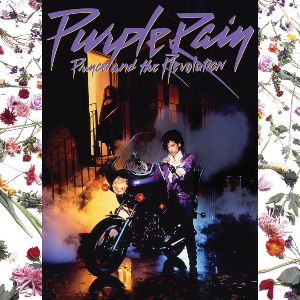
Purple Rain, Prince and the Revolution, 1984
Calling Purple Rain a soundtrack is accurate, but it can undersell how completely it functions as a Prince album. Released by Warner Bros. in 1984, it fuses arena rock, Minneapolis funk, synth pop, gospel drama, and studio precision into a record that dominated the decade without sounding committee-built. The film gave the songs a mythology; the LP gave the mythology a permanent home.
Vinyl collectors should pay attention to dynamics and side structure. Side one runs from "Let's Go Crazy" through "Darling Nikki," moving from ecstatic sermon to private obsession. Side two opens with "When Doves Cry," a hit single famous for having no bass line, then builds toward the long emotional release of the title track. The album cover, with Prince on the motorcycle, is one of the era's most recognizable images and a big part of why jacket condition matters. Original copies are common enough that patience is rewarded, but clean vinyl is less automatic than the sales numbers suggest. Many copies were loved hard. A strong pressing turns the final guitar solo into a room-filling event rather than just a familiar radio memory.
-

The Bodyguard, Whitney Houston and Various Artists, 1992
Whitney Houston's performance of "I Will Always Love You" is so enormous that it can blur the rest of the album, which is a shame because The Bodyguard is a fascinating early 1990s soundtrack product. It combined Houston's vocal showcases with contributions from artists including Lisa Stansfield, Kenny G, and The S.O.U.L. S.Y.S.T.E.M., then became one of the best-selling soundtrack albums ever. The RIAA has certified it at multi-platinum levels in the United States, while global sales estimates routinely place it among the biggest albums of the decade.
As a vinyl record, it sits at the edge of a format transition. In 1992, CD and cassette were dominant, so original vinyl copies can be more desirable than the album's overall popularity would imply. That scarcity changes the buying calculus. A modern reissue may be the most sensible way to actually hear the record without paying a premium for a format that was not the main commercial lane at release. Sonically, the album is built around vocal scale and clean adult-contemporary production. If your system flatters voices, Houston's control on the big ballads is the reason to own it.
-

Pulp Fiction, Various Artists, 1994
Quentin Tarantino's soundtrack method changed how a generation thought about old records in new films. Pulp Fiction did not need a traditional score; it stitched together surf guitar, soul, pop, rockabilly, dialogue snippets, and deep-cut attitude until the compilation felt like a character. Dick Dale's "Misirlou" became the blast door, but the album's identity comes from contrast: Dusty Springfield beside Kool and the Gang, Urge Overkill beside Al Green, Link Wray beside movie chatter.
The LP is a collector object because it captures a 1990s moment when crate-digging and cinema started talking to each other in the mainstream. Dialogue tracks can annoy people on repeated listens, but here they are part of the pacing, little cigarette burns between songs. Original vinyl was not as ubiquitous as the CD, so pressings can be uneven in price. What matters most is whether the compilation's sharp edits and tonal jumps still feel fun on your system. It is not a hi-fi spectacular. It is a hangout record, the kind that makes guests lean over the jacket and remember where they first heard that guitar line.
-

Trainspotting, Various Artists, 1996
Few 1990s soundtracks captured youth culture with such specific voltage. Trainspotting connects Iggy Pop's "Lust for Life" to Underworld's "Born Slippy .NUXX," then threads in Brian Eno, New Order, Primal Scream, Blur, Elastica, Lou Reed, and Leftfield. The result is not a neutral sampler of British music. It is a nervous system for Danny Boyle's film, moving between addiction, euphoria, disgust, club culture, and the strange romance of escape.
On vinyl, the album is valuable because it puts guitar bands and electronic music in the same physical conversation. That was the 1990s in miniature, especially in the U.K., where club records, indie records, and older punk records could all belong to the same night. Original pressings and later reissues can differ in track selection, territory, and packaging, so buyers should check the exact version rather than assuming every copy has the same flow. The strongest moment remains the side-length emotional pivot into Underworld, where the film's chaos becomes something huge and communal. If Pulp Fiction made retro cool feel newly cinematic, Trainspotting made the present tense feel dangerous.
-

O Brother, Where Art Thou?, Various Artists, 2000
T Bone Burnett's work on O Brother, Where Art Thou? turned old-time music, bluegrass, gospel, blues, and country traditions into a mainstream phenomenon without smoothing away all the grain. The soundtrack won Album of the Year at the 44th Grammy Awards, a rare feat for a roots-heavy film album, and helped send many listeners toward Ralph Stanley, Alison Krauss, Gillian Welch, The Cox Family, and the wider American folk archive.
The record's vinyl appeal is tactile. Acoustic instruments, close harmonies, and room tone benefit from a pressing that does not fight the material. Unlike heavily produced pop soundtracks, this one can punish a noisy copy because so many performances rely on air and decay. The best editions make the voices feel gathered rather than assembled. It also has one of the most unusual cultural afterlives on this list: a Coen brothers comedy indirectly pushed traditional music into big-box stores and Grammy headlines. For collectors, it is a reminder that a soundtrack can revive a repertoire, not just sell a movie.
-
Guardians of the Galaxy: Awesome Mix Vol. 1, Various Artists, 2014
Marvel's most vinyl-friendly soundtrack works because the music is built into the story as an object. Peter Quill's cassette is not background decoration; it is memory, family, comedy, and emotional armor. That made Awesome Mix Vol. 1 feel unusually natural as a physical release, even in an era when most listeners met the songs through streaming. The tracklist pulls from Blue Swede, Raspberries, Norman Greenbaum, David Bowie, Elvin Bishop, The Jackson 5, and others, turning 1970s pop radio into a superhero engine.
Collectors should not mistake familiarity for laziness. The genius is context. "Come and Get Your Love" and "Hooked on a Feeling" were already oldies-radio staples, but the film gave them new visual hooks and introduced them to younger listeners. Vinyl editions often lean into the cassette gag with packaging and variants, which can be fun, although the music itself is the main reason to buy. This is a family-room soundtrack in the best sense: bright, shared, and easy to replay. It also proves that soundtrack albums can still create collector demand when the physical format becomes part of the film's emotional logic.
-

Tron: Legacy, Daft Punk, 2010
Daft Punk's Tron: Legacy score is the rare franchise soundtrack that brought electronic music fans, film-score collectors, and audiophile-leaning vinyl buyers into the same queue. Rather than making a club record with orchestra pasted on top, Thomas Bangalter and Guy-Manuel de Homem-Christo built a hybrid language: low-end synth weight, clean arpeggios, brass, strings, and digital menace arranged with surprising restraint.
The LP rewards systems that handle bass without smearing the midrange. Tracks such as "The Grid," "Recognizer," and "Derezzed" offer the obvious electronic thrills, but the quieter cues are what make the album hold together. Pressing quality matters because modern score reissues can be visually extravagant while not always being equally quiet. Check reviews for the specific edition, especially colored variants. The cover's black, blue, and neon geometry also scales beautifully to LP size, which helps explain why the record became a modern soundtrack collectible. It is less about nostalgia than world-building. Put it on, and the room changes temperature.
-

Blade Runner, Vangelis, 1994 soundtrack release
Vangelis recorded music for Ridley Scott's 1982 film, but the official album history is messier than many casual buyers realize. For years, listeners dealt with orchestral interpretations, partial releases, and bootlegs before a proper Vangelis album arrived in the 1990s. That delayed path is part of the collector story. Blade Runner feels like music that escaped slowly from the film's rain, neon, and smoke.
Vinyl is a natural home for this score because texture is everything. The saxophone, synthesizer pads, distant voices, and noir atmosphere depend on sustained mood rather than big theme statements. It is a record for late-night listening, where small surface ticks can either add accidental grit or become deeply distracting. Reissues vary, and buyers should decide whether they want the canonical 1994 program, expanded editions, or a specific collector variant. The important thing is to avoid treating it as wallpaper. Vangelis created a sound world that shaped how cyberpunk would feel for decades, and the album remains one of the most immersive electronic scores a vinyl shelf can hold.
-
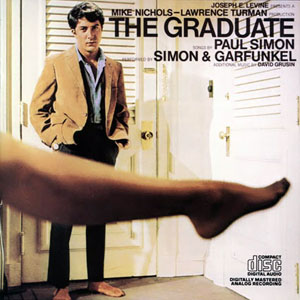
The Graduate, Simon & Garfunkel and Dave Grusin, 1968
Mike Nichols' The Graduate used Simon & Garfunkel songs so effectively that the soundtrack became inseparable from the film's image of young American dislocation. "Mrs. Robinson" is the headline, but "The Sound of Silence" and "Scarborough Fair/Canticle" carry much of the emotional weight. Dave Grusin's score cues sit beside the duo's songs, giving the LP an unusual blend of pop familiarity and film-specific connective tissue.
For vinyl buyers, the charm is partly in the late-1960s Columbia presentation. The jacket, typography, and sequencing feel like a bridge between soundtrack album and folk-rock LP. Because Simon & Garfunkel material is available elsewhere, condition and completeness should guide purchases more than urgency. A clean copy plays like a period object, not only a compilation. It captures a moment when a film could make pre-existing songs feel newly authored for its characters, a method later directors would push much harder. The album is not the longest or deepest record here, but it is a foundational example of pop songs doing narrative work on screen.
-

Singles, Various Artists, 1992
Cameron Crowe's Singles soundtrack is one of the clearest major-label snapshots of Seattle's rock explosion as it was turning from local scene to global commodity. Pearl Jam, Alice in Chains, Soundgarden, Mudhoney, Screaming Trees, Mother Love Bone, and Chris Cornell all appear, with Paul Westerberg and The Smashing Pumpkins broadening the frame. The film is a romantic comedy, but the album became something closer to a scene report.
The collector appeal is tangled up with timing. Released in 1992, it sits in the CD-era vinyl scarcity zone, when many albums were pressed in smaller LP quantities than their cultural footprint suggests. That makes original vinyl desirable, but also risky if priced like a trophy rather than a playable record. Musically, the soundtrack has the advantage of catching bands near a volatile peak. Alice in Chains' "Would?" alone justifies the album's reputation, while Cornell's "Seasons" offers a very different kind of intimacy. Buy it because it documents a moment before the mythology hardened. The best copies sound less like nostalgia and more like wet pavement, loud amps, and a city suddenly under a microscope.
-

Black Panther: The Album, Kendrick Lamar and Various Artists, 2018
Black Panther: The Album is not a conventional score album, although Ludwig Goransson's orchestral work for the film deserves its own attention. This companion album, curated by Kendrick Lamar and Top Dawg Entertainment, treats Wakanda as a musical prompt rather than a branding exercise. Lamar, SZA, The Weeknd, Jay Rock, Future, James Blake, Anderson .Paak, Travis Scott, and others contribute to a record that tied a superhero film to contemporary hip-hop, R&B, and Afrofuturist imagination.
The vinyl angle is modern and practical. Recent pressings are easier to find than many 1990s soundtrack originals, but buyers should still check reviews because bass-heavy contemporary albums can vary widely across editions. The album's standout, "All the Stars," became the crossover anchor, while "King's Dead" and "Pray for Me" pushed different energies into the same universe. What makes the record collectible is its cultural timestamp: a blockbuster film, a major rap auteur, and a soundtrack strategy that treated popular music as world-building. It belongs on this list because it shows the soundtrack album still evolving, not merely recycling classic-rock cues for nostalgia.
What to buy first
If you are starting a soundtrack shelf from zero, buy one record from each lane instead of chasing only the famous titles. For a composer score, start with Star Wars or Blade Runner, depending on whether you want orchestral grandeur or electronic atmosphere. For a song compilation, The Harder They Come, Pulp Fiction, and Trainspotting each represent a different kind of curation. For a soundtrack that is also a canonical artist album, Super Fly and Purple Rain are the two safest bets.
On budget, Saturday Night Fever is often the smartest first purchase because common copies keep prices sane and the music is still superb. For condition-sensitive listening, be more careful with O Brother, Where Art Thou?, Blade Runner, and orchestral scores, where quiet passages expose groove wear. If you care about collectibility, watch the CD-era titles, especially Singles, The Bodyguard, and some 1990s pressings of Trainspotting. If you simply want a record people will notice at a party, Guardians of the Galaxy: Awesome Mix Vol. 1 earns its shelf space honestly.
Buying notes for soundtrack collectors
- Check the exact tracklist. Soundtracks are often reissued with alternate licensing, omitted songs, bonus cues, or different regional sequences.
- Do not ignore condition. Huge-selling albums such as Saturday Night Fever can be cheap, but many copies were played relentlessly.
- Read pressing notes. Colored vinyl, picture discs, and deluxe packaging are fun, but quiet mastering matters more for scores.
- Separate scores from compilations. A great score and a great song collection solve different listening problems. Build room for both.
- Use the jacket as a clue, not proof. A near-mint cover can hide a noisy disc. Always inspect the vinyl under bright light when buying in person.
FAQ
A great soundtrack LP works as an album, not only as a souvenir. Look for strong sequencing, music you want to hear away from the film, good mastering notes, quiet vinyl, and packaging that uses the movie artwork well.
No. Originals can be historically satisfying, but many were cut quickly, pressed in huge numbers, or played hard. A clean modern reissue from a trusted label can beat a noisy original, especially for orchestral scores and quiet electronic albums.
Scarcity, licensing, fan demand, and condition drive prices. Soundtracks often involve multiple labels, composers, estates, film studios, and publishers, so some albums fall out of print for years.
Both can be rewarding. Scores tend to reward immersive listening and clean pressings, while song compilations capture a cultural moment. The best collection usually has a mix of composer-led albums and scene-defining compilations.
Sources and further reading
A spreadsheet tracks what you own. What's Spinning identifies what's playing.
On-device vinyl ID logs your listening history automatically. 7-day free trial.
Looking for Shazam for vinyl?
What's Spinning identifies what's playing on your turntable on-device, logs history, and AirPlays now-playing to your TV.
Comparing vinyl ID apps?
Analog requires Discogs and is iPhone-first (iPad coming). What's Spinning works without Discogs on iPhone and iPad with AirPlay.
Try What's Spinning Free
Turn your iPad into a live now-playing display. Track every record you spin.
START FREE TRIALThen $4.99/mo or $39.99/yr · Cancel anytime