Store Vinyl Records Upright to Prevent Warping
There is a moment every vinyl collector knows well: you pull a record from the shelf, set it on the platter, drop the needle, and hear a telltale warp-wobble that should not be there. That gentle wow is not a stylistic choice by the artist. It is the sound of a record that has been waiting years to tell you something went wrong in storage. The good news is that warp is almost entirely preventable with a few consistent habits, and none of them require expensive equipment or elaborate systems.
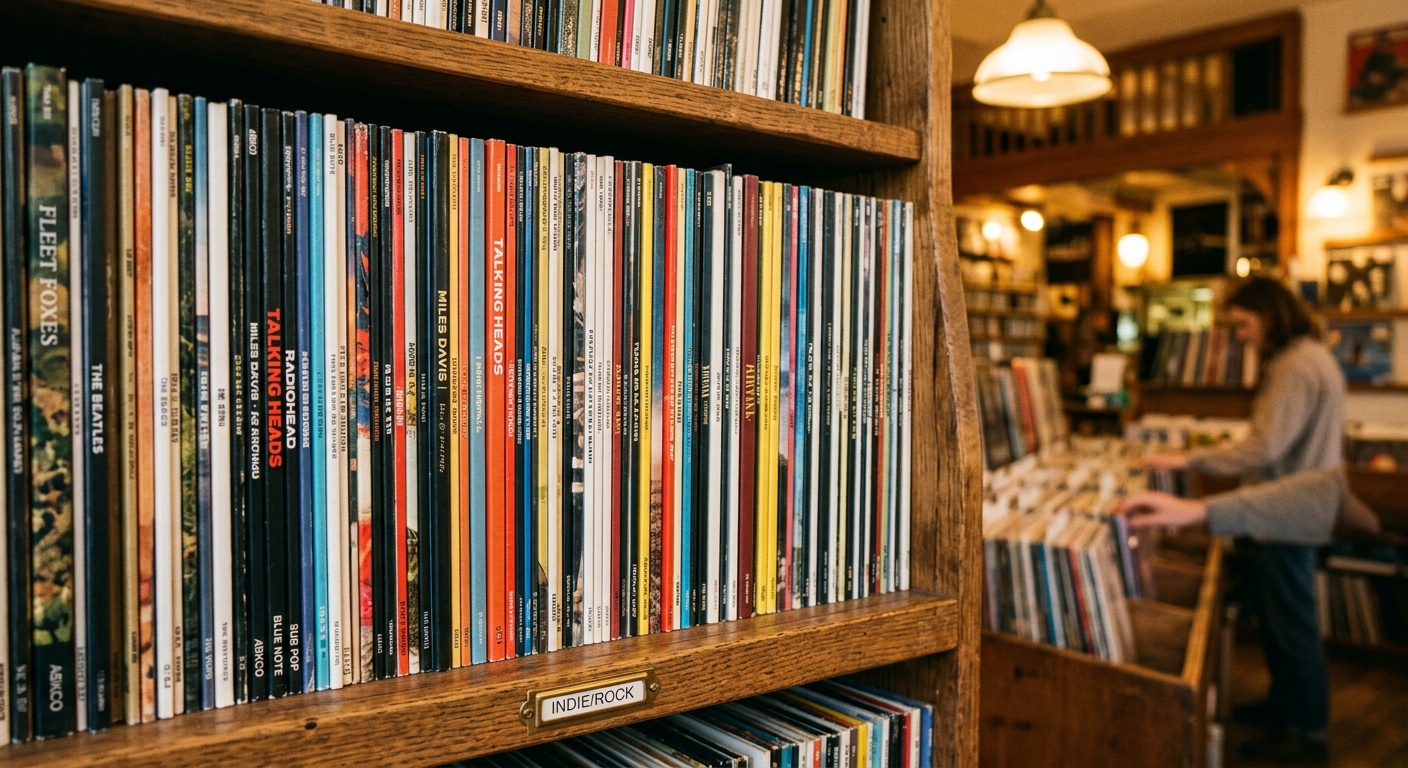
The single most important rule in vinyl storage is also the simplest: keep your records standing upright, the way they were designed to sit. A vinyl LP is a thin disc of PVC with a groove structure that depends on flat, even contact with the platter. When you lay records flat and stack one on top of another, the weight of the pile concentrates on the lowest records at the center spindle area. Over months and years, that constant pressure slowly deforms the PVC. The result is a record that plays with pitch instability, and once a warp sets in, it is very difficult to reverse.
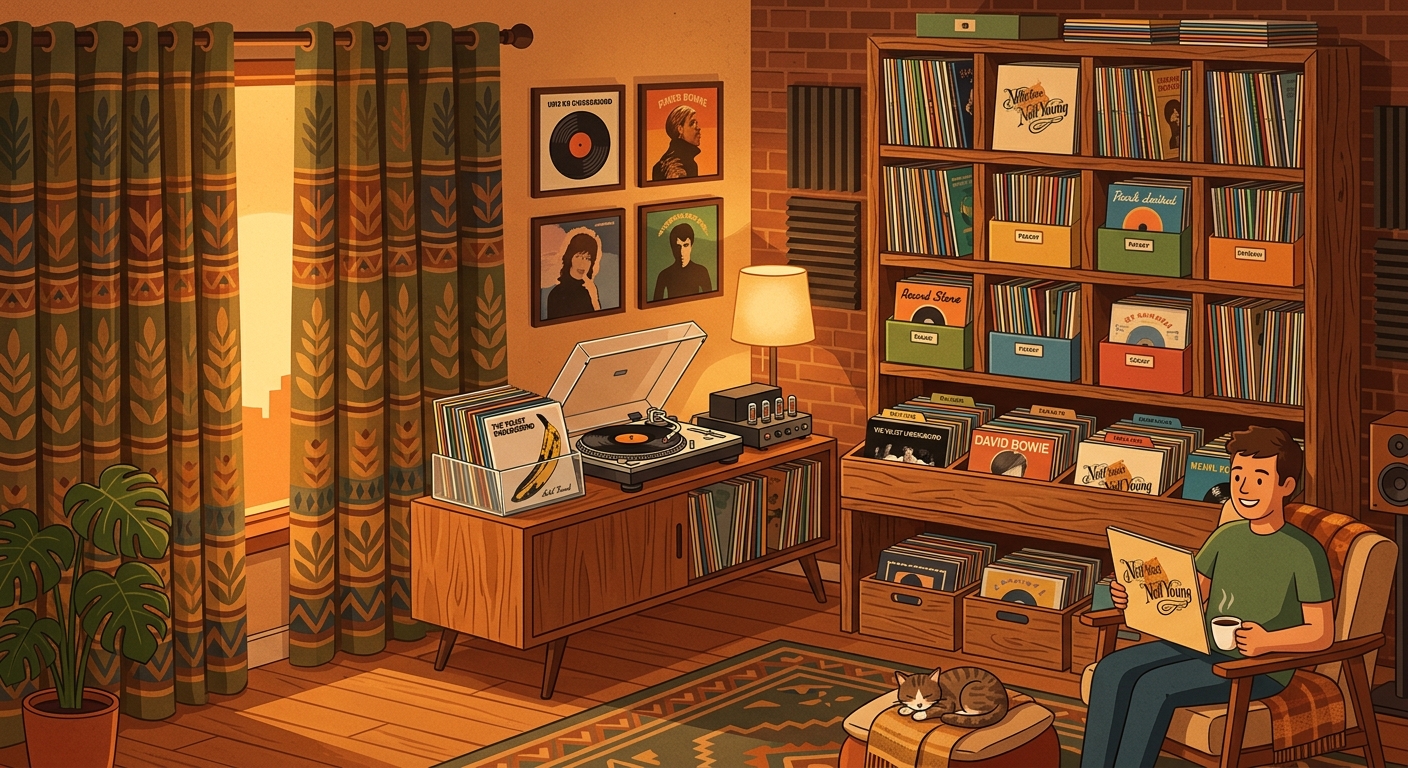
Keeping records vertical means investing in proper shelving. Wooden shelves and metal racks are both excellent choices, and both outperform the particle-board shelving that comes with many flat-pack furniture sets. Particle board can bow under the weight of a serious collection, and it tends to off-gas chemicals that accelerate the degradation of PVC. If you have ever opened a shelf unit and noticed a faint chemical smell, that is off-gassing at work, and your records are close enough to absorb it.
Within the shelf, records should be close enough together that they do not lean or tip, but not so tightly packed that you have to yank them free. A record that leans at a sharp angle for months is essentially being held in a permanent slight warp. Shelf dividers are an inexpensive solution that keeps sections of your collection organized by genre, artist, or any system you prefer, and they also help records stand straight without being squeezed against one another. Wooden bookends work well too, and they add a visual warmth that suits a record room.
Heat is the other great enemy of vinyl, and it works in concert with weight to cause warping. Records stored near radiators, heating vents, or in direct sunlight will slowly soften and deform even if they are standing upright. The ideal storage temperature is somewhere in the 65 to 70 degree Fahrenheit range, with relative humidity between 40 and 60 percent. These are also the conditions that make a room pleasant to spend time in, so if you are comfortable, your records probably are too. Basements are often too damp, and attics are usually too hot and dry. A interior closet or a dedicated shelving wall in a climate-controlled room is close to ideal.
One surprising source of gradual damage is vibration. Records stored directly on top of or very close to speakers experience constant low-level vibration every time the system plays. That vibration does not cause dramatic warping, but over long periods it can stress the PVC structure and contribute to groove wear. A few inches of separation, or placing records in a closed cabinet rather than on open speaker-adjacent shelving, makes a measurable difference over years of listening.
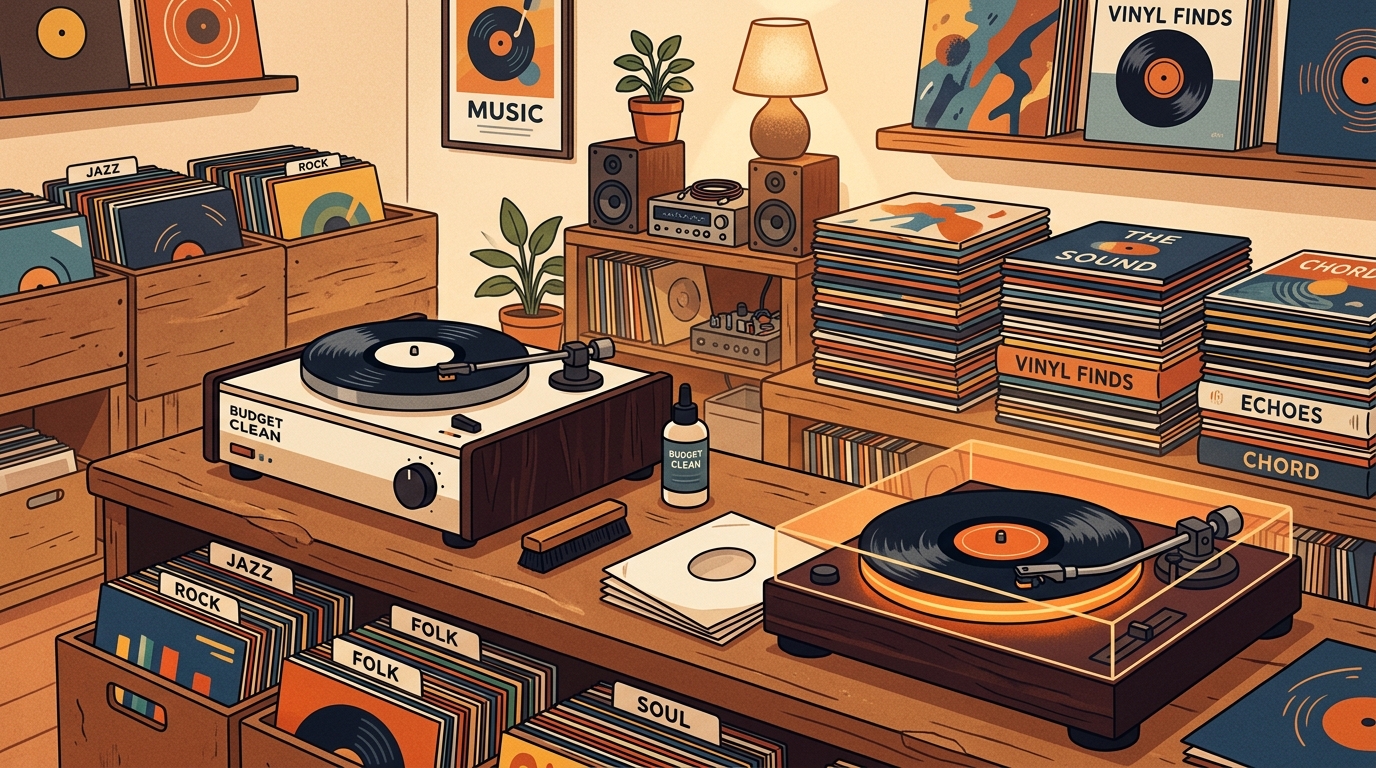
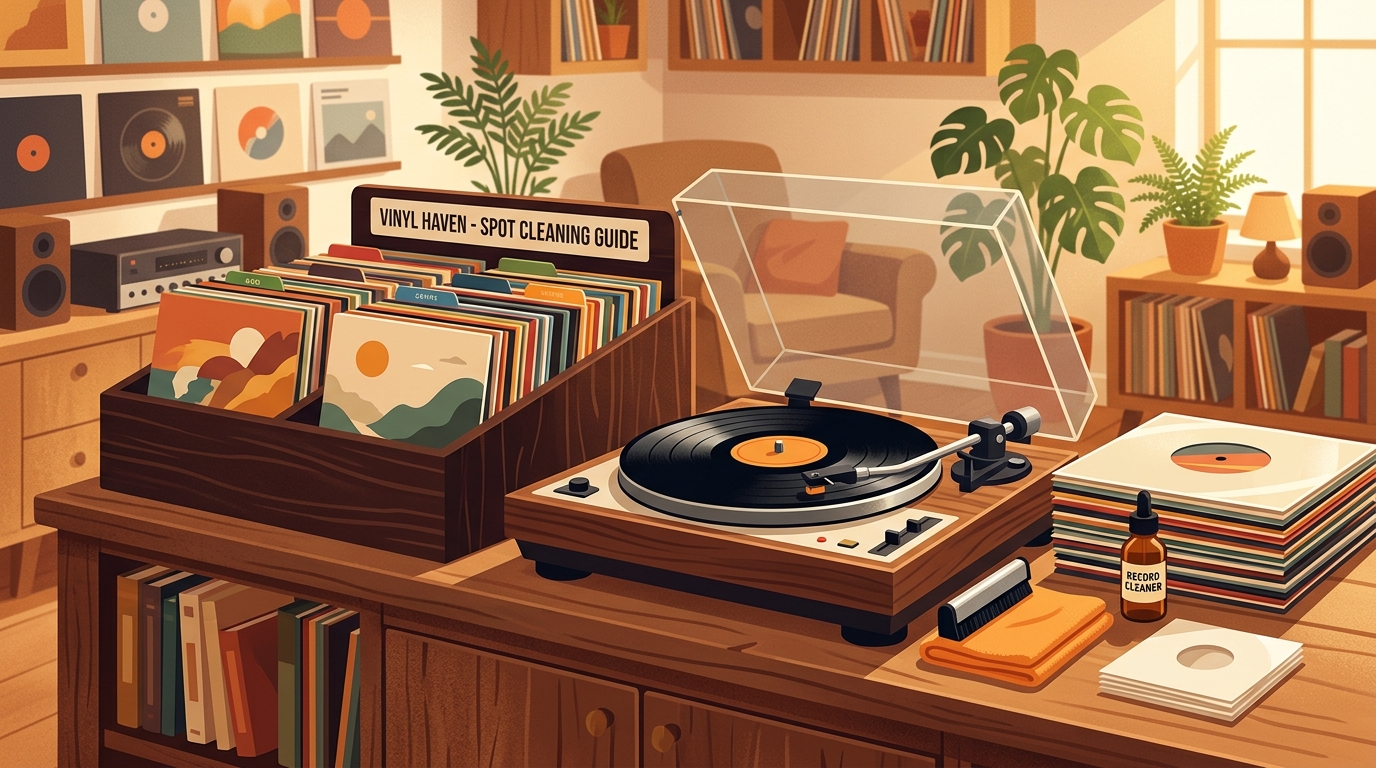
The sleeves your records live in matter more than most collectors realize. Original inner sleeves are often made of paper, which breathes and allows the record surface to stay dry. Many aftermarket sleeves are made of PVC, and PVC has a well-documented tendency to bond with the record surface over time, especially in warm conditions. The result is a record that looks cloudy or splotchy and plays with increased surface noise. Poly-lined inner sleeves are a safe and widely available alternative that avoids this problem entirely.
Outer sleeves, the plastic bags you slide the entire record into after play, serve a practical purpose beyond presentation. They reduce dust accumulation on the outer jacket and provide a mild barrier against humidity fluctuations. Standard polyethylene outer sleeves are inexpensive and do the job well. Avoid glossy or PVC-style outer bags for the same reason you avoid PVC inner sleeves: chemistry matters when you are storing something as sensitive as vinyl.
One final habit that makes a real difference: handle records by the edges and label only, and put them back in their sleeves and on the shelf immediately after play. Records left on the turntable overnight, or propped against a wall awaiting filing, are one bump or one leaning incident away from a bent corner or a new curve in the disc. The thirty seconds it takes to return a record to its home is the smallest possible investment in preserving something you plan to enjoy for decades.
What is Spinning is built to help you keep track of every record in your collection, including the notes you make about condition, listening sessions, and storage location. Scanning shelf QR codes lets you log where a record lives without needing to type anything, and the collection view gives you a quick overview of everything you own. A well-organized shelf and a well-organized digital record of that shelf are two of the best tools a collector can have.
A spreadsheet tracks what you own. What's Spinning identifies what's playing.
On-device vinyl ID logs your listening history automatically. 7-day free trial.
Looking for Shazam for vinyl?
What's Spinning identifies what's playing on your turntable on-device, logs history, and AirPlays now-playing to your TV.
Comparing vinyl ID apps?
Analog requires Discogs and is iPhone-first (iPad coming). What's Spinning works without Discogs on iPhone and iPad with AirPlay.
Try What's Spinning Free
Turn your iPad into a live now-playing display. Track every record you spin.
START FREE TRIALThen $4.99/mo or $39.99/yr · Cancel anytime